Managing waste in an environmentally responsible way is becoming increasingly important as waste volumes continue to rise across Asia, including Indonesia. This requires solutions ranging from waste reduction and sorting to recycling and processing waste into new resources.
The right waste management strategy not only helps reduce pollution, but can also support the circular economy, conserve resources, and create new value from waste.
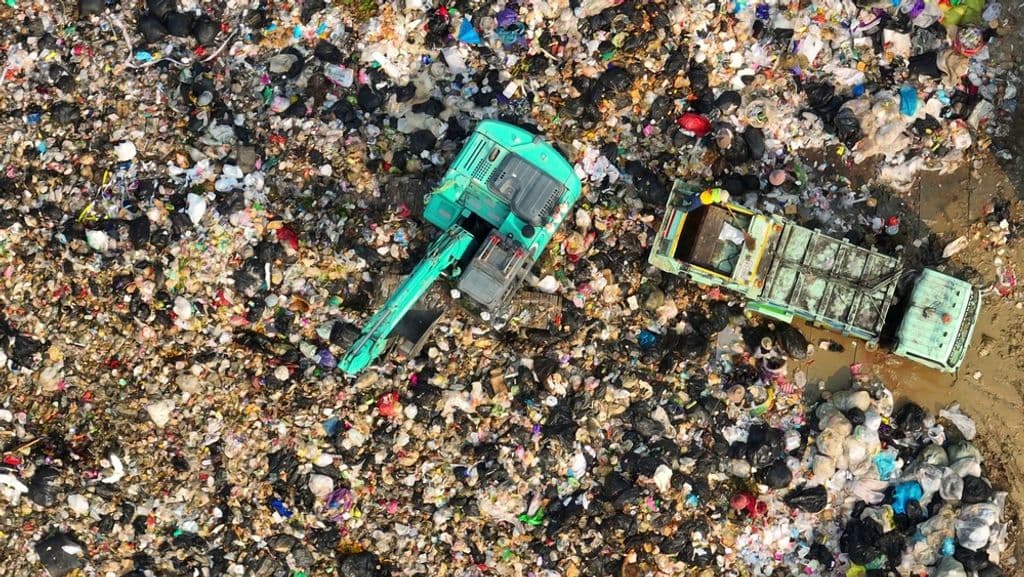
Population growth, industrial activity, and the expansion of e-commerce continue to increase the amount of waste generated. For this reason, waste management can no longer rely solely on landfills.
A more comprehensive approach is needed, involving communities, businesses, governments, and waste processing technologies.
Waste Management Challenges in Asia
Asia faces significant challenges in managing waste.
Across the Asia-Pacific region, the amount of waste generated is projected to increase from around 802 million tons in 2016 to 1.1 billion tons by 2030.
Meanwhile, waste volumes in Southeast Asia reached approximately 150 million tons in 2016 and are expected to more than double by 2030.
This growth makes the need for sustainable waste management systems increasingly urgent.
Poorly managed waste can clog waterways, worsen flooding, pollute rivers and oceans, and create various environmental problems.
In Indonesia, these challenges are also linked to the diverse characteristics of waste and the fact that different waste types are still frequently mixed together.
This makes source separation an important step before waste enters the processing stage.
Eco-Friendly Waste Management Strategies
To address rising waste volumes, waste management strategies need to go beyond disposal and include reduction, sorting, reuse, recycling, and the recovery of waste as a new resource.
1. Apply the 3R Principles
A fundamental step in waste management is applying the reduce, reuse, recycle or 3R principles.
Reduce means minimizing waste at the source. Examples include choosing products with minimal packaging, using digital documents, and avoiding single-use items when reusable alternatives are available.
Reuse means extending the useful life of products. Glass containers, for example, can be reused to store food or other items.
Meanwhile, recycle means processing used materials into new materials or products.
Waste sorting is therefore important so that materials such as plastic, paper, glass, and metal can be recycled more effectively.
2. Process Organic Waste Through Composting
Organic waste from kitchens and gardens can be processed into compost.
This helps reduce the amount of waste sent to landfills while producing material that can benefit soil.
Compost can be made by combining nitrogen-rich materials, such as vegetable scraps and coffee grounds, with carbon-rich materials such as dry leaves and cardboard.
With proper moisture and aeration, organic waste can decompose into compost that can be used in gardens or green spaces.
3. Sort Waste at the Source
Source separation is an important part of an effective waste management strategy.
Waste can be separated by type, including organic waste, plastic, paper, glass, and metal.
This system helps reduce material contamination so that recycling processes can operate more effectively.
It can be implemented in homes, schools, offices, public facilities, and industrial areas.
Education is also necessary so that people understand different waste categories and how they should be disposed of.
The more consistently waste is sorted, the greater the opportunity for materials to be recovered and reused.
4. Use Waste Processing Technology
Technological developments are creating various options for managing waste more effectively.
AI-based sorting technologies, robotic sorting systems, modern composting, and waste-to-energy (WTE) facilities are some examples of innovations being developed.
WTE uses waste as an energy source through specific processing methods.
This approach can help reduce the volume of waste sent to landfills while also generating energy.
However, no single technology is suitable for every location.
The appropriate solution needs to consider factors such as waste composition, moisture content, calorific value, waste volume, regulations, geographical conditions, and economic feasibility.
In Southeast Asia, for example, municipal waste often has a high moisture content.
For this reason, biological treatment methods such as anaerobic digestion or composting may be suitable for waste streams dominated by organic material.
Meanwhile, materials with suitable calorific value can be processed into Refuse Derived Fuel (RDF).
The Role of Communities in Waste Management
Technology alone is not enough to create a sustainable waste management system.
Community participation remains an essential part of the process.
Activities such as community clean-ups, river cleaning, tree planting, waste banks, and education about waste sorting can help build awareness and shared responsibility.
Businesses can also contribute by reducing excessive packaging, using recycled materials, and ensuring that operational waste is handled in accordance with applicable regulations.
TBS’s Integrated Waste Management in Southeast Asia
Effective waste management also requires an integrated system capable of handling different types of waste.
In Southeast Asia, TBS is strengthening its capabilities through the development of waste management services in Indonesia and Singapore.
This expansion began in 2023 with the acquisition of Asia Medical Enviro Services, or AMES, and ARAH, which have capabilities in managing medical waste, hazardous and toxic waste, household waste, and electronic waste.
The two entities were subsequently consolidated under PT Solusi Bersih TBS, or SBT, as a dedicated waste management sub-holding.
In March 2025, TBS strengthened its presence in Singapore by completing the full acquisition of Sembcorp Environment, or SembEnviro.
The company has expertise in municipal waste management, recycling, and environmental solutions.
Then, in September 2025, SembEnviro was officially renamed CORA Environment.
The new identity brought TBS’s waste management units together under one brand and strengthened the company’s ambition to provide waste-to-resource solutions across Southeast Asia.
Together with AMES, ARAH, and CORA, TBS is implementing the TBS2030 roadmap, which focuses on sustainability targets, reducing environmental impacts, and creating long-term value.
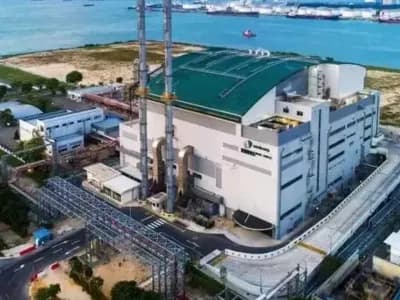
TBS currently operates five waste management facilities in Indonesia and Singapore.
Throughout 2025, these facilities processed more than 970,000 tons of waste, while TBS’s services reached more than 475,000 active customers.
Ultimately, eco-friendly waste management needs to be implemented across the entire value chain, from upstream to downstream.
It can begin with reducing waste, reusing products, sorting materials, recycling, processing organic waste, and using technology to recover valuable resources.
As waste volumes continue to increase across Asia, integrated approaches are becoming increasingly important.
Through AMES, ARAH, CORA Environment, PT Solusi Bersih TBS, and the TBS2030 roadmap, TBS continues to strengthen its role in providing waste management solutions that support both environmental sustainability and the circular economy in Southeast Asia.