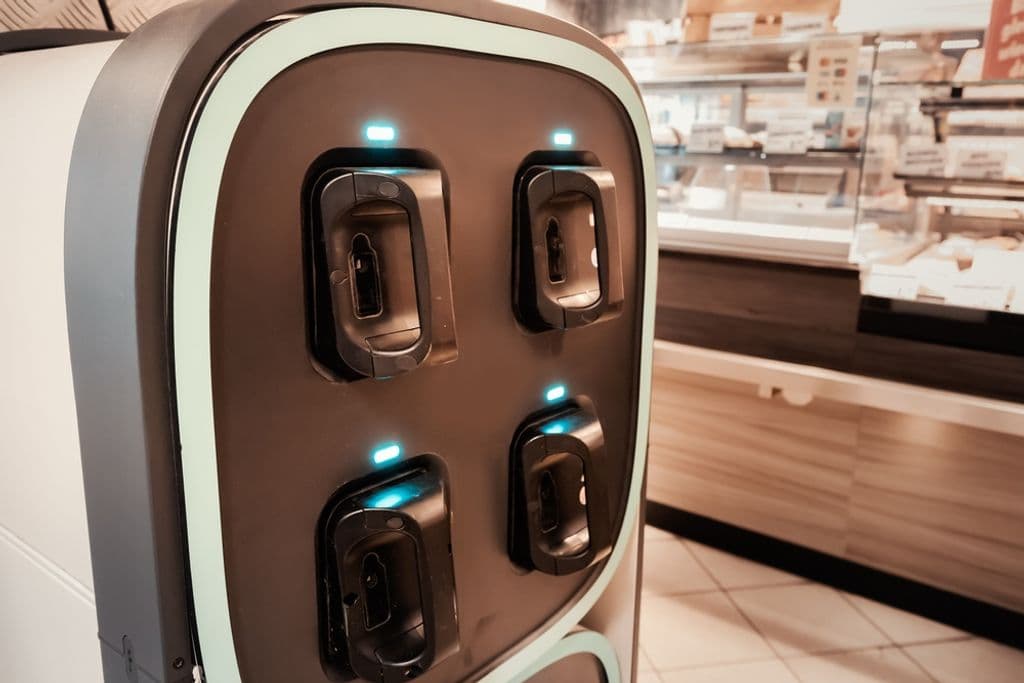
Battery swapping is a technology that allows electric motorcycle riders to replace a depleted battery with a fully charged one in a short amount of time.
This technology helps reduce charging wait times, lower the upfront cost of purchasing an electric vehicle, and support more efficient electric motorcycle operations.
As electric vehicle adoption continues to grow in Indonesia, the need for practical charging infrastructure is becoming increasingly important.
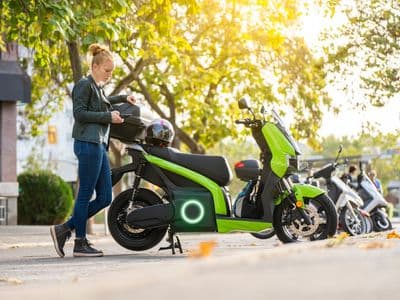
This is especially relevant for online motorcycle taxi drivers, couriers, and businesses that rely on vehicles for daily mobility.
So, how does battery swapping work, and what role does it play in building the electric motorcycle ecosystem? Read the explanation below.
What Is Battery Swapping?
Battery swapping is a system that allows electric vehicle users to exchange a depleted battery for another battery that is already fully charged.
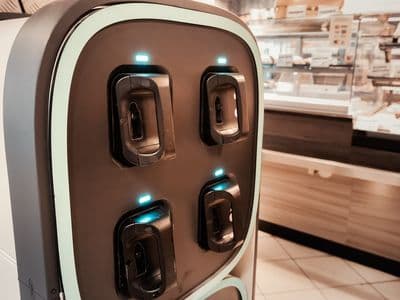
The process is carried out through a dedicated facility known as a Battery Swapping Station (BSS).
Unlike conventional charging, which requires riders to wait until the battery is recharged, this technology allows the battery to be replaced in just a matter of seconds.
Riders simply visit a swapping station, return the depleted battery, and collect a fully charged replacement.
In addition to saving time, the system can also help maintain battery safety and condition. Charging is managed centrally, with temperature, capacity, and battery health monitored through digital technology.
Read Also: Understanding Battery Management Systems for Electric Vehicle Safety
How Does Battery Swapping Work?
A battery swapping system involves several connected components, including removable batteries, compatible electric vehicles, digital applications, and swapping cabinets.
The process generally works as follows:
- The rider visits a battery swapping station. Riders can locate the nearest BSS through an application provided by the operator.
- Verification is completed. Users scan a QR code on the machine or use an NFC card to access the service.
- The depleted battery is returned. The used battery is placed into the swapping cabinet.
- A fully charged battery is collected. The system identifies the battery type and opens the appropriate compartment containing a compatible replacement.
- The returned battery is recharged. Once returned, the battery is inspected and automatically recharged for the next user.
A single cabinet can charge several batteries at the same time, depending on its capacity. The digital system also allows operators to monitor battery inventory, charging processes, temperature, and the condition of each unit in real time.
With this mechanism, riders do not need to wait for hours before continuing their activities.
Types of Battery Swapping Technology
Battery swapping technology can be categorized based on battery placement and configuration.
Based on installation position, there are five main methods:
- Bottom-mounted: The battery is positioned underneath the vehicle and replaced through a lifting or lowering mechanism.
- Side-mounted: The battery is installed on the side of the vehicle and removed laterally.
- End-mounted: The battery is positioned at the front or rear of the vehicle.
- Top-mounted: The battery is placed at the top and replaced using a dedicated mechanism.
- Mid-mounted: The battery is installed in the center section of the vehicle.
Based on configuration, there are two main methods. The first involves replacing the entire battery pack at once. The second involves swapping individual battery modules divided into several compartments.
For electric motorcycles, removable battery systems are generally more practical because the batteries are smaller and lighter than those used in electric cars.
The Role of Battery Swapping in the Electric Motorcycle Ecosystem
Battery swapping is more than just an alternative charging method. It also supports the development of the electric vehicle ecosystem through several benefits.
1. Reducing Operational Downtime
Conventional battery charging can take several hours, depending on battery capacity and charging power. In comparison, battery swapping can be completed in seconds or within a minute.
This is especially beneficial for online motorcycle taxi drivers and couriers who depend on their vehicles throughout the day.
2. Lowering the Purchase Cost of Electric Motorcycles
The battery is one of the most expensive components of an electric vehicle. Through a Battery-as-a-Service (BaaS) model, consumers can use an electric motorcycle without having to purchase the battery outright.
Battery ownership remains with the operator, while users pay for the service through subscription packages or based on the number of swaps.
3. Improving Battery Safety and Maintenance
Operators can monitor battery temperature, capacity, and performance degradation through a Battery Management System (BMS). If a battery shows signs of declining quality, it can be removed from circulation for inspection.
4. Simplifying Battery Waste Management
Because batteries are managed centrally, collecting units that are no longer suitable for vehicle use becomes easier. These batteries can then be directed toward second-life applications, such as energy storage, or sent for recycling.
Despite its advantages, battery swapping still faces several challenges. Differences in battery shape, capacity, and connectors between brands make standardization important.
In addition, building a wide swapping station network requires significant investment and an adequate supply of spare batteries.
Read Also: Electric Vehicle Batteries: Types, Components, and Their Future
TBS’ Role in the Development of Battery Swapping in Indonesia
In Indonesia, battery swapping technology is developing alongside the growing adoption of electric motorcycles.
A number of companies and energy service providers are introducing BSS infrastructure to support riders, including those working in transportation and logistics.
One company contributing to the development of this ecosystem is TBS through its collaboration with GoTo Group.
In 2021, the two companies established PT Energi Kreasi Bersama, or Electrum, to build an integrated electric mobility ecosystem in Indonesia.
Electrum’s development covers electric motorcycle assembly, battery technology, battery swapping infrastructure, charging stations, and financing support.
In February 2022, a collaborative electric vehicle ecosystem involving Electrum, Pertamina, Gogoro, and Gesits was launched by President Joko Widodo.
Electrum also participated in the G20 and B20 Summits in Bali in 2022 by providing 50 electric motorcycles, 11 shelters, and 150 Gojek driver partners to support delegate mobility.
On the financing side, Electrum secured US$15 million in investment in December 2024 from the Asian Development Bank, the Australian Climate Finance Partnership, and Bank DBS Indonesia.
The funding was intended to accelerate electric vehicle procurement and expand the battery swapping network.
Electrum also introduced the H3i electric motorcycle in October 2024 and the H1 model in 2025. Both models form part of the company’s efforts to provide electric mobility options supported by both home charging and battery swapping networks.
By 2025, Electrum’s ecosystem development had achieved several milestones:
- More than 15,000 electric motorcycles in operation.
- More than 500 Battery Swapping Station locations.
- More than 19,000 battery swaps per day.
- More than 3,200 tonnes of carbon emissions avoided.
Battery swapping plays an important role in accelerating electric motorcycle adoption by offering a practical, efficient, and well-managed battery replacement process.
In Indonesia, further development of infrastructure and the electric vehicle ecosystem will continue to require collaboration among multiple stakeholders.
Through Electrum, TBS continues to contribute to expanding access to electric mobility, advancing battery technology, and developing sustainable supporting infrastructure.