Types of electric motorcycles are an important consideration for businesses looking to improve operational efficiency while reducing dependence on fossil fuels.
In Indonesia, their use continues to grow, particularly for logistics, goods delivery, product distribution, and online transportation services.
Electric motorcycles offer several advantages, including lower energy costs and relatively simple maintenance. However, each vehicle comes with different battery capacities, driving ranges, and technologies.
For this reason, companies need to understand their characteristics before selecting vehicles that best suit their operational needs.
Read Also: LFP vs NMC Batteries: Which Is Better and More Suitable for Indonesia?
Types of Electric Motorcycles for Business Needs
Based on their design and intended use, several types of electric motorcycles can be considered by businesses.
1. Flat-Floor Electric Scooter (Commuter Scooter)
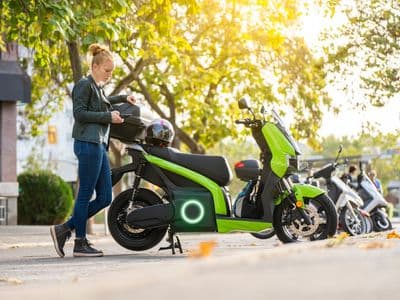
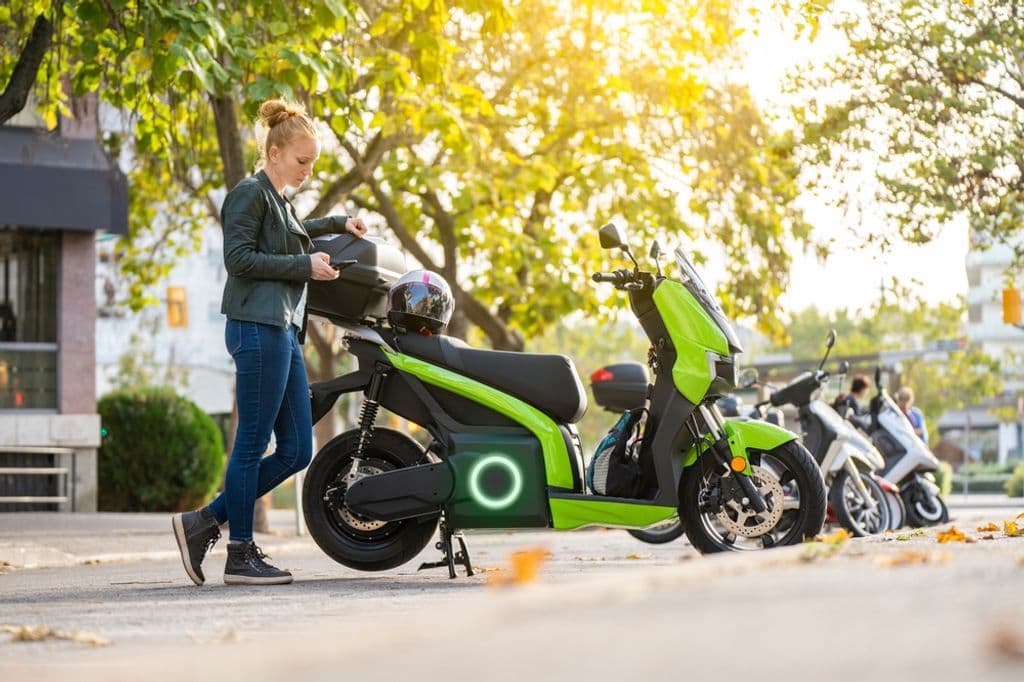
This type of electric scooter has a design similar to a conventional automatic scooter, with a spacious footboard and relatively light weight. It is suitable for food delivery, small parcel couriers, and online ride-hailing services.
Key factors to consider include battery capacity, ease of carrying goods, and vehicle maneuverability in congested urban areas.
2. Electric Cargo Motorcycle
Electric cargo motorcycles are designed to carry larger loads. They are generally equipped with stronger frames, specialized rear suspension, and mounts for storage boxes.
This type is suitable for logistics businesses, e-commerce deliveries, and daily goods distribution. Companies should consider load capacity, frame strength, and the motorcycle’s ability to handle inclines.
3. Electric Maxi Scooter
Electric maxi scooters are larger in size, feature wider seats, and are designed to support more comfortable long-distance travel.
They can be used for employee transportation, inter-area courier services, and company operations with high mobility requirements. Braking systems, stability, and battery capacity are important factors to consider when choosing this type of vehicle.
4. Three-Wheeled Electric Motorcycle
Three-wheeled electric motorcycles typically have storage space at the rear, either as an open cargo bed or an enclosed cargo compartment. Some models are also equipped with a reverse gear to make maneuvering easier.
These vehicles are suitable for distributing goods from warehouses to stores, delivering household equipment, and supporting catering businesses. Load capacity and vehicle stability should be among the main considerations.
Electric Motorcycle Technologies That Support Operations
In addition to vehicle design, drivetrain technology also affects electric motorcycle performance. Based on the type of electrical current used, there are DC motors, or Direct Current motors, which use direct current and are known for providing strong initial torque.
Meanwhile, AC motors, or Alternating Current motors, use alternating current and generally offer good efficiency and durability.
Based on motor placement, there are two main drivetrain systems:
- Hub Drive. The motor is installed directly on the wheel, typically the rear wheel. Its compact design makes it suitable for urban use.
- Mid Drive. The motor is positioned in the center of the frame and transfers power through a chain or belt. This configuration provides more balanced weight distribution and better support for uphill travel.
Another important innovation is the lithium-ion battery, which offers high energy capacity while remaining relatively lightweight.
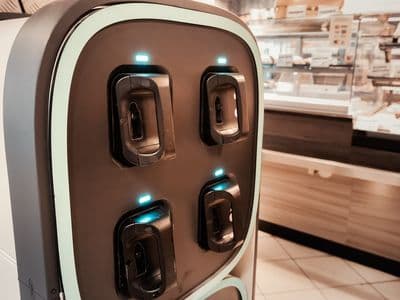
Battery Swapping Station (BSS) technology also allows riders to exchange depleted batteries for fully charged ones without having to wait for charging.
Meanwhile, GPS and Internet of Things (IoT) integration can help companies monitor vehicle location, energy use, and vehicle condition more easily.
Benefits of Using Electric Motorcycles for Business
Electric motorcycles can offer several advantages for companies that rely on vehicles for daily operations.
1. Lower Operating Costs
Electricity costs for operating an electric motorcycle can be lower than fuel expenses for covering the same distance. These savings can be particularly meaningful for logistics and transportation businesses with high travel intensity.
2. Simpler Maintenance
Electric motorcycles do not require several conventional engine components, such as spark plugs and engine oil. They also have fewer moving parts, which can reduce maintenance requirements.
However, battery condition, brakes, tires, and electrical systems still need to be inspected regularly.
3. Reduced Vehicle Emissions
Electric motorcycles do not produce direct exhaust emissions during operation.
Their use can help companies reduce the carbon footprint of transportation activities while supporting more sustainable business practices.
4. Easier Fleet Management
GPS and battery monitoring features can help companies oversee vehicle usage. This data can be used to plan routes and improve fleet operating efficiency.
Challenges of Using Electric Motorcycles for Business
Despite their advantages, electric motorcycles also come with several challenges. The initial investment required to purchase vehicles and batteries can be relatively high.
For this reason, companies need to calculate the total cost of ownership, or TCO, including energy expenses and long-term maintenance costs.
Driving range limitations and charging infrastructure also need to be considered. Businesses with high mobility requirements need sufficient battery capacity or access to a battery-swapping network to minimize vehicle downtime.
Companies should also ensure that load capacity matches operational needs and that authorized service centers and spare parts are available in their operating areas.
Read Also: Transition to EVs to Reduce Air Pollution Could Help Save 8.8 Million Lives
TBS and Electrum Support Indonesia’s Electric Vehicle Ecosystem
Choosing the right type of electric motorcycle is an important first step toward improving business efficiency. However, infrastructure support, battery technology, and vehicle services also play a key role in successful adoption.
One company contributing to the development of Indonesia’s electric vehicle ecosystem is TBS.
In 2021, TBS and GoTo Group established PT Energi Kreasi Bersama, or Electrum, to develop an integrated electric mobility ecosystem covering everything from vehicle assembly to battery-swapping infrastructure.
In 2022, Electrum collaborated with Pertamina, Gogoro, and Gesits to launch an electric vehicle ecosystem inaugurated by President Joko Widodo.
Electrum also provided 50 electric motorcycles, 11 shelters, and 150 Gojek driver partners to support the G20 and B20 Summits in Bali.
The ecosystem continued to expand through US$15 million in financing secured in December 2024 from the Asian Development Bank, the Australian Climate Finance Partnership, and Bank DBS Indonesia to support vehicle procurement and the expansion of the battery-swapping network.
Electrum also introduced the H3i electric motorcycle at IMOS 2024 and launched the H1 model in 2025.
By 2025, its achievements included more than 15,000 electric motorcycles in operation, 500 battery-swapping locations, and more than 19,000 battery swap transactions per day. The ecosystem had also contributed to avoiding more than 3,200 tonnes of carbon emissions.
Through Electrum and other clean energy initiatives, TBS continues to support the development of electric mobility in Indonesia. These efforts create opportunities for businesses to transition toward more efficient and sustainable transportation.