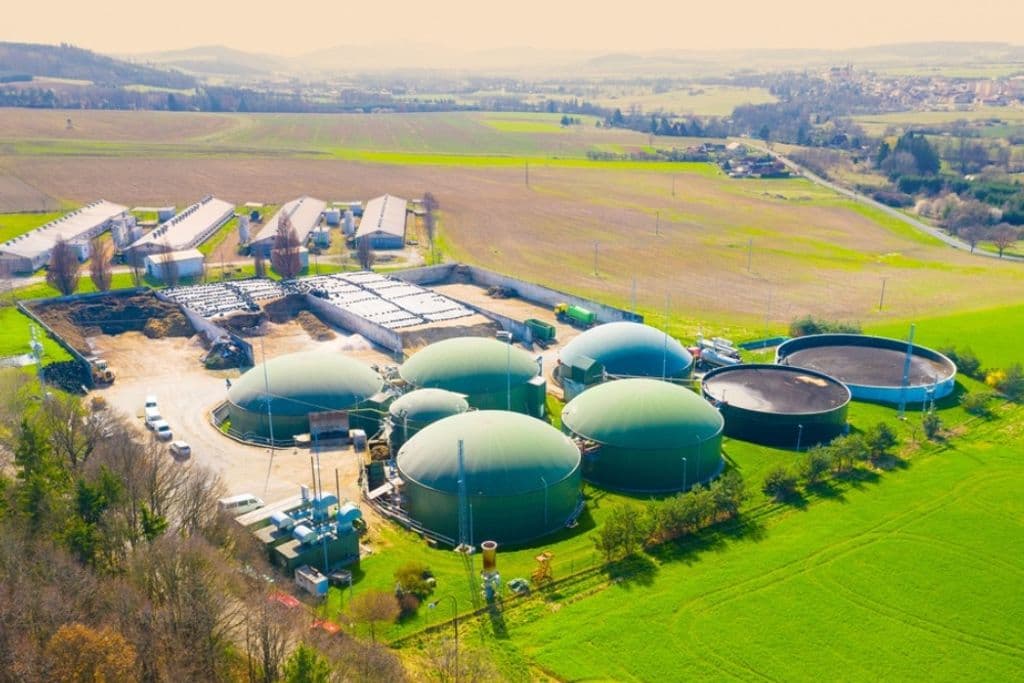
Biogas is a renewable energy source produced from the decomposition of organic matter without oxygen, offering great potential to reduce waste while generating clean energy.
When utilized properly, biogas can become a sustainable solution for energy needs, waste management, and reducing greenhouse gas emissions in Indonesia.
As energy demand rises and waste management challenges grow, biogas is becoming an increasingly relevant option.Indonesia has abundant raw materials such as household waste, agricultural residues, and livestock manure that can be converted into energy.
This article provides a complete overview from its definition and production process to its benefits and applications across various sectors.
What Is Biogas and How Does It Work?
In simple terms, biogas is a gas produced through the decomposition of organic materials such as food waste, animal manure, agricultural waste, and sludge in anaerobic (oxygen-free) conditions.
Biogas mainly consists of methane (CH₄), along with carbon dioxide (CO₂) and small amounts of other gases.
Methane is the most important component due to its high energy value, making biogas a cleaner alternative fuel compared to fossil fuels.
The Biogas Production Process
Biogas is produced through anaerobic digestion inside a system called a digester. This process occurs in four stages:
- Hydrolysis: complex molecules are broken down into simpler forms
- Acidogenesis: simple molecules are converted into organic acids
- Acetogenesis: organic acids are converted into acetic acid
- Methanogenesis: microorganisms produce methane as the main output
To ensure optimal production, several conditions must be maintained:
- Ideal temperature between 35–55°C
- Neutral pH (6.5–7.5)
- High moisture content
- Sufficient fermentation time
In Indonesia, biogas technology is increasingly being adopted, especially in rural areas and the livestock sector.
Benefits of Biogas for the Environment and Society
Biogas offers several important benefits, particularly relevant to Indonesia’s current conditions:
1. Renewable Energy Source
Biogas is renewable because it comes from organic waste that is continuously available, making it a long-term solution to reduce reliance on fossil fuels.
2. Reduces Waste and Pollution
Organic waste that would otherwise accumulate in landfills can be converted into energy, reducing odors, soil contamination, and health risks.
3. Lowers Greenhouse Gas Emissions
Methane is a potent greenhouse gas. Biogas systems capture and utilize it, preventing direct release into the atmosphere.
4. Cost-Effective Energy
For rural communities, biogas provides an affordable alternative for cooking and electricity without relying on LPG or fossil fuels.
5. Produces Organic Fertilizer
The byproduct of biogas production, called digestate, is nutrient-rich and can be used as natural fertilizer to improve soil fertility.
Applications of Biogas Across Sectors
Biogas is a flexible energy source that can be applied in both small-scale and large-scale settings:
1. Electricity Generation
Biogas can power generators to produce electricity, especially in remote areas without grid access.
2. Household Use
Many households use biogas for cooking, as it is cleaner and smokeless compared to firewood.
3. Vehicle Fuel
Biogas can be refined into biomethane and used as a cleaner fuel for vehicles.
4. Industry and Agriculture
Industries use biogas in production processes, while farmers utilize it to manage waste and produce organic fertilizer.
Challenges and Potential of Biogas Development in Indonesia
Despite its many benefits, biogas development in Indonesia faces several challenges:
- Limited public awareness
- High initial installation costs
- Limited access to technology in certain regions
However, its potential remains significant. With support from the government, private sector, and communities, biogas can become a key solution for energy and waste management in Indonesia.
Supporting Clean Energy with TBS Energi Utama
Biogas is a practical solution to address Indonesia’s energy and environmental challenges.
By utilizing abundant organic waste, biogas not only produces clean energy but also helps reduce pollution and improve economic efficiency.
In supporting sustainable energy, TBS Energi Utama (TBS) plays a key role in waste management one of the primary sources of biogas.
TBS develops waste management businesses covering medical, industrial, domestic, and hazardous waste, all of which have the potential to be converted into energy such as biogas.
TBS’s strategic steps began in 2023 with the acquisition of Asia Medical Enviro Services (AMES) and ARAH.
Both companies specialize in medical and hazardous waste management and were consolidated under PT Solusi Bersih TBS (SBT), strengthening TBS’s integrated waste management system.
In March 2025, TBS expanded further by fully acquiring Sembcorp Environment (SembEnviro), a Singapore-based company specializing in municipal waste management and recycling.
This acquisition enhanced TBS’s technological capabilities and expanded its market reach across Southeast Asia.
In September 2025, SembEnviro was officially rebranded as CORA Environment, unifying TBS’s waste management business under a modern and future-oriented identity.
To date, TBS has achieved:
- Operation of 5 waste processing facilities in Indonesia and Singapore
- Management of over 1,000,000 tons of waste in 2025
- Service coverage for more than 475,000 customers
Aligned with its TBS2030 roadmap, the company continues to innovate in developing integrated waste-to-resource solutions.
With strong technological capabilities, operational scale, and long-term vision, TBS Energi Utama is well-positioned to lead the development of environmentally friendly energy solutions such as biogas in Southeast Asia.
If you want to contribute to a greener future, understanding and supporting solutions like biogas alongside TBS Energi Utama is a great place to start.