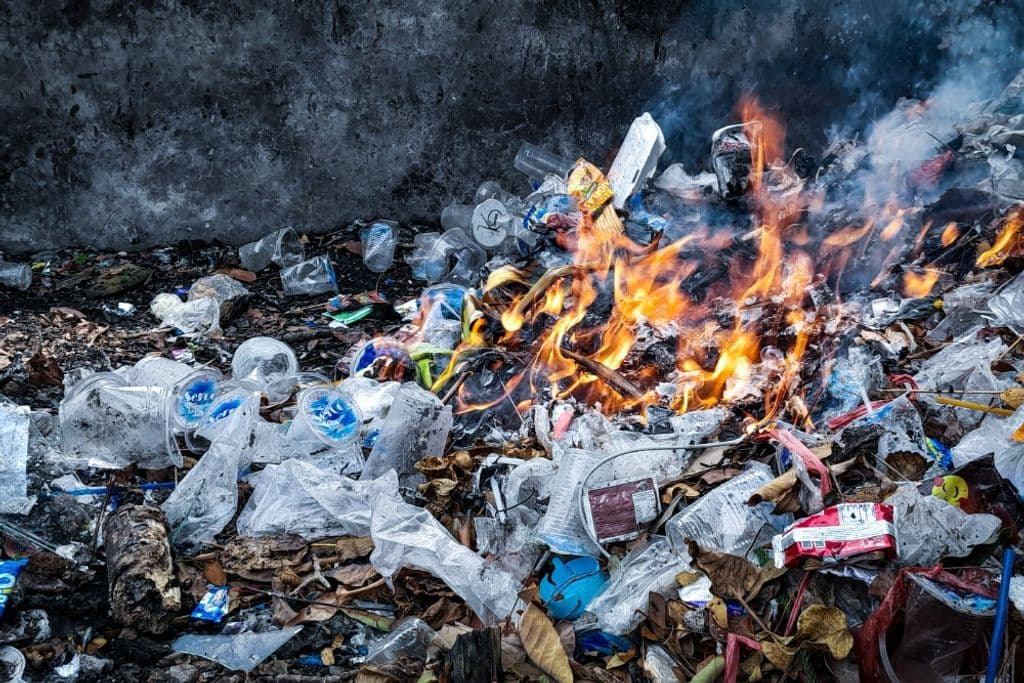
The impacts of waste burning go beyond air pollution. This practice can increase health risks, worsen climate change, and damage soil and water quality.
For this reason, stopping the habit of burning waste indiscriminately and adopting proper waste management practices are important steps toward protecting public health and the environment.
Unfortunately, burning household waste is still common in Indonesia because it is often considered practical, inexpensive, and fast.
In reality, the smoke produced contains various hazardous substances that can harm people nearby, especially children, older adults, pregnant women, and individuals with respiratory conditions.
In addition to affecting health, waste burning can also violate existing regulations and lead to penalties. The following sections explain the issue in more detail.
Related Article: The Secrets Behind Singapore’s Waste Management and Its Status as ASEAN’s Cleanest Country
The Impacts of Waste Burning on Health and the Environment
Many people consider burning waste the easiest way to reduce the amount of rubbish accumulating at home. However, this practice creates much greater problems. Below are several harmful impacts of waste burning.
1. Causes Air Pollution
When waste is burned, particularly plastic, rubber, or other synthetic materials, the combustion process releases fine particulate matter, or PM2.5, as well as carbon monoxide, dioxins, furans, formaldehyde, and volatile organic compounds, or VOCs.
Although these substances may not always be visible or noticeable, they can remain in the air and be inhaled by nearby communities.
Exposure to smoke from waste burning can cause coughing, eye irritation, a burning sensation in the nose, headaches, nausea, and asthma attacks in people with asthma.
2. Increases the Risk of Serious Illnesses
Continuous exposure to smoke from waste burning can increase the risk of various chronic illnesses, including:
- Respiratory disorders.
- Liver problems.
- Reduced immune system function.
- Reproductive system disorders.
- Certain types of cancer caused by long-term exposure to dioxins.
The groups most vulnerable to these risks include children, pregnant women, older adults, and people with heart or lung conditions.
3. Contaminates Soil and Water Sources
The impacts of waste burning do not end when the fire goes out. The remaining ash may contain heavy metals such as mercury, lead, and arsenic.
When this ash is disposed of on the ground, hazardous substances can seep into the soil and contaminate groundwater. Plants growing in the affected area may also absorb heavy metals, allowing them to enter the human and animal food chains.
Over the long term, exposure to heavy metals can increase the risk of high blood pressure, heart disease, stroke, kidney damage, and impaired brain function.
4. Worsens Climate Change
Open waste burning also produces carbon dioxide, or CO₂, methane, and black carbon, all of which contribute to global warming.
Black carbon produced during waste burning is a heat-absorbing particle that can accelerate the increase in global temperatures.
For this reason, household waste burning also indirectly contributes to climate change at both regional and global levels.
5. Creates Fire Hazards
Fire from waste burning can easily spread to dry grass, trees, or nearby buildings when it is not properly supervised. The risk becomes even greater during the dry season.
Regulations and Solutions for Reducing the Impacts of Waste Burning
The Indonesian government prohibits the indiscriminate burning of waste. Under Law No. 18 of 2008 on Waste Management, individuals are prohibited from burning waste in ways that do not comply with technical waste management requirements.
In recent years, local governments have also begun strengthening enforcement. One example occurred in Jakarta, where a resident was fined for burning waste and causing air pollution.
This enforcement serves as a reminder that waste management is a shared responsibility.
To reduce the impacts of waste burning, proper waste management should begin at home through several simple steps.
1. Sort Waste by Type
Organic waste, such as food scraps and leaves, can be processed into compost.
Meanwhile, inorganic waste, such as plastic bottles, paper, and metal, can be sent to waste banks or recycling facilities.
Hazardous and toxic waste, such as batteries, used light bulbs, and electronic waste, must be separated because it requires special handling and must not be burned.
2. Apply the Reduce, Reuse, and Recycle Principles
Reducing the use of single-use plastics, reusing items that are still suitable, and recycling waste are simple steps that can reduce the amount of waste sent to disposal sites.
Items that are still usable should also be donated to extend their useful life. They should not be discarded immediately, especially not burned.
3. Strengthen Community Collaboration
Successful waste management does not depend solely on the government.
Communities also play an important role by establishing waste banks, implementing household- and community-scale composting, and providing ongoing education in neighborhoods, schools, and villages.
Related Article: What Is a Carbon Footprint? Its Meaning, Causes, Impacts, and Ways to Reduce It
Building More Sustainable Waste Management with TBS Energi Utama
Reducing the impacts of waste burning requires support from all stakeholders, including communities, the government, and industry players.
One company contributing to the development of a more modern waste management system is TBS Energi Utama through its integrated waste management business in Indonesia and Southeast Asia.
In 2023, TBS Energi Utama established the foundation of its waste management business through the acquisition of Asia Medical Enviro Services, or AMES, and ARAH, companies with expertise in managing medical waste, hazardous and toxic waste, domestic waste, and electronic waste.
These operations were subsequently consolidated under PT Solusi Bersih TBS, or SBT, as the company’s waste management subholding.
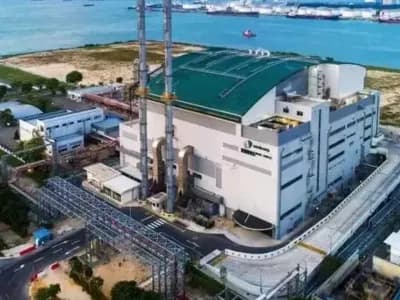
The next strategic step was completed in March 2025 through the full acquisition of Sembcorp Environment, or SembEnviro, in Singapore.
The company has experience in municipal waste management, recycling, and environmental solutions, strengthening TBS Energi Utama business scale, technological capabilities, and regional reach.
In September 2025, SembEnviro officially changed its name to CORA Environment.
The new identity brings all of TBS Energi Utama waste management businesses under one brand and supports its vision of becoming a leader in integrated waste-to-resource solutions across Southeast Asia.
Today, through AMES, ARAH, and CORA Environment, TBS Energi Utama operates five waste treatment facilities in Indonesia and Singapore, managed more than one million tons of waste throughout 2025, and served over 475,000 customers.
These achievements form part of the TBS2030 roadmap to minimize environmental impacts, strengthen sustainable waste management practices, and create long-term value for local communities and the wider Southeast Asian region.