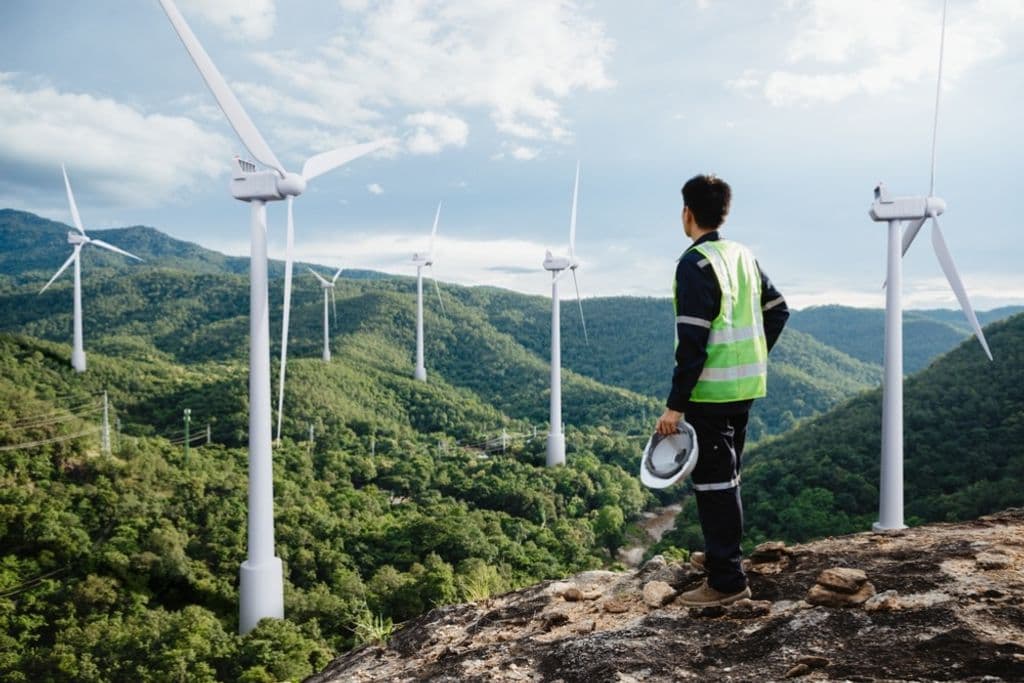
Green jobs are not limited to engineering graduates. They also offer opportunities for people interested in business, agriculture, tourism, design, and environmental management.
As Indonesia’s green economy continues to develop, more professions are contributing to sustainability while offering promising career prospects.
Growing public awareness of sustainable living, carbon emissions reduction targets, and the expansion of renewable energy are increasing demand for workers in green sectors.
It is therefore unsurprising that green jobs are predicted to become one of the fastest-growing career fields in the coming years.
What Are Green Jobs?
Green jobs are occupations that contribute to environmental preservation, reduce the impacts of climate change, and promote the sustainable use of natural resources.
These jobs are not limited to the environmental sector. They also exist across industries that incorporate environmentally responsible principles into their operations.
The International Labour Organization, or ILO, defines green jobs as decent work that helps reduce carbon emissions, improve energy efficiency, protect biodiversity, and support sustainable development.
In Indonesia, the Ministry of National Development Planning, or Bappenas, explains through its Green Jobs Roadmap that green jobs are occupations that preserve or restore the environment through specific tasks, specialized skills, environmentally friendly processes, or the production of more sustainable goods and services.
This concept is becoming increasingly important because it addresses two major challenges at once: climate change and the need for inclusive economic growth.
Related Article: Nationally Determined Contribution: How Ready Is Indonesia to Achieve Its Emissions Targets?
Why Are Green Jobs Increasingly Important?
The sustainable living trend has encouraged people to pay closer attention to the environmental impacts of the products and services they use. Many consumers now consider sustainability before making purchasing decisions.
This shift in behavior is influenced by several factors, including:
- Greater attention to health and quality of life, or personal wellness.
- Technological developments that support environmentally friendly lifestyles, or personal technology.
- Growing trust in institutions that implement sustainable business practices, or institutional trust.
At the same time, Indonesia’s 2020 Population Census showed that millennials and Generation Z dominate the country’s working-age population.
This creates a significant opportunity, as younger generations can play an important role in accelerating the transition toward a green economy through various green jobs.
Green Jobs Are Not Just for Engineering Graduates
Many people still associate environmentally friendly careers with engineers or technicians. In reality, green job opportunities are much broader and available across many fields.
1. Sustainable Fashion Designer
The fashion industry is gradually shifting toward sustainable fashion by using more environmentally friendly materials, reducing textile waste, and implementing more responsible production processes.
As a result, graduates in design and the creative industries have strong career opportunities in this sector.
2. Organic Food Entrepreneur
Growing public interest in healthy food has encouraged rapid growth in the organic food industry.
Activities ranging from food production and processing to the distribution of organic products are becoming part of an expanding green economy.
3. Ecotourism Guide
Indonesia has extraordinary natural wealth, which has contributed to the increasing popularity of ecotourism.
Tour guides not only help visitors enjoy natural attractions, but also educate them about environmental conservation, local culture, and the importance of protecting ecosystems.
4. Waste Management Startup Professional
Startups in the waste management sector are among the fastest-growing examples of green businesses and employment.
These companies connect communities, waste collectors, waste banks, and recycling industries to make waste management more efficient and support the circular economy.
5. Urban Farmer
Urban farming helps people in cities meet food needs while making productive use of limited land.
In addition to supporting food security, this profession can also help reduce the carbon footprint associated with food distribution.
6. Green Building Architect
Green building concepts are increasingly being applied to reduce energy consumption, maximize natural lighting, and use more environmentally friendly materials.
Architects play an important role in creating buildings that are more efficient and sustainable.
7. Renewable Energy Startup Professional
Many startups are developing technologies for energy efficiency, solar power systems, and electrification solutions in remote areas.
Careers in this sector are not limited to technical roles. They also require professionals in business, marketing, finance, and product development.
8. Electric Vehicle Technician
The growth of electric vehicles in Indonesia is increasing demand for qualified technicians.
These professionals are responsible for maintaining, diagnosing, and repairing electric vehicle systems, which are more environmentally friendly than fossil fuel-powered vehicles.
9. Geothermal Exploration Specialist
Indonesia has one of the largest geothermal energy potentials in the world.
Professionals in this field help develop geothermal resources as a clean energy source that can reduce dependence on fossil fuels.
10. Solar Energy Systems Technician
Solar panels are among the fastest-growing renewable energy technologies.
Solar energy systems technicians install, operate, and maintain solar panel systems to ensure they generate clean electricity efficiently.
Challenges Facing Green Jobs in Indonesia
Despite growing opportunities, Indonesia still faces several challenges in developing green jobs. One of the main issues is the shortage of workers with competencies that match the needs of green industries.
Technical and Vocational Education and Training, or TVET, must also continue adapting to produce graduates with relevant skills, particularly in renewable energy, green technology, and the circular economy.
Collaboration among the government, educational institutions, and industries must also be strengthened so that curricula, training programs, certifications, and recruitment processes are aligned with labor market needs.
Related Article: Net Zero Emissions: Definition, How to Achieve It, and Indonesia’s 2060 Target
Green Jobs Continue to Grow Alongside TBS Energi Utama Commitment
The development of green jobs in Indonesia is closely connected to increasing investment in renewable energy.
One company actively supporting the energy transition is TBS Energi Utama, through various clean energy projects that contribute to the creation of green employment opportunities.
In the hydropower sector, TBS Energi Utama began strengthening its renewable energy portfolio in 2020 through its subsidiary PT Toba Bara Energi, or TBAE, by acquiring PT Adimitra Energi Hidro, or AEH.
AEH developed a mini-hydropower plant with a capacity of 2 × 3 MW in Lampung.
The AEH mini-hydropower plant officially reached its Commercial Operation Date on January 22, 2025, and now supplies 6 MW of clean electricity to the Southern Sumatra power system.
TBS Energi Utama also acquired PT Bayu Alam Sejahtera, or BAS, which is developing wind energy potential in East Nusa Tenggara.
The company is also developing a Floating Solar PV Power Plant in Tembesi, Batam. The project achieved financial closing in 2024 and is targeted to begin commercial operations in 2026, when it will connect to the national electricity grid.
In addition to reducing carbon emissions and improving air quality, the project is expected to create new green jobs, strengthen technology transfer, and support sustainable development for communities in Batam.
TBS Energi Utama is also developing a 46 MWp Floating Solar PV project in Batam, further strengthening its contribution to clean energy development in Indonesia.
Through these investments, TBS Energi Utama demonstrates that the transition toward a green economy not only produces cleaner energy, but also creates more green job opportunities for people across Indonesia in the future.