Green hydrogen is emerging as an important solution in the energy transition toward a low-carbon future because it can produce clean energy without carbon emissions during the production process.
With its vast renewable energy potential, Indonesia has an opportunity to develop green hydrogen while strengthening national energy security and supporting its net zero emission target.
As energy demand continues to increase, the world is no longer focusing solely on supply availability but also on energy security and energy resilience.
Dependence on fossil fuels, particularly imported fuels, has encouraged many countries to accelerate the adoption of renewable energy.
In this context, green hydrogen is projected to play an important role, particularly in industries, transportation, and power generation.
What Is Green Hydrogen?
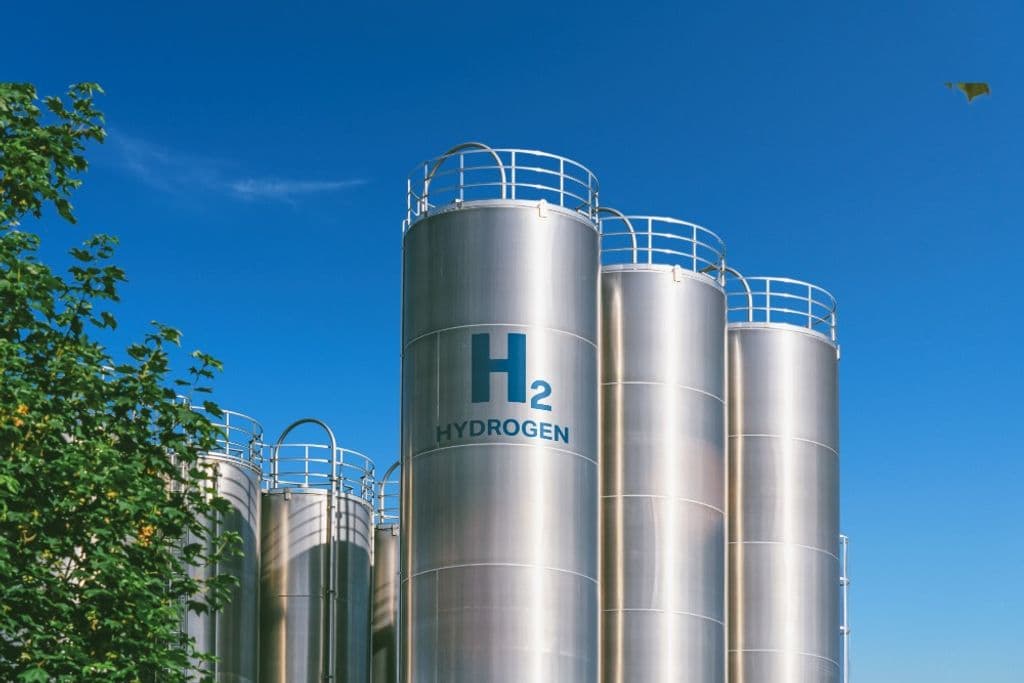
Green hydrogen is hydrogen produced using electricity generated from renewable energy sources, such as solar, hydropower, wind, and geothermal energy.
Unlike hydrogen produced from fossil fuels, the production of green hydrogen does not generate carbon dioxide (CO₂) emissions.
Hydrogen itself is the most abundant element in the universe. However, hydrogen cannot be extracted directly from nature and must therefore be produced through specific processes.
The most common method of producing green hydrogen is water electrolysis. In this process, an electric current is used to split water molecules (H₂O) into hydrogen (H₂) and oxygen (O₂).
When the electricity used comes from renewable energy sources, the resulting hydrogen is considered clean energy.
In addition to electrolysis, hydrogen can also be produced through steam reforming using natural gas. However, this method produces gray hydrogen because it still generates carbon emissions.
A more environmentally friendly alternative is to replace natural gas with biomethane derived from organic waste.
According to the International Energy Agency (IEA), fossil fuel-based hydrogen production generates approximately 830 million tons of CO₂ annually. Therefore, the development of green hydrogen is considered an important step toward reducing global emissions.
Read Also: The Potential of Hydrogen Energy for the Future of Clean Energy in Indonesia
Why Is Green Hydrogen Important?
Green hydrogen offers various advantages that make it one of the energy sources considered essential to the future.
1. Supporting Decarbonization
Green hydrogen does not generate carbon emissions during its production or when used as a fuel.
Therefore, this technology has the potential to help decarbonize sectors that are difficult to electrify, such as heavy industry, shipping, and aviation.
2. Easy to Store
Energy generated from solar and wind power is intermittent because it depends on weather conditions. Green hydrogen can serve as an energy storage medium, allowing electricity generated from renewable energy to be stored and used when needed.
3. Versatile Applications
Green hydrogen can be converted into electricity and synthetic fuels or used as an industrial feedstock for products such as ammonia, steel, and ceramics, as well as for transportation.
Nevertheless, the development of green hydrogen still faces several challenges, including:
- Relatively high production costs.
- Significant electricity requirements for the electrolysis process.
- Hydrogen is highly flammable, requiring strict safety standards for storage and distribution.
However, various international institutions estimate that the cost of producing green hydrogen will continue to decline as renewable energy generation becomes increasingly affordable.
Indonesia Has Significant Green Hydrogen Potential
Indonesia is one of the countries with significant potential for green hydrogen development due to its abundant renewable energy resources.
Based on a study by the Institute for Essential Services Reform (IESR) under the Green Energy Transition Indonesia (GETI) project, Indonesia has the potential to produce up to 345.6 million tons of green hydrogen per year from approximately 15,800 locations with renewable energy potential.
However, not all of these locations are currently economically viable. Approximately 87% of the locations still have production costs above USD 12 per kilogram.
Meanwhile, around 50.7 million tons per year are estimated to have production costs below USD 12 per kilogram, making them more ready for development.
According to IESR, geothermal power plants offer the most stable production costs. Meanwhile, the lowest production costs could potentially be achieved through solar and hydropower plants.
However, project site selection must still take into account the conditions of each region, including energy potential and local industrial demand.
On the demand side, IESR estimates that Indonesia's hydrogen demand could reach 37.3 million tons per year under an optimistic scenario. The electricity and shipping sectors are projected to be the largest users.
IESR's spatial analysis also identified 14 hydrogen demand clusters across Indonesia. West Java is one of the key regions due to its high concentration of industries, ports, and economic activity.
Meanwhile, East Kalimantan has significant potential due to the presence of fertilizer industries that could serve as an initial anchor demand.
IESR also emphasizes that electricity prices are a key factor determining green hydrogen production costs.
A 60% reduction in electricity prices is estimated to lower the price of hydrogen from approximately USD 4 per kilogram to around USD 2 per kilogram.
Therefore, accelerating the development of renewable energy power plants is an important step toward improving the competitiveness of green hydrogen in Indonesia.
Read Also: Clean Energy: Definition, Benefits, Types, and Examples in Indonesia
Together with TBS Energit Utama, Supporting the Future of Green Hydrogen and Renewable Energy
The development of green hydrogen cannot be separated from the broader adoption of renewable energy in Indonesia. The greater the availability of clean energy capacity, the more competitive the cost of producing green hydrogen will become in the future.
As part of these efforts, TBS Energit Utama continues to expand its renewable energy portfolio through various strategic projects across Indonesia.
In 2020, through its subsidiary PT Toba Bara Energi (TBAE), TBS Energit Utama acquired PT Adimitra Energi Hidro (AEH), the developer of a 2×3 MW Mini-Hydropower Plant (PLTM) in Sumberjaya, Lampung, as well as PT Bayu Alam Sejahtera (BAS), which is developing wind energy potential in East Nusa Tenggara.
The AEH Mini-Hydropower Plant achieved Commercial Operation Date (COD) on January 22, 2025, and began supplying 6 MW of clean energy to the Southern Sumatra (Sumbagsel) electricity system.
In addition to generating stable electricity, the project also benefits local communities through infrastructure development, improved access to electricity, and environmental conservation.
TBS Energit Utama is also developing the Tembesi Floating Solar Power Plant (PLTS) in Batam. The project achieved financial closing in 2024 and is targeted to begin commercial operations in 2026 while connecting to the national electricity grid.
The Tembesi Floating Solar Power Plant is expected to reduce carbon emissions, improve air quality, create green jobs, and promote technology transfer and collaboration with local communities.
Through the development of various renewable energy projects, TBS Energit Utama is not only contributing to strengthening Indonesia's clean energy mix but also helping to establish the foundation needed to support the development of green hydrogen in Indonesia.
With the growing adoption of renewable energy, Indonesia has a significant opportunity to build a cleaner, more self-sufficient, and sustainable energy system together with TBS Energit Utama.