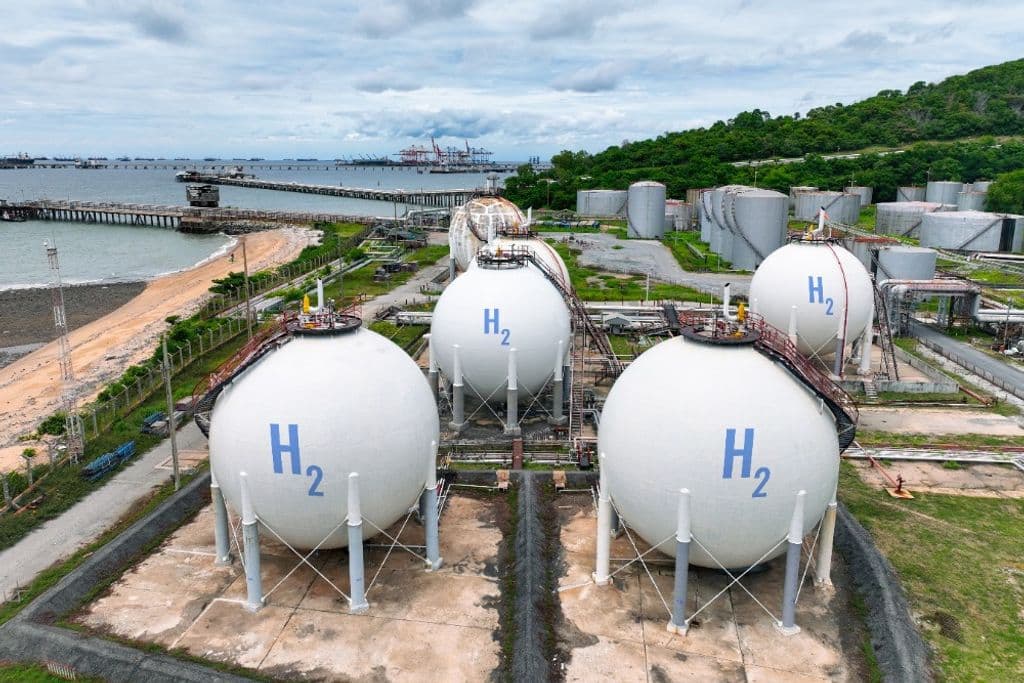
Hydrogen energy is increasingly seen as an important solution to support the transition toward clean energy and achieve Net Zero Emissions targets.
With its vast renewable energy potential, Indonesia has the opportunity to become a major player in the development of green hydrogen, both for domestic needs and the global export market.
Amid the growing demand for environmentally friendly energy, green hydrogen offers a carbon-free energy source that can be used across various sectors, ranging from heavy industry and transportation to power generation.
Governments, industries, and businesses are now beginning to view hydrogen energy as an essential part of Indonesia’s future energy landscape.
Indonesia itself is rich in renewable energy resources such as solar, hydro, geothermal, and wind power.
This potential provides a strong foundation for building a sustainable green hydrogen ecosystem while also creating future green economic opportunities.
What Is Green Hydrogen?
Green hydrogen is hydrogen produced through the electrolysis of water, a process that separates water molecules (H₂O) into hydrogen (H₂) and oxygen (O₂) using electricity generated from renewable energy sources such as solar, hydro, or wind power.
Unlike gray hydrogen, which is produced from natural gas or coal, green hydrogen does not generate carbon emissions during production. That is why this type of hydrogen energy is considered one of the cleanest energy solutions in the world.
In addition to green hydrogen, there are several other types of hydrogen, including:
- Gray hydrogen: Produced from fossil fuels and generates carbon emissions.
- Blue hydrogen: Produced from fossil fuels, but the emissions are captured and stored.
- Pink hydrogen: Produced using nuclear energy.
Among these types, green hydrogen is considered the primary option in global decarbonization efforts.
Why Is Hydrogen Energy Becoming More Popular?
The use of hydrogen energy continues to grow because it offers several strategic advantages, especially in supporting low-carbon energy systems.
1. Produces No Carbon Emissions
Green hydrogen can be used as a fuel without producing carbon dioxide emissions. This makes it highly promising for supporting global emission reduction targets.
2. Long-Term Energy Storage Solution
Hydrogen can be stored in large quantities and reused when needed. Its storage capacity is also easier to scale compared to conventional batteries.
3. Supports Heavy Industry and Transportation
Hydrogen energy is suitable for sectors that are difficult to electrify directly, such as steel manufacturing, shipping, aviation, and heavy-duty vehicles.
4. Faster Refueling Time
Hydrogen-powered vehicles only require around 3–5 minutes for a full refill, significantly faster than charging battery electric vehicles.
5. Massive Market Potential
The global green hydrogen market is projected to continue growing over the coming decades as worldwide demand for clean energy increases.
Indonesia’s Huge Potential for Hydrogen Energy
Indonesia has significant opportunities in hydrogen energy development due to its abundant renewable energy resources spread across the country.
Based on various national energy studies, Indonesia’s technical energy capacity potential for green hydrogen production is estimated to exceed 38 GW, with potential regions including:
- Sumatra: 6 GW
- Java: 4 GW
- Kalimantan: 7 GW
- Sulawesi: 3 GW
- Maluku and Papua: 16 GW
- Nusa Tenggara: 2 GW
In addition, a study by the Institute for Essential Services Reform (IESR) stated that Indonesia’s green hydrogen production potential could reach hundreds of millions of tons per year.
However, early development still needs to focus on locations and sectors that are economically ready.
Hydrogen demand in Indonesia is also expected to increase rapidly after 2030. In an optimistic scenario, hydrogen demand could reach tens of millions of tons annually, especially for the power, shipping, fertilizer, and industrial sectors.
Regions such as West Java and East Kalimantan are considered highly promising as hydrogen energy development hubs due to their strong industrial and port activities.
Challenges in Developing Green Hydrogen
Despite its enormous potential, green hydrogen development in Indonesia still faces several major challenges.
1. Production Costs Remain High
The cost of producing green hydrogen is currently still more expensive than fossil-fuel-based hydrogen. One of the main factors is the cost of renewable electricity.
However, these costs are expected to decrease as technology advances and clean energy investment continues to grow.
2. Limited Infrastructure
Green hydrogen development requires entirely new infrastructure, ranging from production and storage to transportation and distribution systems.
3. Safety Concerns
Hydrogen is highly flammable and therefore requires strict safety standards for storage and use.
4. Large Funding Requirements
Hydrogen energy projects require long-term investment support and strong government policies to develop sustainably.
Indonesia’s Path Toward a Hydrogen Energy Ecosystem
The Indonesian government has begun preparing a hydrogen development strategy through the National Hydrogen and Ammonia Roadmap (RHAN) 2060.
This roadmap serves as the foundation for developing a national hydrogen ecosystem aligned with Indonesia’s energy transition policies.
In addition to regulatory support, hydrogen energy development also requires collaboration among government institutions, industries, financial organizations, and the private sector to accelerate implementation.
The development of renewable energy such as solar, hydro, geothermal, and wind power will also play a critical role in lowering future green hydrogen production costs.
TBS and Its Commitment to Supporting Clean Energy in Indonesia
As part of its commitment to supporting Indonesia’s energy transition, TBS Energi Utama continues expanding its renewable energy portfolio through several strategic projects.
1. Mini Hydro Power Plant in Lampung
In 2020, through its subsidiary PT Toba Bara Energi (TBAE), TBS acquired PT Adimitra Energi Hidro (AEH), which developed a 2x3 MW Mini Hydro Power Plant in Lampung.
The project officially reached Commercial Operation Date (COD) on January 22, 2025, and now contributes 6 MW of clean energy to the Southern Sumatra region.
This mini hydro power plant not only produces environmentally friendly energy but also supports local infrastructure development, improves community electricity access, and contributes to environmental conservation.
2. Floating Solar PV in Tembesi, Batam
TBS is also developing a Floating Solar PV project in Tembesi, Batam. Key achievements of the project include:
- Financial Closing successfully completed in 2024.
- Targeted full commercial operation by 2026.
- Integration with the national electricity grid.
In addition to reducing carbon emissions, the project is expected to create new green jobs, improve air quality, and strengthen clean energy technology development in Indonesia.
Currently, TBS is also developing:
- A 46 MWp Floating Solar PV project in Batam.
- A 6 MW Mini Hydro project in Lampung, which reached COD in January 2025.
Through these projects, TBS demonstrates its commitment to supporting clean energy development and accelerating the transition toward a more sustainable energy future in Indonesia.
With Indonesia’s enormous renewable energy potential, strong government support, and participation from companies such as TBS Energi Utama, hydrogen energy has the opportunity to become one of the key pillars of Indonesia’s future energy transformation.