Electric cars operate by using electrical energy stored in batteries to power a motor, allowing the vehicle to move without relying on fuel (gasoline or diesel).
This technology is known for being more efficient, environmentally friendly, and a key solution for future transportation especially in Indonesia, where awareness of clean energy continues to grow. Here’s a complete explanation.
What Is an Electric Car and Does It Need Fuel?
Many people ask whether electric cars require fuel like conventional vehicles. The answer is no electric cars do not use gasoline.
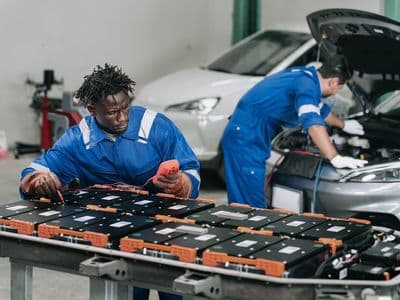
As the name suggests, electric cars use electricity as their primary energy source, stored in rechargeable batteries.
Unlike conventional vehicles that rely on internal combustion engines, electric cars operate with a much simpler system. Electricity from the battery is directly used to power the motor without combustion.
This makes electric cars more efficient, as far less energy is wasted. In addition, they offer several advantages:
- Zero tailpipe emissions
- More energy-efficient than gasoline vehicles
- Lower maintenance due to fewer components
- Quieter operation with minimal noise
With these benefits, it’s no surprise that electric cars are gaining popularity as the future of transportation, including in Indonesia.
How Do Electric Cars Work?
To understand how electric cars work, it’s important to see how electrical energy is converted into motion. The process works as follows:
- The driver presses the accelerator pedal
- The controller receives the signal
- The controller regulates power flow from the battery
- Electricity is sent to the inverter
- The inverter converts DC into AC
- The electric motor receives power and rotates
- The motor transfers motion to the wheels through the transmission
- The car begins to move
One key technology in this system is regenerative braking. When the driver slows down or brakes, the motor acts as a generator.
Energy that would normally be lost is converted back into electricity and stored in the battery.
This system improves energy efficiency and extends battery life. It also reduces wear on braking components since it relies less on mechanical friction.
How Electric Cars Work Based on Their Types
Although the core concept is similar, different types of electric cars operate slightly differently.
1. Battery Electric Vehicle (BEV)
BEVs are fully electric and rely entirely on batteries without any gasoline engine.
How it works:
- Electricity is stored in a large battery
- The inverter converts current before it reaches the motor
- The motor powers the wheels
- Regenerative braking helps recharge the battery
2. Hybrid Electric Vehicle (HEV)
HEVs combine a gasoline engine with an electric motor.
How it works:
- The gasoline engine and electric motor operate together
- The battery is charged through the engine or regenerative braking
- No external charging is required
3. Plug-in Hybrid Electric Vehicle (PHEV)
PHEVs are an advanced version of HEVs that can be charged externally.
How it works:
- Can run fully on electricity for a limited range
- Switches to a gasoline engine when the battery is depleted
- Battery can be charged via an external charger
4. Fuel Cell Electric Vehicle (FCEV)
FCEVs generate electricity using hydrogen through fuel cell technology.
How it works:
- Hydrogen is converted into electricity
- The electric motor powers the vehicle
- The only emission is water vapor
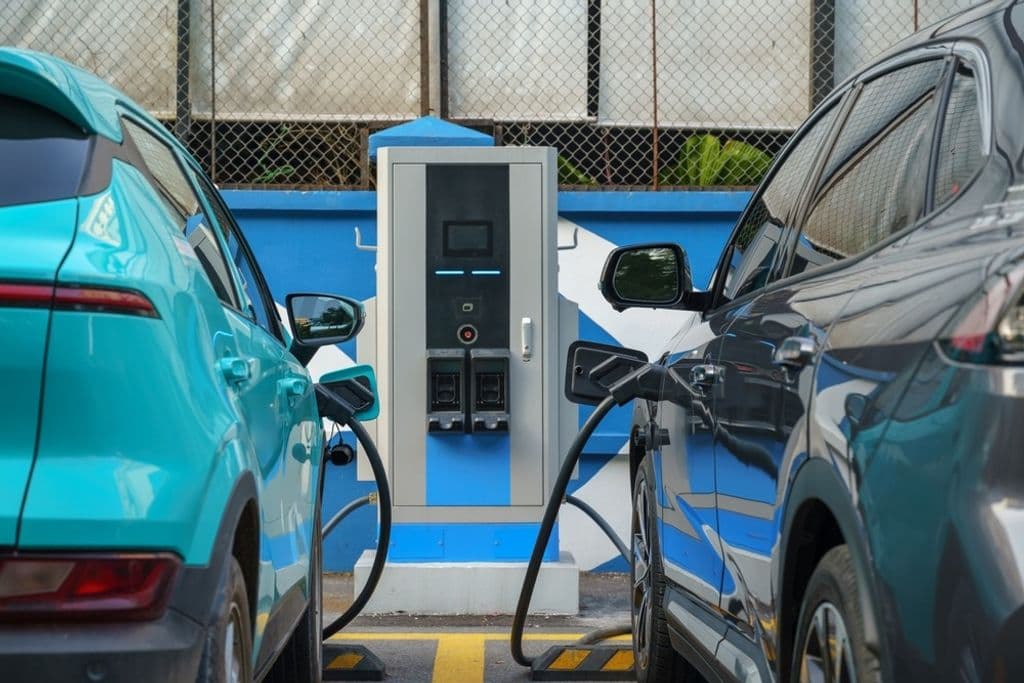
How to Charge an Electric Car
Understanding EV operation also includes knowing how charging works.
1. Home Charging
This is the most practical option for daily use.
- Level 1 (standard voltage)
- Level 2 (higher voltage)
- Charging time: approximately 9–13 hours
2. Public Charging Stations
Fast charging is available at public stations.
- Charging time: 30–60 minutes up to 80%
- Suitable for long-distance travel
Charging speed depends on factors such as battery capacity, charger type, temperature, and vehicle condition.
Electric Vehicle Development in Indonesia
Indonesia is actively promoting electric vehicles as part of its clean energy transition.
The government has introduced various policies, including purchase incentives, charging infrastructure development, and domestic battery industry support.
Public awareness of environmental issues is also increasing, making electric cars not just a trend, but a future necessity.
Major cities such as Jakarta, Bandung, and Surabaya are expanding EV infrastructure, making it easier for people to switch from fossil fuel vehicles.
Electric Car Technology and Ecosystem Support in Indonesia
Understanding how electric cars work highlights that they no longer depend on fossil fuels, but on more efficient and environmentally friendly electricity.
With simpler systems, lower maintenance, and higher efficiency, electric cars are a highly relevant transportation solution for Indonesia’s future.
However, successful adoption depends not only on technology but also on supporting ecosystems.
This is where various stakeholders play a role, including TBS Energi Utama, which contributes through collaboration with GoTo Group in building Electrum.
Electrum focuses on developing electric two wheelers, battery technology, and battery swapping infrastructure to make charging more convenient.
Key contributions include:
- Over 6,000 electric vehicles operating by 2025
- More than 370 battery swapping stations
- Over 19,000 battery swaps per day
- Reduction of more than 3,200 tons of CO₂ emissions
In addition, Electrum continues to innovate through electric motorcycle models such as H3i and Electrum H1 while expanding its infrastructure network.
With a growing ecosystem and contributions from TBS Energi Utama, the future of electric vehicles in Indonesia looks increasingly promising.
Now is the time for people to consider electric cars as a primary choice for transportation that is more efficient, cost effective, and environmentally friendly.