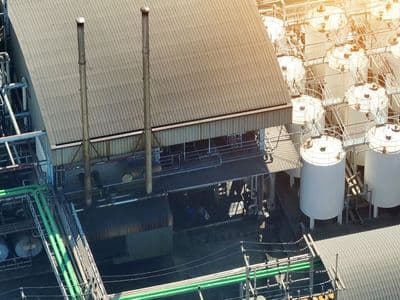
Industrial waste management is an important part of helping companies reduce environmental impacts, protect public health, and comply with applicable regulations.
Challenges such as waste segregation, limited technology, treatment costs, and regulatory compliance require integrated solutions, from reducing waste at the source to recovering and reusing it as a resource.
For this reason, companies need to understand the different types of industrial waste, the challenges involved in managing them, and the strategies that can be applied to ensure industrial activities remain sustainable.
Types of Industrial Waste
Industrial waste can come from production processes, raw material use, operational activities, and consumption. In general, industrial waste can be divided into several categories.
1. Hazardous and Toxic Waste
Hazardous and toxic waste refers to waste containing substances that can pose risks to people and the environment. It may come in solid, liquid, or gaseous form.
Examples include medical waste, electronic waste, petroleum-related waste, and materials containing hazardous substances. Managing this type of waste requires specific procedures covering segregation, storage, transportation, treatment, and disposal.
2. Industrial Liquid Waste
Liquid waste is generated by various industrial processes, such as washing, cooling, and raw material processing.
Textile, food and beverage, chemical, and pharmaceutical industries are among the sectors that generate significant amounts of wastewater.
If not properly treated, liquid waste can pollute rivers, soil, and water sources while disrupting aquatic ecosystems.
3. Industrial Solid Waste
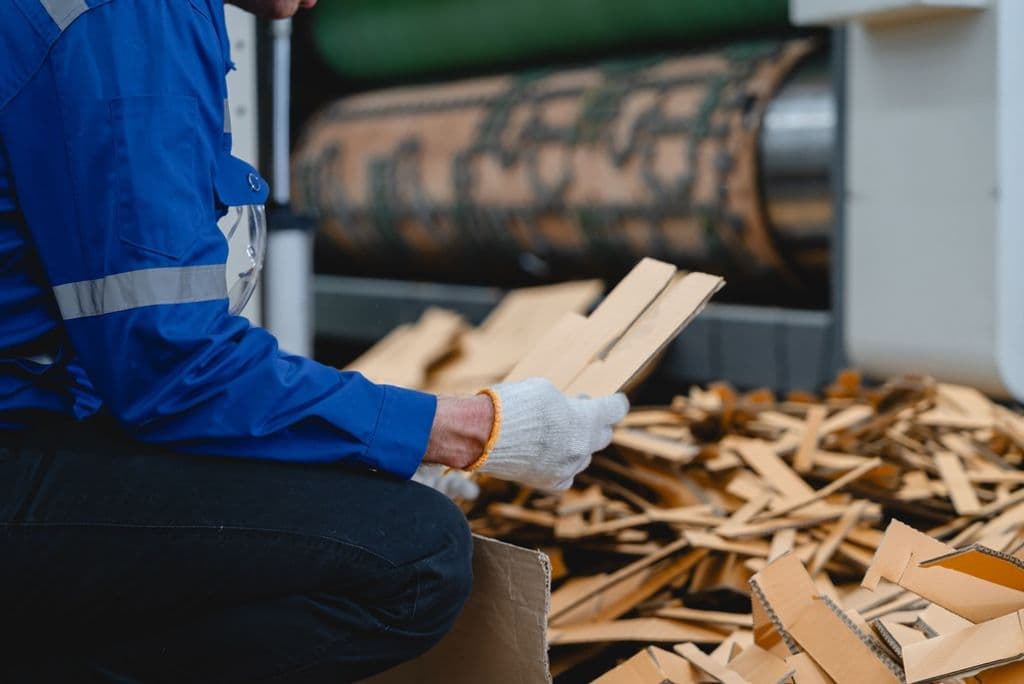
Solid waste consists of residual materials from production or consumption activities, such as plastic, paper, textiles, metals, wood, and glass.
Solid waste can be classified as either hazardous or non-hazardous.
Non-hazardous solid waste that still has useful value can be recycled or reused as an alternative raw material.
4. Industrial Gaseous Waste
Gaseous waste is typically generated by combustion and heating processes.
Industrial stack emissions may contain carbon monoxide (CO), nitrogen dioxide (NO2), sulfur dioxide (SO2), hydrocarbons, and fine particulate matter.
Without proper controls, these emissions can reduce air quality and contribute to climate change.
Related Article: Waste to Energy: Technology for Converting Waste into Environmentally Friendly Energy
Industrial Waste Management Challenges
Implementing industrial waste management is not always straightforward.
Companies need to address various challenges related to human resources, technology, infrastructure, costs, and regulations.
1. Waste Segregation at the Source
One fundamental issue is the failure to separate waste based on its type.
Mixing hazardous and non-hazardous waste can increase treatment costs while also creating safety risks.
2. Limited Technology and Infrastructure
More advanced waste treatment technologies require investment and skilled personnel.
Old or poorly maintained facilities can also lead to leaks, waste accumulation, and potential exposure risks for workers.
3. Lack of Awareness and Training
Effective waste management requires the involvement of all employees.
However, limited understanding of waste categories, segregation procedures, and disposal requirements can result in improper handling.
4. Regulatory Compliance
Companies must also comply with various environmental regulations, waste management standards, and procedures for transporting and treating hazardous waste.
Changes in regulations can create additional challenges for industrial facility operators.
5. Treatment and Disposal Costs
Waste treatment and disposal, particularly for hazardous waste, can involve significant costs.
Without proper planning, these expenses can place additional pressure on company operations.
6. Third-Party Waste Management
Companies using third-party waste management services need to ensure that service providers have the required licenses and comply with applicable regulations.
Choosing an unsuitable vendor can create both legal and environmental risks.
Industrial Waste Management Solutions
These challenges can be addressed by implementing a well-planned and integrated waste management system.
1. Reduce Waste at the Source
Waste reduction should begin during the production process.
Companies can improve raw material efficiency, reduce packaging, align production with actual demand, and optimize manufacturing processes to generate less waste.
The principles of reduce, reuse, recycle, recover, and dispose can also be applied as a waste management hierarchy.
The more companies can reduce and recover waste, the less material ultimately needs to be disposed of.
2. Implement Segregation and Labeling
Different storage containers should be used for each waste category.
Color-coded bins, hazard labels, and dedicated storage areas can help prevent cross-contamination.
Hazardous waste should also be stored in secure containers that are suitable for its specific characteristics before being transported or processed further.
3. Use Technology
Technology can help companies process waste while reducing the amount sent for disposal.
Recycling technologies can recover valuable materials, while waste-to-energy solutions can convert certain types of waste into usable energy.
Real-time monitoring systems and data analytics can also help companies estimate waste volumes, optimize production processes, and identify potential inefficiencies.
4. Improve Employee Competencies
Regular training is important to ensure employees understand how to segregate, store, and handle waste safely.
Companies can also develop standard operating procedures, technical guidelines, and incentive programs for employees who contribute ideas to reduce waste.
5. Conduct Regular Audits
Waste audits help companies identify the types and volumes of waste they generate.
Audit findings can then be used to identify waste reduction opportunities, improve efficiency, and ensure regulatory compliance.
Waste Management in Asia and Indonesia
Waste management is becoming increasingly important as urbanization and infrastructure development accelerate across Asia.
China, India, and Japan are experiencing rising volumes of construction and demolition waste as urban development and infrastructure expansion continue.
In India, the construction sector generates around 150–500 million tons of construction and demolition waste each year.
Meanwhile, China processed approximately 1.8 billion tons of construction waste in 2022.
These conditions highlight the growing need for recycling facilities and more effective waste management systems.
Similar developments are also creating opportunities in Indonesia.
Industrial growth, urbanization, and infrastructure development are increasing demand for safe and sustainable waste management services.
Related Article: Waste Management Systems: From 3R to 9R for a Greener Future
Leading Integrated Waste Management in Southeast Asia with TBS
To address these needs, TBS is strengthening its integrated waste management capabilities in Indonesia and Singapore.
This initiative began in 2023 with the acquisition of Asia Medical Enviro Services, or AMES, and ARAH, two companies operating in the management of medical, hazardous and toxic, household, and electronic waste.
The two entities were subsequently consolidated under PT Solusi Bersih TBS, or SBT, as a sub-holding focused on waste management.
In March 2025, TBS completed the full acquisition of Sembcorp Environment, or SembEnviro, a Singapore-based company with expertise in municipal waste management, recycling, and environmental solutions.
The acquisition expanded TBS’s scale, technology, and market reach across the region.
Then, in September 2025, SembEnviro was officially renamed CORA Environment.
The new identity brings TBS’s waste management units together under one brand and supports the company’s vision of developing waste-to-resource solutions across Southeast Asia.
With AMES, ARAH, and CORA operating under one platform, TBS continues to implement the TBS2030 roadmap to support sustainability targets, reduce environmental impacts, and create long-term value.
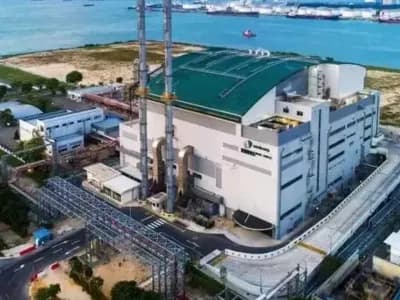
TBS currently operates five waste management facilities in Indonesia and Singapore.
Throughout 2025, more than 970,000 tons of waste were processed, while TBS’s services reached more than 475,000 active customers.
Ultimately, the challenges of industrial waste management cannot be solved simply by disposing of waste safely.
Companies need to reduce waste at the source, improve segregation, adopt appropriate technologies, train employees, and build integrated waste management systems.
By strengthening its capabilities in Indonesia and Singapore and integrating AMES, ARAH, and CORA Environment, TBS continues to develop integrated waste management solutions that support more sustainable resource use.