Waste management in Singapore is one of the main factors behind the country’s reputation as the cleanest nation in ASEAN.
This success is supported not only by modern technology, but also by strict regulations, an integrated management system, and public participation in reducing and sorting waste at the source.
Over the past several decades, Singapore has demonstrated that limited land availability does not prevent a country from creating a clean and healthy environment.
Despite its small land area, Singapore has developed an efficient waste management system that allows much of its waste to be reused, converted into energy, or disposed of with minimal environmental impact.
This achievement provides a valuable example for many countries, including Indonesia.
With a much larger population and waste volumes that continue to increase every year, Indonesia needs a more modern, integrated, and sustainable waste management system to reduce environmental pollution while supporting the development of a circular economy.
Waste Management in Singapore Is Fully Integrated
One of the reasons Singapore is consistently recognized as one of the cleanest countries in Southeast Asia is that its entire waste management process is handled comprehensively, from collection and sorting to treatment and final disposal.
The entire system is supervised by the National Environment Agency, or NEA, which is responsible for planning, developing, and regulating the management of solid and hazardous waste.
Strict regulations are also applied to ensure that each type of waste is handled according to its specific characteristics.
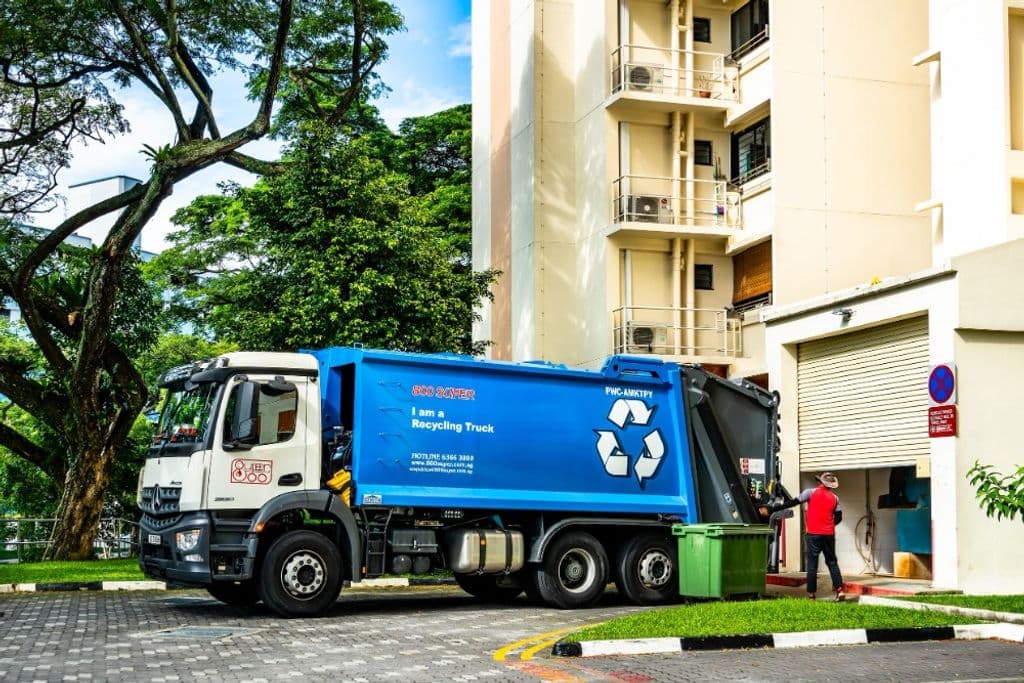
For public facilities such as Housing and Development Board residential areas, government buildings, and public spaces, the NEA appoints designated companies to collect and transport waste.
Meanwhile, private companies and commercial areas may choose licensed waste collection companies known as General Waste Collectors, or GWCs.
Waste Is Sorted at the Source
One of the key factors behind the success of waste management in Singapore is that waste is sorted before collection. In general, waste is divided into several categories:
- Recyclable waste, such as paper, plastic, glass, and metal.
- Organic waste, including food scraps and green waste, which must be separated to prevent odors and health risks.
- Hazardous waste, such as batteries, used oil, chemical-based paint, and industrial waste that requires special handling.
- General waste, consisting of materials that cannot be recycled and are not classified as hazardous waste.
This sorting system makes the treatment process far more effective while increasing the opportunity to recover valuable materials for recycling.
Related Article: Sanitary Landfills: An Environmentally Friendly Waste Management Method
Waste Is Converted into Energy
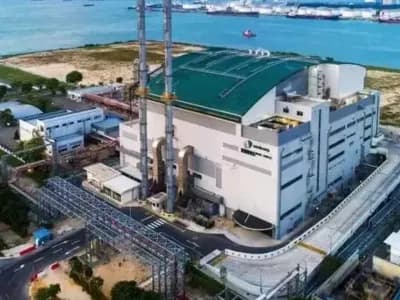
Unlike many countries that still rely heavily on landfills, Singapore sends most of its general waste to Waste-to-Energy, or WTE, facilities.
At these facilities, waste is burned using modern incineration technology. The heat generated during the process is then used to produce electricity, allowing waste volume to be reduced while also generating energy.
Through incineration, waste volume can be reduced by approximately 90%. The remaining ash is transported to Semakau Landfill, an offshore disposal site and Singapore’s only active landfill.
Waste that still has recycling value is first sent to sorting facilities.
Materials that can still be used are processed into new raw materials, while the remaining non-recyclable materials are redirected to Waste-to-Energy facilities.
Why Is Waste Management in Singapore Successful?
Singapore’s waste management success is not based solely on the use of advanced technology. The government also implements long-term strategies involving the public, businesses, and consistent law enforcement.
1. A Strong Focus on Waste Reduction
Singapore recognizes that population growth and economic activity will continue to increase the amount of waste generated each year.
For this reason, the government encourages residents to reduce waste at the source through various initiatives supporting its Zero Waste goals.
This approach is intended to reduce dependence on landfills, which have limited capacity.
2. Strict Regulations
Hazardous industrial waste receives particular attention from the Singapore government. Various regulations are enforced to prevent toxic waste from contaminating the environment or endangering public health.
The government also continues to strengthen its waste collection system, improve treatment facilities, develop recycling technology, and manage priority waste streams so that more materials can be recovered and reused.
3. Continuous Development of Environmental Infrastructure
Singapore’s success extends beyond its waste management system.
The country is also known for maintaining good air quality, treating wastewater so that it can be reused, and developing a wide range of environmentally friendly technologies.
Through this approach, Singapore consistently ranks among the cleanest countries in Southeast Asia based on various international environmental indicators.
This achievement shows that cleanliness is the result of consistent policies, long-term investment, and collaboration among the government, private sector, and public.
For Indonesia, Singapore’s experience provides an important lesson that waste management cannot rely solely on final disposal sites.
A comprehensive system is needed to reduce waste at the source, increase recycling rates, utilize Waste-to-Energy technology, and build cross-sector collaboration so that waste management becomes more sustainable.
Related Article: Recycling: How Waste Is Turned into Resources, Including the Process and Examples
Building Sustainable Waste Management in Southeast Asia with TBS Energi Utama
Singapore’s experience demonstrates that integrated waste management can create a cleaner environment while also generating economic and energy benefits.
This same principle is reflected in TBS Energi Utama’s commitment to building a modern and sustainable waste management ecosystem in Indonesia and across Southeast Asia.
The initiative began in 2023 through the acquisition of Asia Medical Enviro Services, or AMES, and ARAH, two companies with expertise in managing medical waste, hazardous and toxic waste, domestic waste, and electronic waste.
These businesses were subsequently placed under PT Solusi Bersih TBS, or SBT, a subholding company focused specifically on waste management.
TBS Energi Utama strengthened this commitment in March 2025 by completing the full acquisition of Sembcorp Environment, or SembEnviro.
The company is a leading environmental management business in Singapore with extensive experience in municipal waste management, recycling, and a range of environmental solutions.
In September 2025, SembEnviro officially changed its name to CORA Environment.
The new identity brings all of TBS Energi Utama’s waste management businesses under a single brand focused on waste-to-resource solutions, while strengthening TBS Energi Utama’s position as one of Southeast Asia’s leading integrated waste management companies.
Through AMES, ARAH, and CORA Environment, TBS Energi Utama continues to implement its TBS2030 roadmap to accelerate the achievement of sustainability targets, reduce environmental impacts, and create long-term value for communities.
TBS Energi Utama currently operates five waste management facilities across Indonesia and Singapore. Throughout 2025, these facilities managed more than one million tons of waste and served over 475,000 customers.
This achievement demonstrates that collaboration, innovation, and investment in waste management technology are essential steps toward creating a cleaner and more sustainable future for Southeast Asia.