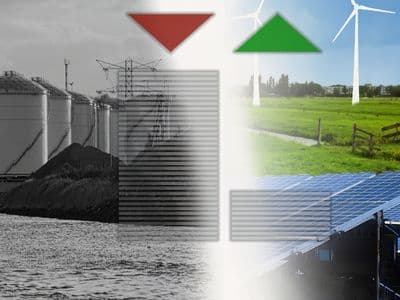
Energy investment has become one of the most promising business opportunities as demand for clean energy continues to rise and Indonesia advances toward its net-zero emissions target.
With abundant natural resources, growing government support, and the expansion of renewable energy projects, the sector offers attractive long-term returns while contributing positively to environmental sustainability.
Although Indonesia possesses enormous potential in solar, hydropower, wind, and biomass energy, renewable energy development still faces several challenges. However, these challenges also create opportunities for investors seeking to participate in the growth of the future energy sector.
Read More: Biogas: A Form of Renewable Energy How It Works and Its Benefits
Why Is Clean Energy Investment Promising?
Here are some reasons why clean energy investment is highly attractive in Indonesia.
1. A Growing Market Potential
Electricity demand in Indonesia continues to increase alongside population growth, urbanization, and industrial expansion.
This creates a substantial need for new energy sources capable of sustainably meeting the country’s growing energy requirements.
With a population of more than 270 million people, Indonesia represents a massive market for renewable energy development. This demand is expected to continue rising over the coming decades.
2. Global Shift Toward Clean Energy
Many countries are reducing their dependence on fossil fuels and transitioning toward renewable energy sources. This global trend has driven increased investment in clean energy, including in emerging markets such as Indonesia.
The Indonesian government has set a target to reduce greenhouse gas emissions by 31.9% independently and up to 43.2% with international support by 2030.
Achieving these goals will require significant investment, including participation from the private sector.
3. Long-Term Stability and Efficiency
Unlike oil and gas based energy, which is highly vulnerable to fluctuations in global commodity prices, renewable energy generally offers more stable operating costs.
Once infrastructure is established, electricity generation costs from solar, hydropower, and wind energy tend to be lower and more predictable.
This makes energy investment an attractive long-term opportunity for investors seeking sustainable returns.
4. Government Support and Growing Environmental Awareness
Although regulatory challenges remain, the government continues to promote renewable energy development through various policies and energy transition programs.
At the same time, increasing awareness among consumers and businesses regarding sustainability issues is driving demand for clean energy solutions.
Renewable Energy Investment Opportunities in Indonesia
Several renewable energy sectors offer significant investment potential in Indonesia.
1. Solar Energy
Solar energy is among the fastest-growing sectors due to Indonesia’s high year-round solar irradiation. Investment opportunities include:
- Solar power plant (PLTS) development
- Rooftop solar systems for commercial and industrial facilities
- Solar panel technology and component manufacturing
2. Hydropower
Indonesia's abundant rivers and water resources provide strong potential for hydropower development, ranging from large-scale hydroelectric facilities to mini-hydro projects.
Hydropower is known for delivering stable and reliable electricity, making it an ideal complement to intermittent energy sources such as solar and wind.
3. Biomass Energy
Biomass utilizes agricultural waste, plantation residues, and organic waste to generate energy.
In addition to reducing waste, biomass projects create new economic value from resources that would otherwise remain underutilized.
4. Wind Energy
Several regions in Indonesia, particularly in eastern Indonesia, possess significant wind resources suitable for wind power generation.
Challenges of Energy Investment in Indonesia
Despite its strong potential, renewable energy development still faces several obstacles.
1. Evolving Regulatory Framework
Policies related to electricity tariffs, project procurement mechanisms, and asset ownership remain important considerations for investors.
Regulatory certainty is a critical factor in determining the long-term viability of renewable energy projects.
2. High Initial Capital Requirements
Renewable energy infrastructure projects typically require substantial upfront investment.
However, these costs are generally offset by lower operating expenses and improved efficiency over the long term.
3. Local Content Requirements (TKDN)
Indonesia's Domestic Component Level (TKDN) policy aims to strengthen local industries.
While beneficial for domestic manufacturing, it can sometimes increase project costs due to limited local availability of certain technologies and components.
4. Financing Access and Incentives
Investors also evaluate the availability of financing schemes, government incentives, and additional revenue opportunities such as carbon credits.
Despite these challenges, both government and industry stakeholders continue working to improve the investment climate and attract greater participation in the renewable energy sector.
How to Start Investing in Renewable Energy
For individuals and companies interested in entering the renewable energy sector, several important steps should be considered.
- Choose the Right Investment Area. Select a sector that aligns with your capital capacity, expertise, and investment objectives, such as solar, hydropower, biomass, wind energy, or supporting technologies.
- Conduct Market Research. Understand energy demand, resource availability, and regulatory requirements in the target area.
- Evaluate Risks and Returns. Comprehensive financial analysis is essential to ensure long-term project viability and profitability.
- Build Strategic Partnerships. Collaborating with experienced companies can help accelerate project development while minimizing risks.
Read More: Energy Transformation: Definition, Examples, and Its Role in Indonesia
Seizing Renewable Energy Investment Opportunities with TBS
The future of Indonesia’s energy sector will be strongly influenced by the successful development of renewable energy. One company actively contributing to Indonesia’s energy transition is TBS.
Over the past several years, TBS has continued expanding its renewable energy portfolio through strategic projects across the country.
In 2020, through its subsidiary PT Toba Bara Energi (TBAE), TBS acquired PT Adimitra Energi Hidro (AEH), the developer of a 2x3 MW Mini Hydro Power Plant (PLTM) in Lampung.
The project achieved Commercial Operation Date (COD) on January 22, 2025, and now contributes 6 MW of clean energy to the Southern Sumatra region.
TBS also acquired PT Bayu Alam Sejahtera (BAS) to explore wind energy development opportunities in East Nusa Tenggara (NTT), one of Indonesia’s most promising regions for wind power generation.
In the solar energy sector, TBS is developing the Floating Solar PV Power Plant project in Tembesi, Batam. The project reached financial closing in 2024 and is scheduled to begin commercial operations in 2026.
This floating solar power plant will be integrated into Indonesia’s national electricity grid and is expected to reduce carbon emissions, improve air quality, create green jobs, and support technology transfer to local communities.
TBS is also developing a 46 MWp Floating Solar PV project in Batam, further strengthening the company’s contribution to Indonesia’s energy transition.
Through these initiatives, TBS Energy demonstrates its commitment to delivering cleaner, more sustainable energy solutions while creating tangible benefits for Indonesian communities.
For businesses and investors looking to participate in Indonesia’s energy future, TBS serves as a strategic partner in advancing a low carbon economy and sustainable development.