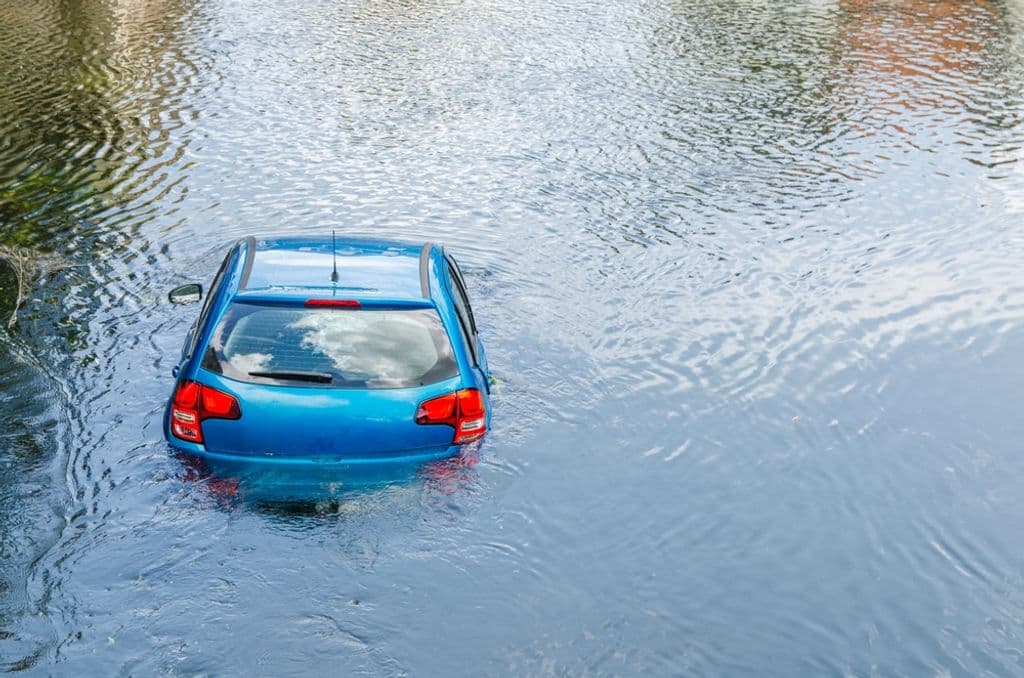
Using an electric car during flooding is generally safe because EVs are designed with water protection. However, this does not mean electric cars are completely risk-free when driving through standing water or floods.
Electric vehicles are designed to withstand rain and normal water exposure, but deep flooding can still damage vehicle components and put driver safety at risk.
As weather becomes increasingly unpredictable, heavy rainfall and flooding are conditions that drivers across many Asian countries, including Indonesia, need to anticipate.
For both current and prospective electric vehicle owners, questions about EV safety during the rainy season are therefore becoming increasingly relevant.
Related Article: 8 Electric Car Maintenance Tips You Need to Know to Keep Your Vehicle in Optimal Condition
Are Electric Cars Safe During the Rainy Season?
Modern electric cars undergo various safety tests before entering the market. Critical components such as batteries and electrical systems are designed with special protection to prevent water intrusion.
For this reason, driving in the rain or through shallow puddles is generally not a problem. However, the level of protection can vary between vehicle models.
Batteries and Electrical Systems Are Protected
Electric vehicle batteries are housed in sealed systems and equipped with protection against water exposure.
Special materials and seals help prevent water from entering vital components.
As a result, the risk of short circuits caused by rain or water splashes is very low as long as the vehicle is operated within the limits specified by the manufacturer.
Charging in the Rain Is Possible
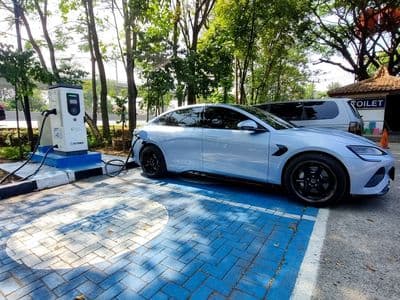
Many people are still hesitant to charge an electric car when it is raining. In fact, charging with a suitable charger is generally safe even during rain.
Charging connectors and sockets are designed to protect electrical components from water.
Even so, make sure the charger installation has been carried out properly and uses equipment designed for outdoor use.
Avoid using unsuitable extension cables, as they can overload the electrical system and increase the risk of fire.
What Are the Risks of Using an Electric Car During Floods?
Being safe in the rain does not mean an electric car is safe to drive through floods.
Electric cars should be treated with caution during flooding, especially when water levels exceed the limit recommended by the manufacturer.
Floodwater can also conceal potholes, sharp objects, debris, or road damage that cannot be seen from the surface.
These conditions can endanger any vehicle, whether electric, gasoline-powered, or diesel-powered.
Pay Attention to Water Depth Limits
Every vehicle has a different maximum water-wading capability or wading depth. For this reason, do not assume that all electric cars can handle the same conditions.
Interestingly, electric cars are not always at a greater disadvantage than conventional vehicles when dealing with standing water.
Gasoline and diesel vehicles can also suffer serious damage if water enters the engine through the air intake.
However, the electric motor, wheel systems, brakes, and other EV components can still be damaged if submerged for too long.
Floodwater containing mud, salt, or chemicals can also accelerate corrosion and cause long-term damage.
What Should You Do If an Electric Car Is Flooded?
If an electric car has already been exposed to floodwater, do not assume the vehicle is safe simply because it can still power on.
Make sure to take the following steps.
1. Do Not Turn the Car On Immediately
If the vehicle has been deeply submerged, avoid trying to restart it.
Water that has entered certain components may cause additional damage when the electrical system is reactivated.
2. Contact a Technician Immediately
Have the vehicle inspected by a qualified technician or an authorized service center.
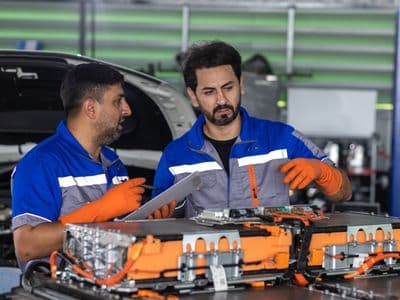
A professional inspection is important to determine whether there is damage to the battery, electrical system, brakes, motor, or other components.
3. Contact Your Insurance Provider
If the vehicle has insurance coverage that includes flood damage, report the incident as soon as possible.
Document the condition of the vehicle and follow the insurer’s claim procedures.
Electric Car Maintenance Tips During the Rainy Season
In addition to understanding the risks of using an electric car during floods, owners should also make sure the vehicle remains in good condition throughout the rainy season.
Here are several tips.
1. Check Tire Condition
Tires with worn tread are more likely to lose traction on wet roads.
Make sure tire pressure also matches the manufacturer’s recommendations so that the vehicle remains stable.
2. Make Sure the Wipers Work Properly
Wipers are essential for maintaining visibility during heavy rain.
Check the condition of the wiper blades and make sure windshield washer fluid is available before traveling.
3. Monitor Battery Level
Before starting a trip, make sure the battery has sufficient charge.
This can reduce the need to look for a charging station during heavy rain or when traffic congestion occurs because of flooding.
4. Wash the Car After Exposure to Rain
Rainwater and dirt left on the vehicle can accelerate corrosion if they are not cleaned off.
Washing the car after exposure to rain can help maintain the condition of the body and other vehicle components.
What About Electric Cars in Indonesia?
Road and weather conditions across Asia, including Indonesia, make rainy-season preparedness increasingly important.
Heavy rainfall can occur within a short period and cause flooding or standing water in several urban areas.
For this reason, EV owners should consider more than just battery capacity or driving range when choosing a vehicle.
Water protection, maximum wading depth, after-sales service availability, and manufacturer guidance are also important factors.
Although electric cars are designed to withstand rain and standing water within certain limits, no vehicle is completely flood-proof.
Avoiding deep floodwater remains the safest option.
Related Article: Solid-State Battery: The Future Technology of Electric Vehicles
TBS and the Development of Indonesia’s Electric Vehicle Ecosystem
The adoption of electric vehicles requires not only safe products, but also a strong supporting ecosystem.
In Indonesia, TBS, through Electrum, is contributing to the development of the electric mobility ecosystem.
In 2021, TBS and GoTo Group established PT Energi Kreasi Bersama, or Electrum, to build Indonesia’s first integrated electric mobility ecosystem.
The ecosystem covers vehicle assembly, battery technology, battery swapping infrastructure, charging stations, and financing schemes.
In February 2022, President Joko Widodo inaugurated the launch of a collaborative electric vehicle ecosystem involving Electrum, Pertamina, Gogoro, and Gesits.
In the same year, Electrum also participated in the G20 Summit and B20 Forum in Bali by providing 50 electric motorcycles, 11 shelters, and 150 Gojek driver partners to serve delegates.
Financial support expanded further in December 2024, when Electrum secured US$15 million in financing from the Asian Development Bank, the Australian Climate Finance Partnership, and Bank DBS Indonesia.
The funding was used to accelerate vehicle procurement and expand the battery swapping network, which is projected to reduce greenhouse gas emissions by up to 123,000 tons each year.
In October 2024, the Electrum H3i electric motorcycle was officially launched at IMOS, offering both home charging and access to the battery swapping network.
The following year, Electrum introduced the H1 as its latest model to provide consumers with more options.
By 2025, more than 500 Battery Swapping Stations were supporting over 15,000 electric motorcycles across Jakarta and surrounding areas.
In the same year, the network recorded more than 19,000 battery swaps every day and helped avoid more than 3,200 tons of CO2 emissions.
As Indonesia’s electric vehicle ecosystem continues to develop, TBS, through Electrum, continues to support more sustainable mobility through vehicles, battery technology, infrastructure, and supporting services.
With a stronger ecosystem and responsible usage, the transition toward electric mobility can continue to grow across Indonesia.