The transition to EVs is not only about replacing fossil fuel-powered vehicles with electric vehicles. It is also an important step toward reducing air pollution and potentially saving millions of lives.
A study by the International Council on Clean Transportation (ICCT) estimates that by 2050, as many as 8.8 million deaths linked to traffic-related air pollution could be prevented through more aggressive vehicle electrification.
Vehicle pollution is a serious public health issue, particularly in densely populated cities with heavy traffic.
For this reason, the transition to electric vehicles (EVs) is not only about technology and mobility, but also about creating cleaner air and healthier urban environments.
How Could the Transition to EVs Help Save 8.8 Million Lives?
The ICCT study highlights the significant health impacts of vehicle-related air pollution.
In 2024, pollutants such as fine particulate matter, ozone, and nitrogen dioxide from road transport were estimated to contribute to around 700,000 premature deaths and 250,000 new cases of childhood asthma worldwide.
If current policies remain unchanged, premature deaths linked to traffic pollution are projected to increase by 74% by 2050.
However, under a more aggressive electrification scenario, premature deaths from road transport pollution could decline by 63%.
This scenario includes a target of 100% electric vehicle sales for new cars globally by 2045.
The impact is also projected to reduce childhood asthma cases by up to 80% and help save around 8.8 million lives by 2050.
Read Also: How Do Solar-Powered Electric Vehicle Charging Stations Work?
Why Do EVs Matter for Public Health?
Internal combustion engine vehicles produce pollutants through fuel combustion.
In cities with heavy traffic, these emissions increase public exposure to air pollution.
Electric vehicles produce no tailpipe emissions while in operation.
As a result, replacing more fossil fuel-powered vehicles with EVs creates greater potential to reduce pollution from road transport.
However, these benefits still depend on cleaner electricity sources.
If the electricity used to charge EV batteries continues to come largely from fossil fuel-based power generation, some emissions may simply shift from roads to the power sector.
This is why vehicle electrification needs to progress alongside the transition toward cleaner energy.
The Transition to EVs in Asia
Asia has become one of the most important regions for electric vehicle development.
China provides an example of how large-scale EV adoption can contribute to improvements in air quality.
Evidence from China
Research published in Nature Health found that the adoption of new energy vehicles across 150 Chinese cities contributed to lower pollution levels between 2013 and 2023.
Compared with a conventional vehicle scenario, PM2.5 concentrations declined by 23.8%, PM10 by 15.06%, and carbon monoxide by 23.8%.
Researchers estimated that these changes helped prevent around 337,000 non-accidental deaths.
These findings show that the benefits of electric vehicles can become more visible when adoption is supported by adequate policies and infrastructure.
Infrastructure Is Key
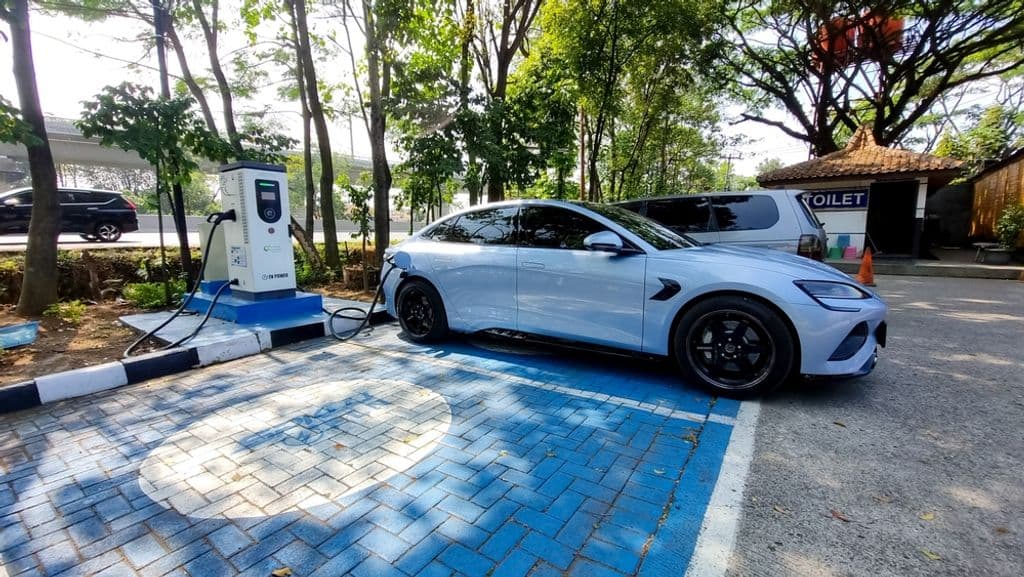
China has built millions of electric vehicle charging points while also implementing various incentives and restrictions on fossil fuel-powered vehicles.
This experience shows that the transition to EVs requires more than just electric vehicles themselves.
Public transportation, emissions controls, renewable energy development, and cleaner electricity grids are also needed to maximize the benefits of electrification.
What About the Transition to EVs in Indonesia?
Indonesia also faces air pollution challenges related to transportation activities, particularly in major cities such as Jakarta.
This makes vehicle electrification one potential solution for reducing urban emissions.
Electrifying Urban Transportation
Jakarta is targeting the deployment of 10,000 electric buses by 2030.
A study by Systemiq and Institut Teknologi Bandung (ITB) found that a combination of expanded mass transportation and clean vehicle infrastructure could potentially reduce PM2.5 emissions by up to 92% and NOx emissions by up to 51% by 2030 compared with a business-as-usual scenario.
Electrifying high-utilization vehicles, such as public transportation and operational fleets, can potentially deliver broader benefits because these vehicles are used extensively every day.
Clean Energy Support Is Also Needed
The environmental benefits of EVs also need to be considered in relation to the electricity source used for charging.
Electric vehicle development should progress alongside renewable energy expansion and power grid decarbonization so that emissions reductions do not simply shift pollution from one source to another.
This can help ensure that electric vehicles deliver genuine long-term environmental and public health benefits.
Read Also: Understanding How Electric Cars Work Based on Their Types
TBS Is Building an Electric Vehicle Ecosystem
The transition to EVs cannot rely on electric vehicles alone.
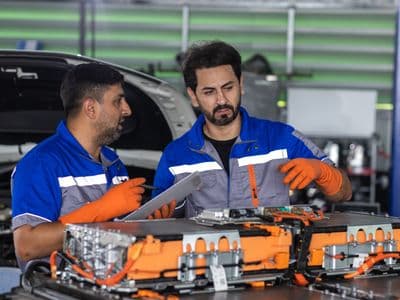
Vehicles, batteries, infrastructure, technology, and user access need to develop together so that low-emission mobility can be adopted more widely.
Recognizing this need, TBS partnered with GoTo Group to establish PT Energi Kreasi Bersama (Electrum) in 2021 as part of an effort to build a comprehensive electric mobility ecosystem in Indonesia.
As it developed, Electrum expanded beyond vehicles to include supporting components such as battery technology, battery swapping facilities, charging stations, and financing solutions.
The ecosystem gained further attention in February 2022 when President Joko Widodo inaugurated an electric vehicle collaboration involving Electrum, Pertamina, Gogoro, and Gesits.
A few months later, Electrum also supported the G20 Summit and B20 Forum in Bali by operating 50 electric motorcycles, providing 11 shelters, and involving 150 Gojek driver partners to support delegate mobility.
Electric vehicle development received additional support in December 2024, when Electrum secured US$15 million in financing from the Asian Development Bank (ADB), the Australian Climate Finance Partnership (ACFP), and Bank DBS Indonesia.
The funding was used to expand the electric vehicle fleet and strengthen the battery swapping network.
This development is projected to help reduce greenhouse gas emissions by around 123,000 tonnes per year.
Alongside the expansion of its ecosystem, Electrum also broadened its vehicle offerings.
The H3i was introduced in October 2024 with both home charging and battery swapping options, followed by the launch of the H1 in 2025.
By 2025, more than 15,000 electric vehicles were operating across Jakarta and surrounding areas, supported by over 500 battery swapping station locations and more than 19,000 battery swaps per day.
The use of these vehicles also contributed to avoiding more than 3,200 tonnes of CO₂ emissions throughout 2025.
This progress shows that the transition to EVs requires an ecosystem that makes electric vehicles not only available, but also practical for everyday use.
Through Electrum, TBS continues to support the adoption of low-emission mobility while contributing to the development of a more sustainable transportation system in Indonesia.