Hybrid cars have become one of the increasingly popular vehicle solutions because they offer fuel efficiency while producing lower emissions compared to conventional cars.
By combining a gasoline engine and an electric motor, this technology helps support the transition toward more environmentally friendly transportation, including in Indonesia.
As public awareness of environmental issues grows and fuel prices increase, hybrid cars have become an attractive option for many drivers.
These vehicles not only provide a comfortable driving experience but also help reduce fossil fuel consumption. So, what exactly is a hybrid car and how does it work? Here is the explanation.
What Is a Hybrid Car?
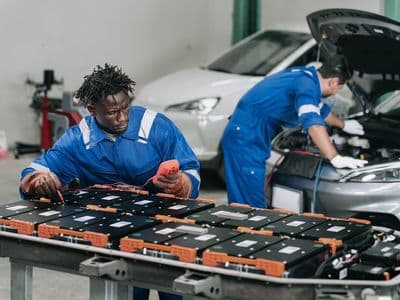
A hybrid car is a vehicle that uses two main power sources: an internal combustion engine (generally a gasoline engine) and an electric motor.
Both systems work together or separately to produce the power needed when the vehicle is operating.
One of the main advantages of hybrid cars is their ability to select the most efficient power source according to road conditions and driving needs.
When the vehicle moves at low speeds or is stuck in traffic, the electric motor usually becomes the primary power source.
However, when more power is needed, such as during overtaking or uphill driving, the gasoline engine takes over or works together with the electric motor.
This technology makes fuel consumption more efficient while reducing the carbon emissions produced by vehicles.
Read Also: Potential of Electric Vehicles in Indonesia: Opportunities, Challenges, and Future Prospects
Difference Between Hybrid Cars and Electric Cars
Although both utilize electric power, hybrid cars are different from fully electric vehicles (EVs).
Electric cars rely entirely on energy stored in large-capacity batteries and must be recharged through external charging sources.
Meanwhile, hybrid cars still use gasoline engines as one of their power sources, meaning they do not fully depend on batteries.
In terms of emissions, electric cars generally produce lower emissions during operation.
However, hybrid cars offer greater flexibility because they do not require frequent charging and can still be used for long-distance travel without worrying about running out of battery power.
How Do Hybrid Cars Work?
Hybrid car systems are controlled by computers or electronic controllers that automatically determine the most efficient power source based on driving conditions.
At low speeds, the electric motor usually becomes the main driver because it is more energy-efficient and responsive. When the vehicle moves faster or requires additional power, the gasoline engine activates to help drive the wheels.
In addition, hybrid cars are equipped with regenerative braking technology. This technology allows energy that would normally be lost during braking to be converted into electricity and stored back into the battery.
The entire power transition process occurs automatically without requiring driver intervention. This makes the driving experience comfortable while improving efficiency compared to conventional vehicles.
Types of Hybrid Cars
Generally, there are three types of hybrid systems widely used in vehicles today.
1. Full Hybrid
A full hybrid system allows vehicles to use power from the gasoline engine, electric motor, or a combination of both.
Under certain conditions, the vehicle can run using only the electric motor. When additional power is required, the gasoline engine works together with the electric motor to deliver optimal performance.
2. Mild Hybrid
A mild hybrid uses a smaller-capacity battery compared to a full hybrid. This system does not have an electric motor capable of moving the vehicle independently.
Its function is mainly to support the gasoline engine, especially during initial acceleration. With the assistance of a starter generator system, the engine workload becomes lighter, helping reduce fuel consumption.
3. Plug-in Hybrid (PHEV)
A Plug-in Hybrid Electric Vehicle (PHEV) has a larger battery capacity compared to a full hybrid. The battery can be recharged through external electricity sources, either at home or public electric vehicle charging stations.
Because it has a larger battery capacity, the vehicle can travel a certain distance using only electric power before the gasoline engine starts operating.
This makes PHEVs an attractive option for users who want to enjoy the benefits of electric vehicles while maintaining the flexibility of conventional engines.
How to Drive a Hybrid Car
Basically, driving a hybrid car does not require special skills. Its operation is almost the same as a typical automatic transmission vehicle.
However, to achieve the best efficiency, drivers are advised to accelerate smoothly and avoid aggressive driving habits. This helps the hybrid system maximize the use of the electric motor while reducing fuel consumption.
Some models also provide various driving modes, such as full electric mode, automatic mode, and a mode that combines engine and electric motor power for maximum performance.
For plug-in hybrid vehicles, there is also a mode that allows the battery to be reserved for certain situations, such as entering congested urban areas.
Advantages and Disadvantages of Hybrid Cars
Before deciding to purchase a hybrid car, it is important to understand its advantages and disadvantages.
1. Advantages of Hybrid Cars
Some benefits offered by hybrid cars include:
- More efficient fuel consumption compared to conventional vehicles.
- Lower exhaust emissions, making them more environmentally friendly.
- Smoother and more comfortable driving performance.
- No need for frequent charging like electric cars.
- Suitable for dense urban traffic conditions such as those in Indonesia.
- Reliable technology that has been proven and continues to develop.
2. Disadvantages of Hybrid Cars
On the other hand, there are several considerations:
- The purchase price is generally higher than conventional cars.
- Maintenance costs for some components may be more expensive.
- For plug-in hybrids, optimal efficiency is only achieved if the battery is regularly recharged.
- Vehicle weight tends to be heavier due to the use of two power systems.
Read Also: Fleet Electrification in Indonesia: Business Strategies Toward Low-Emission Transportation
Hybrid Cars and TBS’s Support for a Sustainable Transportation Future
TBS demonstrates its commitment to environmentally friendly mobility through the development of a national electric vehicle ecosystem.
In 2021, TBS together with GoTo Group established PT Energi Kreasi Bersama (Electrum) to build an integrated electric mobility ecosystem in Indonesia, covering vehicle assembly, battery technology, battery swapping infrastructure, charging stations, and financing solutions.
Electrum continues to achieve various important milestones. In 2022, President Joko Widodo inaugurated the electric vehicle ecosystem collaboration involving Electrum, Pertamina, Gogoro, and Gesits.
In the same year, Electrum also supported the G20 Summit and B20 Forum in Bali by providing 50 electric motorcycles, 11 shelters, and 150 Gojek driver partners.
Support for electric vehicle development became stronger after Electrum secured funding worth US$15 million from the Asian Development Bank, Australian Climate Finance Partnership, and Bank DBS Indonesia in December 2024.
The funding was used to expand electric vehicle fleets and battery swapping networks, with the potential to reduce greenhouse gas emissions by up to 123,000 tons annually.
To date, Electrum has introduced the H3i electric motorcycle and launched its latest model, Electrum H1, in 2025.
With more than 370 Battery Swapping Stations supporting the operation of over 6,000 electric motorcycles in Jakarta, more than 19,000 battery swaps per day, and carbon emission reductions exceeding 3,200 tons of CO₂, TBS Energy continues to demonstrate its commitment to accelerating the transition toward more sustainable transportation in Indonesia.