The automotive industry in Indonesia continues to grow along with increasing vehicle demand, technological advancements, and the push toward more environmentally friendly transportation.
Amid various challenges such as infrastructure needs and changing consumer preferences, this industry also offers significant opportunities through electric vehicles, digital technology, and growing investments.
Indonesia is not only developing as a market but also as a production hub that attracts the attention of many global automotive manufacturers.
Development of the Automotive Industry in Indonesia
In recent years, Indonesia’s automotive industry has shown consistent growth. Indonesia’s position as one of the largest vehicle producers in the ASEAN region demonstrates the significant potential of this sector.
This growth is supported by increasing mobility needs, the development of industrial areas, and investments from various international automotive companies.
In addition, the government continues to encourage automotive industry growth through various policies that support investment, technological development, and the competitiveness of domestic manufacturing.
These efforts aim to make Indonesia a major player in the regional and global automotive supply chain.
The transformation taking place is not only focused on increasing conventional vehicle production. Today, the automotive industry is moving toward a more modern era by adopting digital technology, automation, and clean energy-based vehicles.
Read Also: The Role of Electric Vehicles in Reducing Vehicle Emissions in Indonesia
The Growing Popularity of Electric Vehicles
One of the biggest changes in the automotive industry is the increasing adoption of electric vehicles (EVs). The global shift toward cleaner energy has encouraged Indonesia to accelerate the development of its electric vehicle ecosystem.
The government has introduced various incentives to encourage EV adoption, ranging from tax reductions to support for charging infrastructure development.
These efforts are expected to accelerate the transition toward more environmentally friendly transportation while reducing dependence on fossil fuels.
Indonesia also has an advantage because it is one of the countries with the largest nickel reserves in the world.
This commodity is a key material in electric vehicle battery production, creating major opportunities for developing an EV-based automotive industry domestically.
Utilization of AI and Automation Technology
Artificial Intelligence (AI) technology is increasingly being used in the automotive industry. AI helps improve production efficiency, enhance quality control, and optimize various manufacturing processes.
From the consumer perspective, AI technology enables advanced features such as driver assistance systems, smart navigation, and improved safety technologies.
Various vehicle manufacturers are also beginning to develop autonomous vehicle technologies, which are expected to become an important part of the future automotive industry.
Collaboration between technology companies and automotive companies is a key factor in accelerating innovation. Through this cooperation, future vehicles will not only become more efficient but also safer and more comfortable to use.
Integration of Internet of Things (IoT)
The development of the Internet of Things (IoT) is also bringing major changes to the automotive industry. This technology allows vehicles to connect with each other and with surrounding infrastructure.
Through Vehicle-to-Vehicle (V2V) and Vehicle-to-Infrastructure (V2I) technologies, vehicles can share information about road conditions, traffic, and potential hazards, improving driving safety while reducing congestion.
In addition, IoT-based vehicles provide a more modern driving experience through real-time vehicle monitoring, predictive maintenance, and integration with other digital devices.
Challenges and Opportunities for the Automotive Industry in the Future
Although it has promising prospects, Indonesia’s automotive industry still faces several challenges that must be addressed to ensure sustainable growth.
Challenges Faced
Here are some of the main challenges facing Indonesia’s automotive industry in the future:
1. Infrastructure Readiness
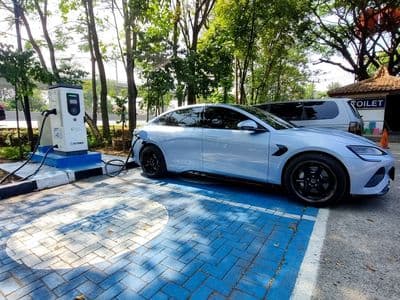
This is one of the main challenges because electric vehicle development requires sufficient charging stations and supporting facilities to ensure users feel comfortable switching to new technology.
2. Workforce Skills
The demand for workers with technology-related skills is expected to increase. Digital transformation in the automotive industry requires human resources capable of operating and developing modern technologies.
3. Changing Consumer Behavior
This is also a challenge because consumers are increasingly considering sustainability, energy efficiency, and digital technology when choosing vehicles. Manufacturers must adapt to changing market needs.
Opportunities to Utilize
Behind these challenges, there are major opportunities that can encourage the growth of Indonesia’s automotive industry.
1. Increasing Demand
Demand for electric vehicles is expected to continue increasing as public awareness of environmental issues grows.
2. Digital Technology Development
The development of digital technology will create new opportunities for automotive manufacturers to deliver more innovative products and services.
From smart vehicles to application-based mobility services, all have the potential to become new sources of growth.
3. Electric Vehicle and Battery Production Hub
Indonesia also has the opportunity to become a center for electric vehicle and battery production in Southeast Asia. Natural resources, a large domestic market, and government policies create a strong foundation to realize this potential.
TBS’s Role in Supporting the Future of the Automotive Industry
TBS Energi Utama is a company actively supporting the acceleration of the transition toward electric mobility through the development of an integrated electric vehicle ecosystem. In 2021, together with GoTo Group, TBS established PT Energi Kreasi Bersama, also known as Electrum.
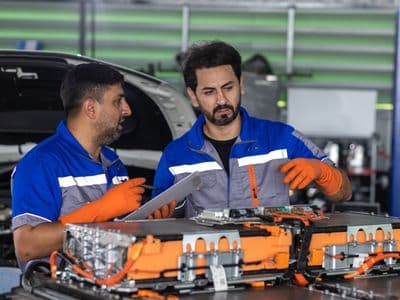
The company focuses on developing an electric mobility ecosystem covering vehicle assembly, battery technology, battery swapping infrastructure, charging stations, and financing solutions.
Electrum has achieved several important milestones in supporting Indonesia’s automotive industry transformation. In February 2022, President Joko Widodo officially launched the electric vehicle ecosystem developed through collaboration between Electrum, Pertamina, Gogoro, and Gesits.
In the same year, Electrum also participated in the G20 Summit and B20 Forum in Bali by providing 50 electric motorcycles, 11 shelters, and involving 150 Gojek driver partners to support delegate mobility.
From a funding perspective, in December 2024, Electrum secured a US$15 million financing package from the Asian Development Bank (ADB), Australian Climate Finance Partnership, and Bank DBS Indonesia.
This funding is used to expand electric vehicle procurement and battery swapping networks, which are projected to reduce greenhouse gas emissions by up to 123,000 tons annually.
Electrum continues to develop its products and infrastructure. In October 2024, the company launched the H3i electric motorcycle, offering flexible charging options at home or through its battery swapping network.
Then, in 2025, Electrum introduced its latest model, Electrum H1, providing more vehicle options for consumers.
Currently, Electrum operates more than 370 Battery Swapping Stations, supports more than 6,000 electric motorcycles operating in Jakarta, and records over 19,000 battery exchange transactions per day.
This initiative also contributes to carbon emission reduction, with more than 3,200 tons of CO₂ successfully avoided.
Through these various initiatives, TBS Energi Utama demonstrates its commitment to supporting the development of a greener, more innovative, and sustainable automotive industry.