Vehicle emissions are one of the largest contributors to greenhouse gas emissions in Indonesia, making it essential to implement effective solutions to minimize their environmental impact.
One of the most promising approaches is accelerating the adoption of electric vehicles (EVs), supported by clean energy sources and adequate infrastructure.
As the number of vehicles on the road continues to increase, demand for fossil fuels also rises. This trend not only contributes to higher carbon emissions but also increases Indonesia’s dependence on imported energy.
For this reason, the transition to electric vehicles has become a key component of Indonesia’s strategy to achieve its Net Zero Emissions (NZE) target by 2060.
According to various studies, the transportation sector is one of the primary sources of greenhouse gas emissions in Indonesia. The majority of these emissions come from land transportation, particularly private vehicles.
Therefore, reducing vehicle emissions has become a critical agenda in supporting sustainable development and strengthening national energy security.
Read More: Understanding How Electric Cars Work Based on Their Types
Why Are Vehicle Emissions a Major Challenge in Indonesia?
According to the Indonesia Energy Transition Outlook (IETO) 2024 published by the Institute for Essential Services Reform (IESR), the transportation sector generated approximately 150 million tons of CO₂ equivalent (CO₂e) emissions in 2022.
Of this total, around 90% originated from land transportation, while passenger vehicles accounted for nearly 78% of all land transportation emissions.
The increasing number of vehicles each year has also driven fuel consumption higher. Meanwhile, a significant portion of Indonesia’s fuel demand is still met through imports.
This dependence not only places pressure on government spending through energy subsidies but also poses risks to national energy security.
As a result, the government has prioritized reducing transportation-related emissions as part of its roadmap toward achieving NZE by 2060.
Various initiatives are being implemented, including improving vehicle efficiency, increasing the use of bioenergy and hydrogen, and accelerating the electrification of land transportation.
The Role of Electric Vehicles in Reducing Vehicle Emissions
Below are several important ways electric vehicles help reduce vehicle emissions.
1. Electric Vehicles Produce Lower Emissions
Electric vehicles (EVs) have a major advantage: they produce no direct tailpipe emissions.
Unlike gasoline- or diesel-powered vehicles, EVs do not emit carbon dioxide (CO₂) while operating.
Numerous studies show that the overall carbon footprint of electric vehicles is lower than that of conventional vehicles, even when battery production is taken into account.
The reduction in vehicle emissions becomes even more significant when the electricity used for charging comes from renewable energy sources such as solar, wind, or geothermal power.
IESR notes that current EV emissions per kilometer are approximately 18% lower for two-wheel vehicles and 25% lower for four-wheel vehicles compared to conventional vehicles.
These figures are expected to improve further as Indonesia’s electricity grid becomes cleaner.
2. Lower Operating Costs
In addition to being environmentally friendly, electric vehicles offer lower operating costs.
The total cost of ownership for electric motorcycles is estimated to be around 7% lower than conventional motorcycles, while electric cars can reduce costs by up to 14%.
These savings come from lower energy expenses and fewer mechanical components, resulting in lower maintenance costs.
As battery prices continue to decline globally, electric vehicles are expected to become increasingly affordable for Indonesian consumers.
3. Continuous Battery Technology Advancements
Advances in battery technology are strengthening the role of electric vehicles in reducing vehicle emissions.
Lithium-ion batteries, which are currently the most widely used, have seen significant improvements in capacity, lifespan, and efficiency.
In addition, the development of solid-state battery technology is expected to deliver EVs with longer driving ranges, faster charging times, and enhanced safety.
These technological improvements could encourage more consumers to switch to electric vehicles.
4. Expanding Charging Infrastructure
The government and industry players are continuously expanding EV charging infrastructure.
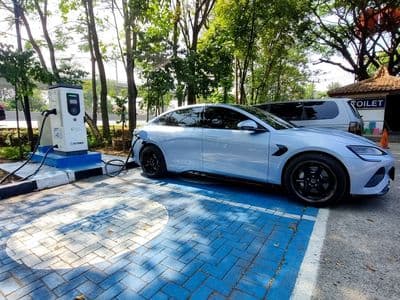
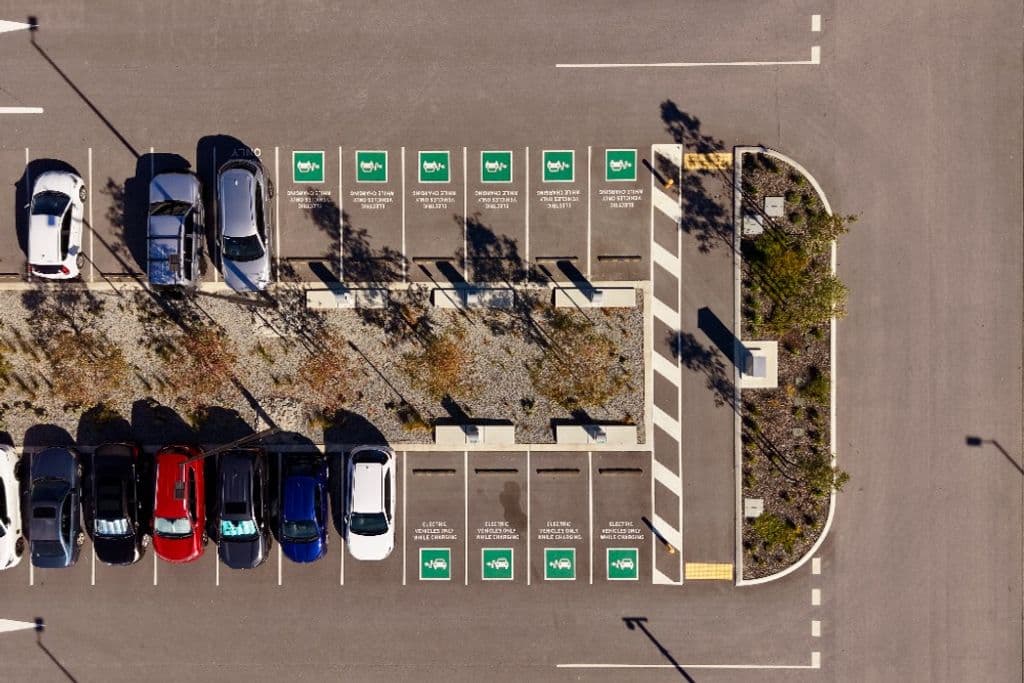
The growing availability of Public Electric Vehicle Charging Stations (SPKLU) helps reduce concerns about driving range and charging accessibility.
However, utilization rates of charging stations in some regions remain relatively low.
Therefore, increasing EV adoption must go hand in hand with infrastructure development to ensure investments deliver maximum benefits.
Electric Vehicles Must Be Supported by Clean Energy
Although electric vehicles help reduce vehicle emissions, their environmental benefits can be maximized only if the electricity used for charging comes from renewable energy sources.
Currently, a significant portion of Indonesia’s electricity is still generated by coal-fired power plants.
For this reason, the transition to clean energy must progress alongside transportation electrification. The greater the share of renewable energy in the national electricity mix, the lower the emissions associated with electric vehicles.
Furthermore, efforts to reduce transportation emissions should also be supported by increased public transportation usage, the development of more pedestrian-friendly cities, and the adoption of sustainable mobility concepts.
Read More: 10 Ways to Save Energy in Industry: Reduce Costs and Protect the Environment
Driving a Low-Emission Transportation Future with TBS
Accelerating electric vehicle adoption is one of the most effective ways to reduce vehicle emissions in Indonesia.
Beyond lowering carbon emissions, EVs also improve energy efficiency, reduce dependence on imported fuel, and strengthen national energy security.
TBS has demonstrated its commitment to this energy transition through the development of an integrated electric vehicle ecosystem in Indonesia.
In 2021, TBS partnered with GoTo Group to establish PT Energi Kreasi Bersama (Electrum), focusing on electric vehicles, battery technology, battery-swapping infrastructure, charging stations, and EV financing solutions.
In 2022, Electrum collaborated with Pertamina, Gogoro, and Gesits in launching an electric vehicle ecosystem initiative inaugurated by President Joko Widodo.
Electrum also participated in the G20 and B20 Summits in Bali by providing 50 electric motorcycles, 11 shelters, and 150 Gojek driver-partners to support delegate mobility.
Support for the EV ecosystem was further strengthened through a US$15 million investment from the Asian Development Bank (ADB), the Australian Climate Finance Partnership, and Bank DBS Indonesia in 2024.
This funding is being used to expand electric vehicle fleets and battery-swapping networks, with the potential to reduce greenhouse gas emissions by up to 123,000 tons annually.
Electrum has also continued to innovate through the launch of the H3i electric motorcycle in 2024 and the Electrum H1 in 2025.
To date, Electrum has operated more than 370 Battery Swapping Stations supporting over 6,000 electric motorcycles across Jakarta.
Currently, TBS Energy has deployed more than 6,000 electric vehicles, operates over 370 battery-swapping stations, facilitates more than 19,000 battery swaps per day, and has contributed to reducing carbon emissions by more than 3,200 tons of CO₂.