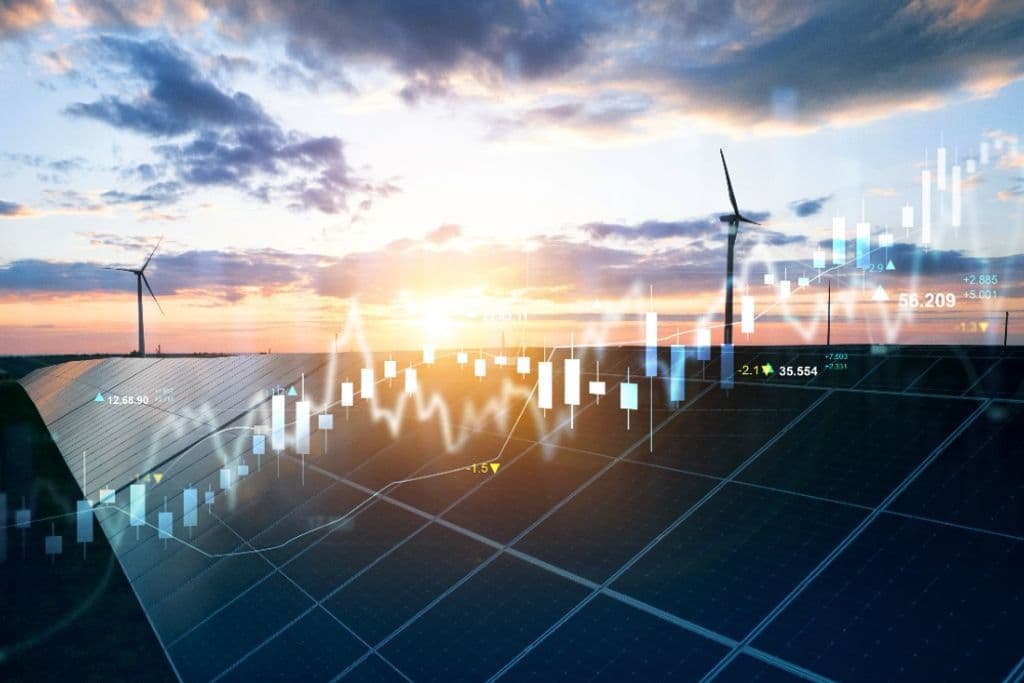
Economic growth can go hand in hand with efforts to reduce carbon emissions when supported by renewable energy development and improved energy efficiency.
Various studies show that investment in clean energy not only helps achieve climate targets but also creates jobs, strengthens energy security, and improves public welfare.
Indonesia is currently at a critical crossroads. On one hand, energy demand continues to increase alongside industrial growth and national development. On the other hand, the government has committed to achieving net-zero emissions by 2060.
This situation makes renewable energy one of the key factors in supporting sustainable development.
Read More: Green Industry: Concepts, Goals, and Implementation in Indonesia
How Does Renewable Energy Support Economic Growth?
For decades, many countries have relied on fossil fuels to support economic activities.
However, the extensive use of coal, oil, and natural gas has created various challenges, including rising carbon emissions, air pollution, and dependence on energy supplies vulnerable to global price fluctuations.
Renewable energy offers a different approach. Resources such as sunlight, water, wind, and geothermal heat are naturally available and can be utilized over the long term.
In addition to reducing emissions, renewable energy development contributes to economic growth in several important ways.
1. Encouraging Investment and Economic Activity
The development of solar, hydropower, and wind power plants requires significant upfront investment.
These investments are not only used to build generation facilities but also to develop transmission networks, energy storage systems, and supporting technologies.
When investment flows into the renewable energy sector, economic activity across multiple industries increases as well.
Construction, manufacturing, logistics, and engineering services all gain new business opportunities. This creates a multiplier effect that can strengthen national economic growth.
Furthermore, as more renewable energy projects are developed, the opportunities for local supply chains to emerge and generate added value for Indonesia’s economy also increase.
2. Creating New Employment Opportunities
One of the greatest benefits of the energy transition is job creation.
The construction and operation of renewable energy facilities require workers with diverse skills, including technicians, engineers, operators, and administrative personnel.
Numerous studies indicate that renewable energy development has the potential to create hundreds of thousands even millions of new jobs over the coming decades.
These employment opportunities extend beyond power generation and include supporting industries such as solar panel manufacturing, battery production, wind turbine components, and maintenance services.
For Indonesia, which benefits from a large working age population and a demographic dividend, this opportunity can become a major driver of economic growth while improving public welfare.
3. Reducing Dependence on Energy Imports
Indonesia’s domestic oil production has declined over the past several decades. As a result, a portion of national energy demand must be met through imported oil and gas.
Dependence on imported energy creates economic risks, particularly when global energy prices rise or international supply disruptions occur.
Such conditions can burden government finances and increase production costs across various industries.
By increasing the share of renewable energy in the national energy mix, Indonesia can reduce its dependence on imported fossil fuels.
Foreign exchange previously spent on energy imports can then be redirected toward more productive sectors such as education, healthcare, and infrastructure development.
4. Improving Public Health and Productivity
Fossil fuel power plants generate pollutants that can negatively affect air quality.
Long-term exposure to air pollution has been linked to various respiratory and cardiovascular diseases.
These health impacts not only affect communities but also influence workforce productivity. As illness rates increase, healthcare costs rise and economic productivity can decline.
Renewable energy can significantly reduce pollutant emissions. Cleaner air helps improve quality of life, lower healthcare expenses, and support a healthier, more productive workforce.
In the long run, these benefits directly contribute to national economic growth.
Indonesia’s Vast Renewable Energy Potential
Indonesia is among the countries with the largest renewable energy potential in the world.
As a tropical nation, Indonesia receives abundant sunlight throughout the year, creating substantial opportunities for solar power development.
In addition to solar energy, Indonesia also possesses significant potential in hydropower, geothermal energy, and wind energy.
These resources are distributed across various regions, enabling more balanced energy and economic development throughout the country.
However, fully realizing this potential will require consistent policy support, increased investment, simplified regulations, and stronger electricity grid infrastructure.
The development of a domestic renewable energy industry is also essential to ensure that the economic benefits are widely shared across Indonesian society.
TBS and Its Commitment to Supporting Sustainable Economic Growth
The role of the private sector is becoming increasingly important in accelerating Indonesia’s energy transition.
One company actively developing renewable energy projects is TBS through a range of initiatives across Indonesia.
In 2020, through its subsidiary PT Toba Bara Energi (TBAE), TBS strengthened its renewable energy portfolio by acquiring PT Adimitra Energi Hidro (AEH) and PT Bayu Alam Sejahtera (BAS).
Read More: Understanding Carbon Emissions: Causes, Impacts, and How to Reduce Them
1. Mini Hydro Power Plant in Lampung
AEH developed a 2x3 MW Mini Hydropower Plant (PLTM) in Sumberjaya, Lampung.
The project achieved its Commercial Operation Date (COD) on January 22, 2025, and now supplies 6 MW of clean energy to the Southern Sumatra region.
In addition to providing stable and sustainable electricity, the project benefits local communities through infrastructure development, improved energy access, and support for environmental conservation.
2. Floating Solar PV in Tembesi, Batam
TBS is also developing a Floating Solar PV project in Tembesi, Batam.
The project reached financial closing in 2024 and is scheduled to begin commercial operations in 2026.
This floating solar power plant is expected to deliver broad social and economic benefits, including reduced carbon emissions, improved air quality, and the creation of green jobs.
The project also promotes technology transfer and collaboration among various stakeholders to strengthen sustainable development in Batam.
3. Other Clean Energy Projects
In addition to the Lampung Mini Hydropower Plant and the Tembesi Floating Solar PV project, TBS is currently developing:
- A 46 MWp Floating Solar PV project in Batam
- Wind energy development through PT Bayu Alam Sejahtera in East Nusa Tenggara
- Various renewable energy initiatives supporting Indonesia’s national energy transition goals
Through these projects, TBS demonstrates its commitment to supporting sustainable economic growth while accelerating Indonesia’s transition toward clean energy.
With strong investment, collaboration, and continued renewable energy development, Indonesia has a significant opportunity to achieve robust economic growth without compromising environmental sustainability for future generations.
Economic growth can go hand in hand with efforts to reduce carbon emissions when supported by renewable energy development and improved energy efficiency.
Various studies show that investment in clean energy not only helps achieve climate targets but also creates jobs, strengthens energy security, and improves public welfare.
Indonesia is currently at a critical crossroads. On one hand, energy demand continues to increase alongside industrial growth and national development. On the other hand, the government has committed to achieving net-zero emissions by 2060.
This situation makes renewable energy one of the key factors in supporting sustainable development.
Read More: Green Industry: Concepts, Goals, and Implementation in Indonesia
How Does Renewable Energy Support Economic Growth?
For decades, many countries have relied on fossil fuels to support economic activities.
However, the extensive use of coal, oil, and natural gas has created various challenges, including rising carbon emissions, air pollution, and dependence on energy supplies vulnerable to global price fluctuations.
Renewable energy offers a different approach. Resources such as sunlight, water, wind, and geothermal heat are naturally available and can be utilized over the long term.
In addition to reducing emissions, renewable energy development contributes to economic growth in several important ways.
1. Encouraging Investment and Economic Activity
The development of solar, hydropower, and wind power plants requires significant upfront investment.
These investments are not only used to build generation facilities but also to develop transmission networks, energy storage systems, and supporting technologies.
When investment flows into the renewable energy sector, economic activity across multiple industries increases as well.
Construction, manufacturing, logistics, and engineering services all gain new business opportunities. This creates a multiplier effect that can strengthen national economic growth.
Furthermore, as more renewable energy projects are developed, the opportunities for local supply chains to emerge and generate added value for Indonesia’s economy also increase.
2. Creating New Employment Opportunities
One of the greatest benefits of the energy transition is job creation.
The construction and operation of renewable energy facilities require workers with diverse skills, including technicians, engineers, operators, and administrative personnel.
Numerous studies indicate that renewable energy development has the potential to create hundreds of thousands even millions of new jobs over the coming decades.
These employment opportunities extend beyond power generation and include supporting industries such as solar panel manufacturing, battery production, wind turbine components, and maintenance services.
For Indonesia, which benefits from a large working age population and a demographic dividend, this opportunity can become a major driver of economic growth while improving public welfare.
3. Reducing Dependence on Energy Imports
Indonesia’s domestic oil production has declined over the past several decades. As a result, a portion of national energy demand must be met through imported oil and gas.
Dependence on imported energy creates economic risks, particularly when global energy prices rise or international supply disruptions occur.
Such conditions can burden government finances and increase production costs across various industries.
By increasing the share of renewable energy in the national energy mix, Indonesia can reduce its dependence on imported fossil fuels.
Foreign exchange previously spent on energy imports can then be redirected toward more productive sectors such as education, healthcare, and infrastructure development.
4. Improving Public Health and Productivity
Fossil fuel power plants generate pollutants that can negatively affect air quality.
Long-term exposure to air pollution has been linked to various respiratory and cardiovascular diseases.
These health impacts not only affect communities but also influence workforce productivity. As illness rates increase, healthcare costs rise and economic productivity can decline.
Renewable energy can significantly reduce pollutant emissions. Cleaner air helps improve quality of life, lower healthcare expenses, and support a healthier, more productive workforce.
In the long run, these benefits directly contribute to national economic growth.
Indonesia’s Vast Renewable Energy Potential
Indonesia is among the countries with the largest renewable energy potential in the world.
As a tropical nation, Indonesia receives abundant sunlight throughout the year, creating substantial opportunities for solar power development.
In addition to solar energy, Indonesia also possesses significant potential in hydropower, geothermal energy, and wind energy.
These resources are distributed across various regions, enabling more balanced energy and economic development throughout the country.
However, fully realizing this potential will require consistent policy support, increased investment, simplified regulations, and stronger electricity grid infrastructure.
The development of a domestic renewable energy industry is also essential to ensure that the economic benefits are widely shared across Indonesian society.
TBS and Its Commitment to Supporting Sustainable Economic Growth
The role of the private sector is becoming increasingly important in accelerating Indonesia’s energy transition.
One company actively developing renewable energy projects is TBS through a range of initiatives across Indonesia.
In 2020, through its subsidiary PT Toba Bara Energi (TBAE), TBS strengthened its renewable energy portfolio by acquiring PT Adimitra Energi Hidro (AEH) and PT Bayu Alam Sejahtera (BAS).
Read More: Understanding Carbon Emissions: Causes, Impacts, and How to Reduce Them
1. Mini Hydro Power Plant in Lampung
AEH developed a 2x3 MW Mini Hydropower Plant (PLTM) in Sumberjaya, Lampung.
The project achieved its Commercial Operation Date (COD) on January 22, 2025, and now supplies 6 MW of clean energy to the Southern Sumatra region.
In addition to providing stable and sustainable electricity, the project benefits local communities through infrastructure development, improved energy access, and support for environmental conservation.
2. Floating Solar PV in Tembesi, Batam
TBS is also developing a Floating Solar PV project in Tembesi, Batam.
The project reached financial closing in 2024 and is scheduled to begin commercial operations in 2026.
This floating solar power plant is expected to deliver broad social and economic benefits, including reduced carbon emissions, improved air quality, and the creation of green jobs.
The project also promotes technology transfer and collaboration among various stakeholders to strengthen sustainable development in Batam.
3. Other Clean Energy Projects
In addition to the Lampung Mini Hydropower Plant and the Tembesi Floating Solar PV project, TBS is currently developing:
- A 46 MWp Floating Solar PV project in Batam
- Wind energy development through PT Bayu Alam Sejahtera in East Nusa Tenggara
- Various renewable energy initiatives supporting Indonesia’s national energy transition goals
Through these projects, TBS Energy demonstrates its commitment to supporting sustainable economic growth while accelerating Indonesia’s transition toward clean energy.
With strong investment, collaboration, and continued renewable energy development, Indonesia has a significant opportunity to achieve robust economic growth without compromising environmental sustainability for future generations.