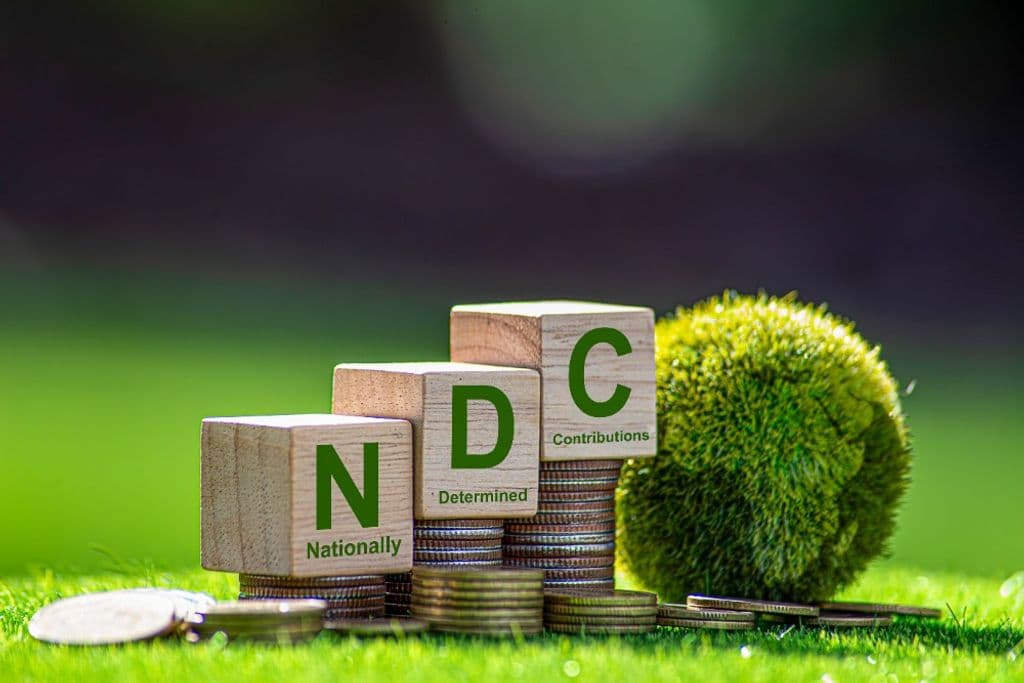
A Nationally Determined Contribution (NDC) is each country’s commitment to reducing greenhouse gas emissions while adapting to the impacts of climate change in accordance with the Paris Agreement.
In Indonesia, updating the NDC is an important step toward strengthening emissions reduction targets, accelerating the energy transition, and supporting low-carbon development toward achieving Net Zero Emissions by 2060 or sooner.
Climate change has become a global challenge affecting nearly every country, including Indonesia.
Extreme weather, rising sea levels, and the increasing frequency of natural disasters serve as reminders that concrete action to reduce carbon emissions can no longer be delayed.
Therefore, every five years, countries participating in the Paris Agreement are required to update their Nationally Determined Contributions as part of their commitment to increasingly ambitious climate action.
What Is a Nationally Determined Contribution?
A Nationally Determined Contribution (NDC) is a national climate policy document prepared by each member country of the United Nations Framework Convention on Climate Change (UNFCCC) as part of the implementation of the Paris Agreement.
Through this document, each country outlines its greenhouse gas emissions reduction targets, climate change adaptation strategies, and the measures it plans to take to achieve those targets.
The Paris Agreement, adopted in 2015, aims to keep the increase in global temperatures well below 2°C and pursue efforts to limit the increase to no more than 1.5°C above pre-industrial levels.
To achieve this objective, each country is required to update its NDC every five years with increasingly ambitious targets based on its respective capabilities.
In addition to serving as a climate change mitigation strategy, a Nationally Determined Contribution can also form part of a national development plan, as it can encourage green investment, create new jobs, strengthen community resilience, and support sustainable development.
Related Article: Energy Diversification: The Importance of Renewable Energy for Indonesia’s Future
How Has Indonesia’s Nationally Determined Contribution Developed?
Indonesia first submitted its NDC to the UNFCCC in 2015. The document was subsequently updated several times, eventually becoming the Enhanced Nationally Determined Contribution, or Enhanced NDC, in 2022.
Under the Enhanced NDC, Indonesia set greenhouse gas emissions reduction targets for 2030 of:
- 31.89% through its own efforts, or unconditionally.
- 43.20% with international support, or conditionally.
These targets are calculated against a business-as-usual scenario.
In accordance with the provisions of the Paris Agreement, Indonesia then updated the document again through the Second Nationally Determined Contribution, or SNDC.
This update was prepared based on several important developments, including the results of the Global Stocktake, the Long-Term Strategy for Low Carbon and Climate Resilience 2050, or LTS-LCCR 2050, as well as the direction of national development under the 2025–2029 National Medium-Term Development Plan and the 2025–2045 National Long-Term Development Plan.
Through the SNDC, Indonesia reaffirmed its target of achieving Net Zero Emissions by 2060 or sooner, while continuing to take economic growth and public welfare into account.
What Are the Key Updates in the Second Nationally Determined Contribution?
Compared with the previous document, the SNDC introduces several important changes.
1. Promoting a Just Transition
For the first time, Indonesia has included a dedicated discussion on a Just Energy Transition.
The government emphasizes that the transition toward clean energy must continue to protect workers’ welfare, create new employment opportunities, improve workforce skills, and involve various stakeholders in the policymaking process.
2. Strengthening Blue Carbon
Indonesia also highlights the significant potential of blue carbon from coastal ecosystems such as mangroves and seagrass meadows.
Through the development of Ocean Accounting and updated coastal ecosystem data, the carbon absorption potential of marine areas is expected to make a greater contribution to achieving the Nationally Determined Contribution targets.
3. Strengthening Climate Change Adaptation
In addition to mitigation, the SNDC places greater emphasis on climate change adaptation.
The government is encouraging the strengthening of the Climate Village Program, or ProKlim, increased research on loss and damage, and improved community resilience in dealing with disasters caused by climate change.
Are Indonesia’s Nationally Determined Contribution Targets Realistic?
Indonesia aims to achieve Net Zero Emissions by 2060 or even sooner.
President Prabowo Subianto has also announced several important commitments, including the long-term phase-out of coal-fired power plants and the full adoption of renewable energy over the coming decades.
However, several challenges remain. The 2025–2034 Electricity Supply Business Plan, or RUPTL, still includes the development of fossil fuel-based power plants with a combined capacity of approximately 16.6 GW.
At the same time, coal continues to dominate Indonesia’s national energy mix, including for electricity generation and the nickel processing industry.
This situation indicates that there is still a gap between Indonesia’s Nationally Determined Contribution targets and the implementation of energy policies on the ground.
Indonesia’s Challenges in Achieving Its Nationally Determined Contribution Targets
Although Indonesia’s targets are becoming increasingly ambitious, their implementation still faces various challenges. One of the main challenges is the country’s continued dependence on coal.
The energy and forestry sectors remain the largest contributors to emissions, while coal continues to dominate the national energy mix, both for public electricity generation and industrial needs.
At the same time, the government has made several international commitments, including the gradual phase-out of coal and the large-scale development of renewable energy.
However, a number of fossil fuel-based power plant projects are still included in electricity sector planning. This creates challenges in aligning energy policy with Indonesia’s Nationally Determined Contribution targets.
Renewable energy projects also continue to face several obstacles, including:
- Relatively complex licensing processes.
- Limited supporting infrastructure.
- Uncertainty surrounding regulations and electricity pricing mechanisms.
- The need for long-term policy certainty to support investment.
Another challenge is the need to increase the participation of communities, academics, the private sector, and local governments so that climate policy implementation becomes more inclusive and effective.
The success of the Nationally Determined Contribution does not depend solely on central government policy, but also on collaboration among all stakeholders in accelerating the transition toward a low-carbon economy.
Related Article: Understanding Carbon Emissions: Causes, Impacts, and Ways to Reduce Them
TBS Energi Utama’s Role in Supporting Indonesia’s Nationally Determined Contribution Targets
Achieving the Nationally Determined Contribution targets requires concrete support from the private sector through investment in and development of clean energy.
One company that continues to expand its contribution is TBS Energi Utama, which has gradually developed various renewable energy projects across Indonesia.
In 2020, through its subsidiary PT Toba Bara Energi, or TBAE, TBS Energi Utama acquired PT Adimitra Energi Hidro, or AEH, which developed a mini-hydropower plant with a capacity of 2 × 3 MW in Lampung.
At the same time, TBS Energi Utama also acquired PT Bayu Alam Sejahtera, or BAS, to explore the potential development of wind power generation in East Nusa Tenggara.
The AEH mini-hydropower plant reached its Commercial Operation Date on January 22, 2025, and now supplies 6 MW of clean electricity to the Southern Sumatra power system.
In addition to generating low-emission energy, the project also benefits local communities by improving infrastructure, expanding access to electricity, and supporting environmental conservation.
TBS Energi Utama is also developing a Floating Solar PV Power Plant in Tembesi, Batam. The project achieved financial closing in 2024 and is targeted to begin commercial operations in 2026 while being connected to the national electricity grid.
The floating solar power plant is expected to reduce carbon emissions, improve air quality, create green jobs, encourage technology transfer, and strengthen collaboration with surrounding communities in support of sustainable development.
Through these renewable energy projects, TBS Energi Utama demonstrates that achieving the Nationally Determined Contribution targets requires not only government policy, but also concrete investment from the private sector.
Such collaboration will become an important foundation for Indonesia to accelerate its energy transition, strengthen climate resilience, and achieve its Net Zero Emissions target by 2060 or even sooner.