Non-renewable energy remains an important part of the global energy system in 2026, even as renewable energy continues to expand.
The transition toward cleaner energy is accelerating, but it does not happen instantly.
Existing energy infrastructure, industrial demand, economic growth, and energy security considerations mean that several non-renewable energy sources are still widely used in many countries, including across Asia and Indonesia.
What Is Non-Renewable Energy?
Non-renewable energy is energy derived from natural resources that are limited in supply and take a very long time to form again.
Because these resources may take millions of years to develop, they cannot be replenished within the timescale of a human lifetime.
Some of the main characteristics of non-renewable energy include:
- Limited availability.
- High energy density.
- Support from well-established infrastructure.
- Prices influenced by market and geopolitical conditions.
- Most sources produce higher emissions than renewable energy.
Read Also: 5 Advantages of Renewable Energy and Its Opportunities for Sustainable Industries
Examples of Non-Renewable Energy
Here are several important examples of non-renewable energy sources.
1. Petroleum
Petroleum is one of the most widely used examples of non-renewable energy.
In addition to being used as a transportation fuel, petroleum is also a raw material for a wide range of industrial products.
Its refined products include gasoline, diesel, aviation fuel, lubricants, asphalt, plastics, resins, and various chemicals.
For this reason, petroleum plays an important role not only in the energy sector but also in manufacturing and petrochemicals.
2. Coal
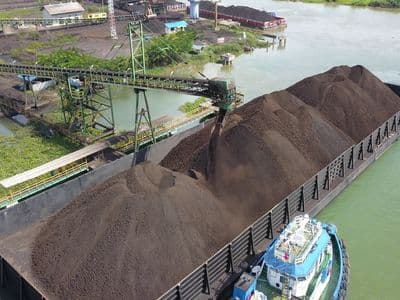
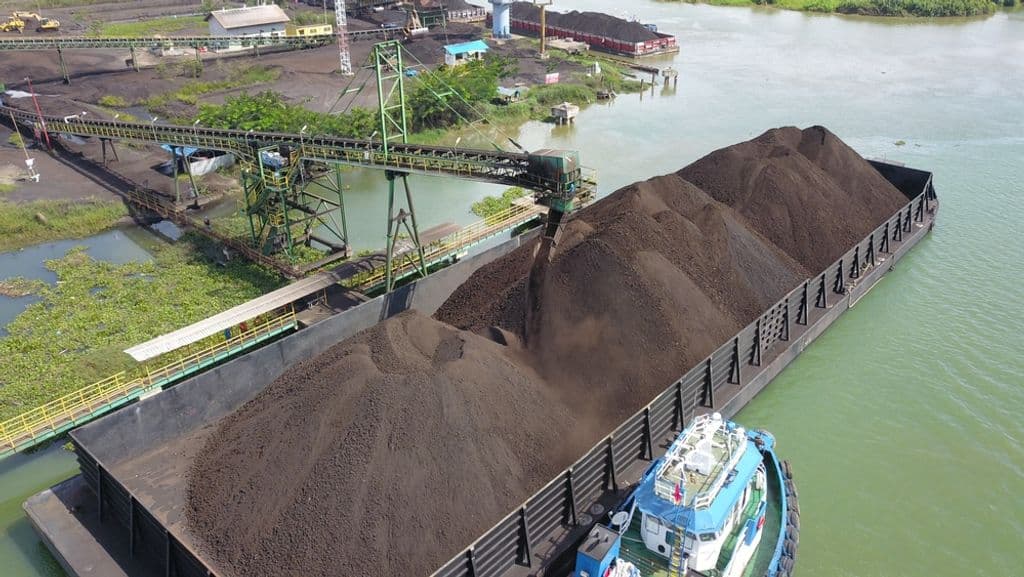
Coal continues to play a major role in electricity generation and industry, particularly in steel and cement production.
Across Asia, coal consumption remains high as electricity and industrial demand continue to grow.
IEA data shows that China, India, and ASEAN countries accounted for around 77% of global coal consumption in 2024.
In Southeast Asia, coal still accounted for around 48% of electricity generation in 2025.
3. Natural Gas
Natural gas is a non-renewable energy source widely used for electricity generation, household needs, industrial activities, and petrochemicals.
Combined-cycle power plants can also convert natural gas into electricity with relatively high efficiency.
Natural gas is often considered a transition fuel because its emissions are lower than coal when used for energy generation.
However, natural gas remains a fossil fuel and therefore depends on finite natural resources.
4. Nuclear Energy
Nuclear energy is generated through fission, a process in which atomic nuclei are split to produce heat.
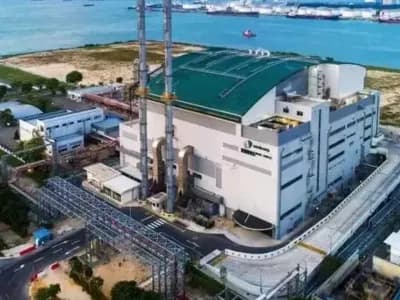
The heat is then used to produce steam and drive turbines for electricity generation.
Nuclear energy differs from coal, oil, and natural gas because it does not rely on combustion.
However, its fuel, such as uranium, is a finite mineral resource. For this reason, nuclear energy can be included in discussions of non-renewable energy.
5. Uranium
Uranium is the primary fuel used in many nuclear reactors.
Before it can be used, uranium must go through several processing stages and, for certain types of nuclear fuel, enrichment.
The role of uranium is becoming increasingly strategic as several countries revisit nuclear energy as part of their energy security strategies and efforts to reduce power-sector emissions.
6. Plutonium
Plutonium has much more limited applications than uranium.
This material can be produced in nuclear reactors and used in certain types of nuclear fuel or specific nuclear systems.
Because of its sensitive nature and its connection to military technologies, its use is subject to strict regulation and oversight.
7. LPG
Liquefied Petroleum Gas (LPG) consists mainly of propane and butane obtained from petroleum refining and natural gas processing.
LPG is widely used for cooking, heating, and various industrial and commercial applications.
One of its advantages is that it can be easily stored and distributed in pressurized cylinders or tanks.
However, because it is derived from fossil fuels, LPG remains a non-renewable energy source.
8. Oil Sands
Oil sands contain bitumen, a heavy hydrocarbon that can be processed into synthetic crude oil.
Extracting it requires more complex technologies than conventional oil production.
Its development also faces challenges related to land and water use, as well as relatively high emissions.
For this reason, oil sands are often discussed in the context of the environmental impacts of non-renewable energy.
9. Shale Oil
Shale oil comes from rock formations containing hydrocarbons and can be extracted using horizontal drilling and hydraulic fracturing, or fracking.
These technologies have helped increase oil production in several countries and have significantly influenced global energy market dynamics.
However, water use, potential environmental impacts, and seismic activity remain issues of concern.
10. Peat
Peat is formed from plant material that decomposes very slowly in wetland environments.
Because it takes an extremely long time to form, peat can be categorized as a non-renewable energy source when used as fuel.
Its use is relatively limited compared with oil, coal, and natural gas, but it remains significant in certain regions.
Read Also: Why Indonesia’s Energy Transition Cannot Be Delayed and What Are the Challenges?
Non-Renewable Energy in Asia
Asia is one of the most important regions in discussions about non-renewable energy.
Economic growth, industrialization, urbanization, and increasing electricity demand continue to drive high energy consumption across the region.
In Southeast Asia, fossil fuels still dominate the energy mix.
The IEA notes that coal, oil, and natural gas remain major energy sources, even as investment in clean energy continues to increase.
At the same time, the energy transition is progressing.
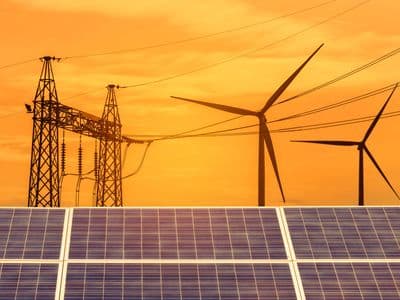
Solar and wind power are expanding rapidly, while several countries are also developing power grids, energy storage, electric vehicles, and other low-emission technologies.
What About Indonesia?
Indonesia still has a high level of dependence on fossil fuels, particularly coal, oil, and natural gas.
Coal also plays an important role in electricity generation and mineral processing industries.
However, clean energy development is being strengthened.
Based on the PLN Electricity Supply Business Plan 2025–2034, approved through Minister of Energy and Mineral Resources Decree No. 188.K/TL.03/MEM.L/2025, PLN plans to develop new power generation capacity totaling 69,512 MW.
Of this amount, 42,569 MW, or 61.2%, will come from new and renewable energy sources, while 16,687 MW will come from fossil-based power generation.
The RUPTL also sets a target for new and renewable energy to account for 34.3% of electricity generation by 2034.
According to the Ministry of Energy and Mineral Resources, the combined capacity of renewable energy and energy storage in the RUPTL reaches approximately 52.9 GW, or 76% of total planned capacity additions.
This consists of around 42.6 GW of renewable energy and 10.3 GW of storage.
These figures show that non-renewable energy will remain part of Indonesia’s electricity system, while new capacity development is increasingly creating greater room for renewable energy and energy storage technologies.
Expansion of TBS Renewable Energy Projects
This shift is also reflected in TBS’s strategy to expand into renewable energy as part of its broader transformation toward more sustainable businesses.
One of its achievements is the Sumber Jaya Mini-Hydropower Plant in Lampung through PT Adimitra Energi Hidro.
The 2 x 3 MW, or 6 MW, facility reached its Commercial Operation Date (COD) on January 22, 2025, and supplies clean energy to the Southern Sumatra region.
TBS is also developing the 46 MWp Tembesi Floating Solar Power Plant in Batam.
The project has reached financial close and is being developed in partnership with PLN Nusantara Power.
In addition to these two projects, TBS has a renewable energy development pipeline in Indonesia and is targeting projects across solar, wind, hydropower, and other energy sources.
This portfolio forms part of TBS’s strategy to expand its green energy business through 2030.
Through the development of the 6 MW Sumber Jaya Mini-Hydropower Plant in Lampung, the 46 MWp Tembesi Floating Solar Power Plant in Batam, and other renewable energy projects in its pipeline, TBS continues to demonstrate concrete steps in supporting Indonesia’s energy transition.