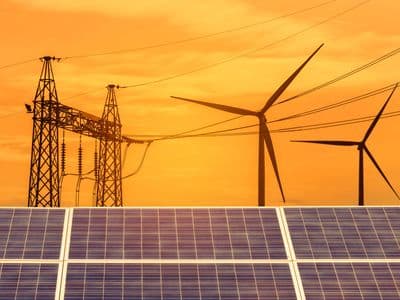
Solar-powered electric vehicle charging stations use solar panels to generate electricity for charging electric vehicles, including both cars and motorcycles.
This technology offers a more environmentally friendly charging solution, helps reduce dependence on the power grid, and has the potential to support the development of a more sustainable electric vehicle ecosystem.
The growth of electric vehicles (EVs) across many Asian countries is driving the need for wider and more efficient charging infrastructure.
Rather than relying solely on grid electricity, charging stations are increasingly combining renewable energy, particularly solar power, with battery storage systems and smart energy management technologies.
So, how does this technology actually work, and how is it being implemented across Asia, including Indonesia? Read on to learn more.
Read Also: Modern Transportation and Its Role in Building Sustainable Mobility
What Is a Solar-Powered Electric Vehicle Charging Station?
A solar-powered electric vehicle charging station is an EV charging facility that uses solar energy as one of its electricity sources.
It uses photovoltaic (PV) panels to capture sunlight and convert it into electricity, which can then be used to charge vehicle batteries.
Unlike conventional charging stations that rely entirely on the electricity grid, solar-powered systems can generate electricity directly on-site.
The energy can be used immediately, stored in batteries, or combined with grid electricity as a backup source.
With this system, renewable energy can become more closely integrated into everyday activities, including transportation.
How Do Solar-Powered Electric Vehicle Charging Stations Work?
In simple terms, the system combines solar panels, energy storage, inverters, and electric vehicle charging points.
1. Solar Panels Capture Solar Energy
Solar panels are the main component.
The photovoltaic cells inside the panels capture sunlight and convert it into direct current (DC) electricity.
The amount of electricity generated depends on factors such as solar intensity, panel orientation, weather conditions, and whether the panels are affected by shading.
2. Energy Is Converted and Stored
Electricity generated by the panels can be sent to an inverter to be converted according to the system’s requirements.
Some of the energy can also be stored in a Battery Energy Storage System (BESS).
Storage is important because sunlight is not available at all times.
Energy collected during the day can be used at night or when electricity generation from the solar panels decreases.
3. Electricity Is Delivered to the Vehicle
The electricity is then supplied to a charging point to charge the electric vehicle battery.
Charging speeds may vary, ranging from slower charging to fast charging or ultra-fast charging.
The control system can also monitor vehicle demand, battery capacity, grid conditions, and overall energy usage.
If solar electricity production exceeds demand, the excess electricity can be stored or, in certain systems, exported back to the grid.
Why Is Solar-Powered EV Charging Important?
Using solar energy at electric vehicle charging stations offers several benefits.
1. Reducing Emissions
Solar energy is a renewable energy source that does not produce direct carbon emissions when generating electricity.
Combining solar power with electric vehicles can help reduce emissions associated with transportation and electricity consumption.
2. Reducing Dependence on the Electricity Grid
Generating electricity directly on-site means charging stations do not have to rely entirely on the electricity grid.
When equipped with battery storage and the appropriate systems, certain facilities may also be able to continue operating during grid disruptions.
However, this ability is not automatically available at every charging station.
Independent operation requires specific system designs, including battery storage, grid-forming inverters, and electrical protection systems.
3. Helping Manage Energy Costs
Once solar panels are installed, sunlight does not require fuel costs.
Over the long term, this can help operators reduce exposure to fluctuations in electricity prices and improve operational cost efficiency.
Development of Solar-Powered Charging Stations in Asia
Solar-powered electric vehicle charging stations are beginning to expand across several Asian countries.
In Singapore, for example, some fast-charging facilities have integrated solar power with battery storage systems.
Meanwhile, China has developed several projects combining large-scale solar panels, megawatt-scale energy storage, and smart charging technologies.
The Philippines has also introduced solar-powered charging stations that can operate independently or export excess electricity to the grid.
India and Thailand have also begun combining solar energy with repurposed batteries and BESS technologies.
These developments show that electric vehicle charging infrastructure in Asia is not only focused on increasing the number of charging points, but also on making the energy used for charging more sustainable.
How Do Solar-Powered Charging Stations Work in Indonesia?
In Indonesia, solar-powered electric vehicle charging stations can take advantage of relatively abundant sunlight throughout the year.
Electricity generated by solar panels can be used directly for charging or stored in batteries.
Several implementations have already appeared in different locations, including university campuses such as Universitas Negeri Surakarta (UNS) in Surakarta and Universitas Indonesia (UI), as well as resort areas such as The Apurva Kempinski Bali.
To maintain electricity availability, systems can also use a hybrid configuration that combines solar energy with electricity from PLN or other backup sources.
Although development is underway, Indonesia still faces several challenges, including high upfront investment costs, land requirements, solar panel and battery capacity, and the need to manage energy according to vehicle usage patterns.
Read Also: Battery Recycling: Challenges in Recycling Electric Vehicle Batteries
TBS and the Development of Indonesia’s Electric Vehicle Ecosystem
The development of energy infrastructure and electric mobility is also part of Indonesia’s broader energy transformation.
In 2021, TBS and GoTo Group established PT Energi Kreasi Bersama, or Electrum, to build an integrated electric mobility ecosystem.
Electrum covers various areas, including vehicle assembly, battery technology, battery swapping infrastructure, charging stations, and financing schemes.
In February 2022, President Joko Widodo inaugurated the launch of a collaborative electric vehicle ecosystem involving Electrum, Pertamina, Gogoro, and Gesits.
Later that year, Electrum also participated in the G20 Summit and B20 Forum in Bali by providing 50 electric motorcycles, 11 shelters, and 150 Gojek driver partners to serve delegates.
In December 2024, Electrum secured US$15 million in financing from the Asian Development Bank, the Australian Climate Finance Partnership, and Bank DBS Indonesia.
The funding supported vehicle procurement and the expansion of the battery swapping network, which is projected to reduce greenhouse gas emissions by up to 123,000 tonnes per year.
TBS has also continued to develop its product offering, not only its supporting infrastructure.
The Electrum H3i electric motorcycle was launched at IMOS in October 2024, offering both home charging and access to the battery swapping network.
In 2025, the Electrum H1 was introduced as an additional electric vehicle option for consumers.
By 2025, Electrum had established more than 500 Battery Swapping Stations, supported more than 15,000 electric motorcycles across Jakarta and surrounding areas, and recorded more than 19,000 battery swaps per day.
The ecosystem has also contributed to avoiding more than 3,200 tonnes of CO₂ emissions.
In Indonesia, developing an electric vehicle ecosystem requires collaboration across technology, infrastructure, energy, and financing.
Through Electrum, TBS continues to contribute to this journey by developing electric vehicles, battery swapping, and a mobility ecosystem that supports the transition toward more sustainable transportation.