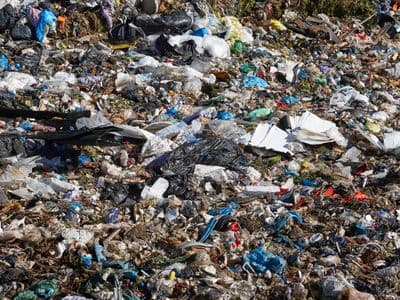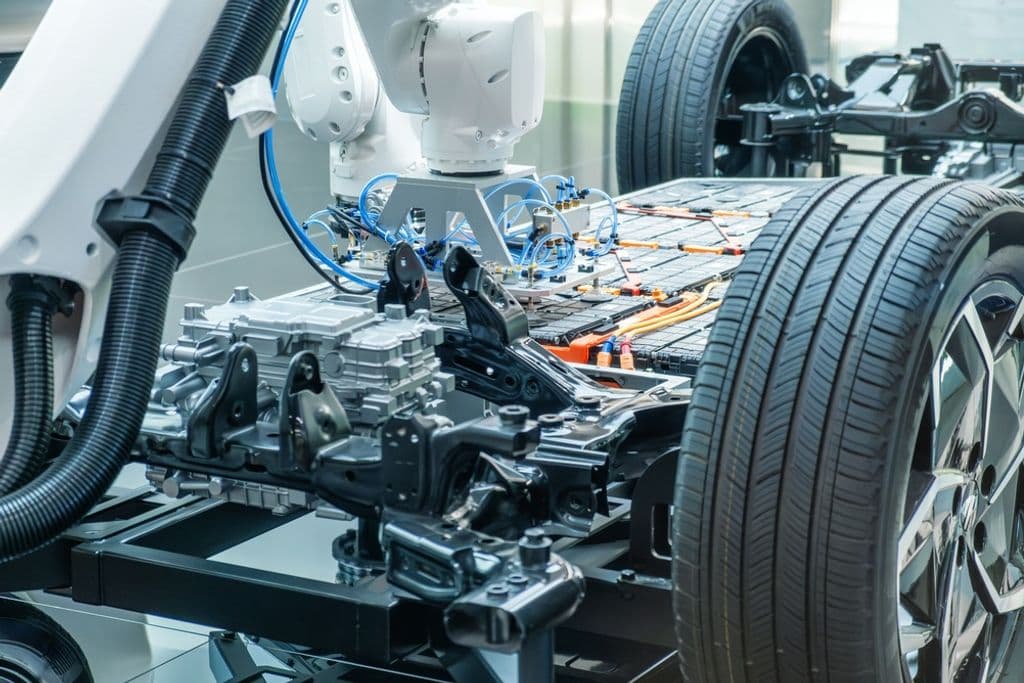
Second-life batteries are becoming an increasingly promising solution for supporting the clean energy transition because they allow electric vehicle batteries that are no longer optimal for automotive use to be repurposed as energy storage systems.
By extending battery life, this technology can help reduce battery waste, conserve resources, and support the use of renewable energy across various sectors, including in Asia and Indonesia.
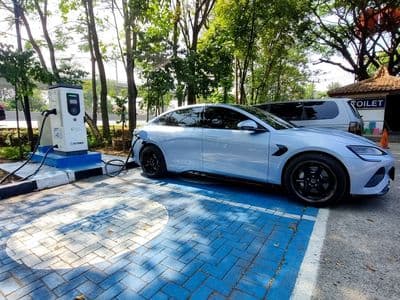
Electric vehicles (EVs) are an important part of efforts to reduce carbon emissions. However, like other components, EV batteries have a limited useful life.
After being used in vehicles for several years, battery capacity gradually declines, making the battery less suitable for driving applications that require high performance.
Even so, these batteries do not necessarily have to become waste.
With around 70–80% of their capacity remaining, EV batteries can still be used for less demanding applications, such as energy storage in homes, buildings, data centers, and renewable energy systems.
What Is a Second-Life Battery?
A second-life battery is an electric vehicle battery or energy storage system that has passed its primary service life but still retains enough capacity and functionality to be used for other applications.
As battery capacity declines, the battery may no longer meet vehicle requirements in terms of driving range, charging efficiency, safety, or usage patterns.
However, this does not always mean the battery should immediately be discarded or recycled.
The battery can instead be reused for stationary applications. For example, it can store electricity generated by solar panels during the day for use at night, provide backup power, or help stabilize electricity supply.
This approach extends the battery’s economic life while potentially reducing the need to manufacture new batteries.
Related Article: Solid-State Battery: The Future Technology of Electric Vehicles
How Are Used Batteries Repurposed?
After reaching the end of their first life, EV batteries generally have several options: repurposing, refurbishment, recycling, and, as a last resort, disposal.
1. Repurposing
Repurposing means reusing batteries that are still suitable by combining and adapting them according to their remaining capacity and condition.
Repurposed batteries can be used for stationary energy storage in homes, buildings, or commercial facilities.
2. Refurbishment
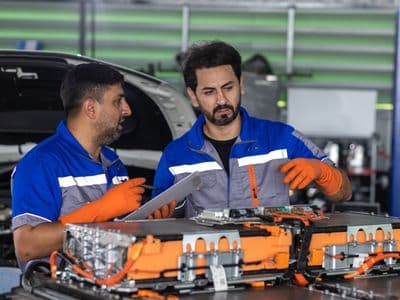
In the refurbishment process, batteries are dismantled and cells that are still usable are inspected and reconditioned.
These cells can then be assembled into new battery modules for specific applications.
3. Recycling
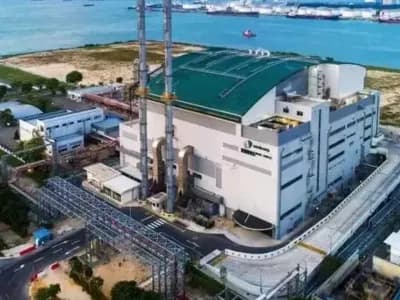
If a battery is no longer suitable for reuse, valuable materials inside it can be recovered through recycling.
Materials such as lithium, cobalt, nickel, and manganese can be reused as raw materials for producing new batteries.
This approach is becoming increasingly important as growing electric vehicle demand increases the need for these minerals.
The Potential of Second-Life Batteries in Asia
Asia is one of the most important regions in the development of electric vehicle ecosystems and battery technologies.
China, Japan, and South Korea have introduced various policies and technologies to support battery reuse and recycling.
China has rapidly expanded its battery recycling infrastructure and implemented producer responsibility systems, collection targets, and battery tracking mechanisms.
The government also supports a circular battery economy through industrial policies and various incentives.
Japan, meanwhile, places significant emphasis on industrial collaboration and technological innovation.
The use of retired batteries for residential energy systems and grid support is also receiving increasing attention.
South Korea is developing battery collection and recycling systems while strengthening domestic battery technologies and circular economy applications.
These developments show that used batteries are not only a waste management issue, but can also become valuable economic resources.
Second-Life Battery Innovation in Indonesia
Indonesia has also begun exploring the reuse of retired electric vehicle batteries.
One example was demonstrated by the Energy Management Laboratory through a 2nd Life Batteries product exhibition on August 23, 2024, represented by Prof. Edi Leksono as the lead researcher.
The innovation uses electric vehicle batteries whose remaining capacity has declined to around 70–80%.
These batteries may no longer be ideal for EV use because of reduced driving range, charging efficiency, safety considerations, and changes in usage profiles.
However, they can still be used for home and building energy storage, backup power, and integration with solar panels.
The Energy Management Laboratory also plans to develop these batteries into rack batteries and power banks.
Rack batteries are intended for homes, buildings, and data centers, with modules that can be expanded or installed in parallel.
Each module is equipped with a Battery Management System (BMS) to monitor voltage, current, and temperature while providing protection against overcharging, over-discharging, thermal runaway, and short circuits.
Meanwhile, the power bank is designed for portable applications such as outdoor activities, camping, emergency lighting, and mobile phone charging.
The use of a BMS is also an important part of maintaining product safety.
Benefits for Businesses and the Environment
Reusing retired batteries offers several advantages.
From an economic perspective, second-life batteries can potentially provide a lower-cost energy storage alternative compared with new batteries.
For businesses using solar panels, batteries can store excess energy for use when electricity generation decreases.
This can help increase renewable energy utilization while strengthening energy resilience.
From an environmental perspective, extending battery life can reduce electronic waste and delay the need for recycling.
Once the battery is no longer suitable for its second application, it can still enter the recycling process to recover valuable materials.
Related Article: 8 Electric Car Maintenance Tips You Need to Know to Keep Your Vehicle in Optimal Condition
TBS and the Future of Indonesia’s Electric Vehicle Ecosystem
The development of second-life batteries is part of the broader electric vehicle ecosystem.
Through its collaboration with GoTo Group, TBS is contributing to the development of Indonesia’s electric mobility ecosystem.
In 2021, TBS and GoTo Group established PT Energi Kreasi Bersama, or Electrum, to build an integrated electric mobility ecosystem.
Electrum covers vehicle assembly, battery technology, battery swapping infrastructure, charging stations, and financing schemes.
In February 2022, President Joko Widodo inaugurated the launch of a collaborative electric vehicle ecosystem involving Electrum, Pertamina, Gogoro, and Gesits.
In the same year, Electrum also participated in the G20 Summit and B20 Forum in Bali by providing 50 electric motorcycles, 11 shelters, and 150 Gojek driver partners to support delegate mobility.
In December 2024, Electrum secured US$15 million in financing from the Asian Development Bank, the Australian Climate Finance Partnership, and Bank DBS Indonesia.
The funding was used to accelerate vehicle procurement and expand the battery swapping network, which is projected to reduce greenhouse gas emissions by up to 123,000 tons per year.
Electrum’s development continued in October 2024 with the launch of the H3i electric motorcycle at IMOS, offering both home charging and access to the swapping network.
In 2025, the Electrum H1 was introduced as the latest model option for consumers.
By 2025, more than 15,000 electric vehicles were operating on the road, supported by more than 500 Battery Swapping Stations across Jakarta and surrounding areas.
The network records more than 19,000 battery swaps every day and has helped avoid more than 3,200 tons of CO2 emissions.
Through the development of the electric vehicle ecosystem with Electrum, TBS continues to contribute to advancing more sustainable mobility in Indonesia.
This initiative is part of a broader effort to build an energy and mobility ecosystem that not only focuses on electric vehicle adoption, but also considers sustainability throughout the entire battery life cycle.