A smart grid is a technology that can transform the way electricity systems operate, making them smarter, more flexible, more efficient, and better equipped to meet growing energy demand.
Electricity demand across many Asian countries continues to rise alongside economic growth, urbanization, industrial development, and the expansion of data centers and electric vehicles.
At the same time, the world is transitioning toward cleaner energy sources such as solar and wind power.
These developments require electricity grids to become more capable of detecting changes, managing supply, and responding to disruptions more quickly.
What Is a Smart Grid?
A smart grid is a modern electricity network that uses digital technology, sensors, communication systems, and automation to manage electricity flows more efficiently and in real time.
In a traditional power grid, electricity generally flows in one direction, from power plants to consumers.
A smart grid, by contrast, enables two-way communication, allowing information on electricity generation, distribution, and consumption to be continuously transmitted and analyzed.
One of the technologies that supports this system is the smart meter.
This device can automatically record electricity usage and transmit the data to electricity providers. With faster and more accurate information, grid management can be carried out more effectively.
A smart grid also enables the integration of various energy sources, including solar and wind power, whose output depends on weather conditions.
Read Also: Solar Power Plants: Types, How They Work, and Their Benefits
How Does a Smart Grid Work?
A smart grid works by connecting various digital devices within an integrated system that can monitor and control the electricity network.
1. Collecting Data
Sensors and smart meters monitor various types of information, including electricity consumption, voltage, current, equipment conditions, and potential disruptions.
2. Analyzing Grid Conditions
The data is transmitted through communication systems to a control center. The system then analyzes electricity demand, grid conditions, and changes in energy production.
3. Automatically Managing Electricity Distribution
When a disruption occurs in the network, the system can help identify the problem and redirect electricity flows.
As a result, disruptions can be addressed more quickly compared with systems that rely entirely on manual inspections.
4. Storing Excess Energy
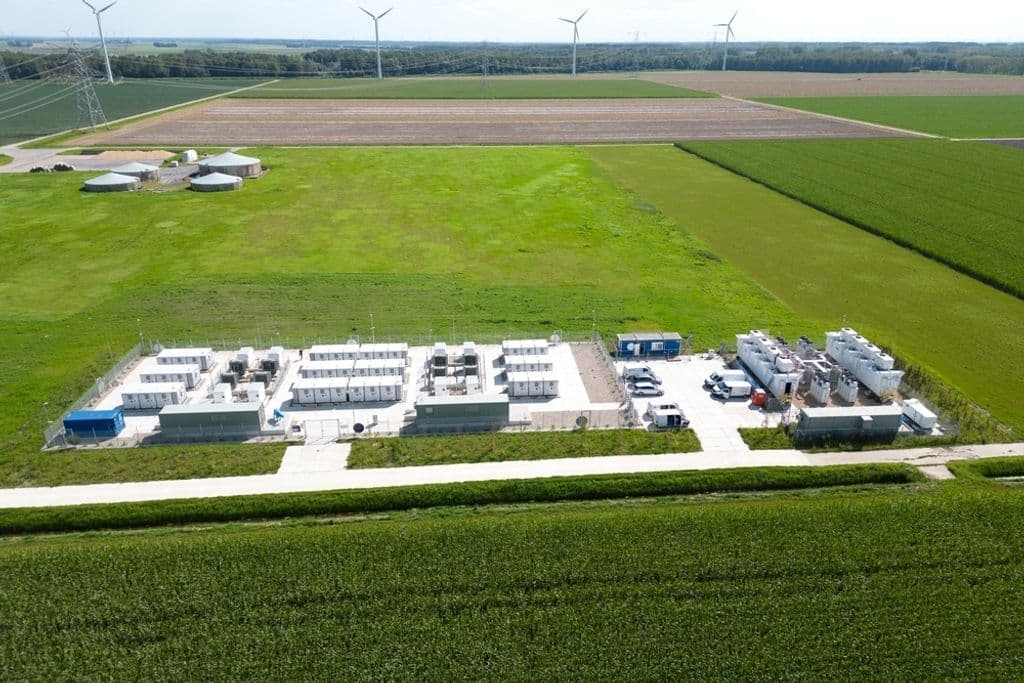
When electricity production exceeds demand, excess energy can be stored using energy storage technologies or batteries. The stored energy can then be used when demand increases or renewable energy generation declines.
This capability is particularly important because solar power only generates electricity when sunlight is available, while wind power depends on wind speeds.
Main Components of a Smart Grid
A smart grid consists of several interconnected technologies, including:
- Renewable energy sources, such as solar and wind power, which form part of a low-carbon energy system.
- Sensors and monitoring devices that track grid conditions rapidly.
- Internet of Things (IoT) devices that enable equipment to exchange data.
- Smart meters that measure and transmit electricity consumption data.
- Cybersecurity systems that protect electricity networks and data from digital threats.
- Energy storage systems, such as batteries, that store excess electricity and release it when needed.
The combination of these technologies allows the electricity grid to function not only as an energy distribution network, but also as a responsive system capable of monitoring conditions and taking appropriate action.
Why Smart Grids Are Important for Indonesia
Indonesia faces both significant challenges and opportunities in developing smart grids. Growing electricity demand is occurring alongside efforts to increase the share of renewable energy and accelerate transportation electrification.
Under Indonesia’s 2025–2034 Electricity Supply Business Plan, or Rencana Usaha Penyediaan Tenaga Listrik (RUPTL), the country is targeting an additional 42.6 GW of renewable energy generation capacity and 10.3 GW of energy storage capacity.
Changes in the energy mix require a grid that can manage electricity sources whose output is not always consistent.
The modernization of the JAMALI (Java-Madura-Bali) electricity system is one important part of this effort. The system accounts for approximately 79% of Indonesia’s power generation capacity.
With support from UNOPS, plans to modernize the control center include renewable energy forecasting capabilities and grid analysis tools to help maintain system stability and security.
The development of smart grids is also becoming increasingly relevant as Indonesia’s electricity demand is influenced by the growth of electric vehicles, data centers, industry, and distributed energy resources.
What About Smart Grids in Asia?
Similar challenges are being faced by other Asian countries. Rising energy demand and greater use of renewable energy require electricity grids to become increasingly flexible.
Across ASEAN, investment in smart grids is expected to help reduce economic losses caused by power disruptions.
Digital grid development may also create hundreds of thousands of new jobs in engineering, construction, information technology, and operations.
Several countries, including Singapore, Malaysia, Thailand, the Philippines, Vietnam, and Indonesia, have introduced smart grid strategies or pilot projects ranging from smart metering and demand response to stronger cybersecurity measures.
Regional cooperation is also becoming increasingly important, as ASEAN’s future electricity systems will require greater interconnection, aligned technology standards, and stronger knowledge sharing between countries.
Benefits of Smart Grids
The implementation of smart grids offers a number of benefits for both electricity systems and consumers.
1. Benefits for Electricity Systems
Smart grids can help reduce energy waste, accelerate disruption detection, improve grid reliability, and support the integration of renewable energy.
The technology also helps electricity providers better understand consumption patterns so that energy distribution can be adjusted according to demand.
2. Benefits for Consumers
For households and other electricity users, smart grids can provide faster access to energy consumption information.
This data can help consumers better understand their electricity usage habits and identify opportunities to save energy.
In the long term, this system can also support the development of smart homes, electric vehicle charging, and more efficient energy use.
Read Also: Why Indonesia’s Energy Transition Cannot Be Delayed and What Are the Challenges?
TBS’s Role in the Future of Smart Grids in Indonesia
The transformation of the energy system requires not only the modernization of electricity grids, but also the development of a stronger electric vehicle ecosystem. In Indonesia, TBS is contributing to this transition through the development of electric mobility solutions together with various partners.
In 2021, TBS and GoTo Group established PT Energi Kreasi Bersama, known as Electrum, to build an integrated electric mobility ecosystem.
The ecosystem covers vehicle assembly, battery technology, battery swapping, charging stations, and financing.
In February 2022, the collaborative electric vehicle ecosystem involving Electrum, Pertamina, Gogoro, and Gesits was launched by President Joko Widodo.
During the G20 and B20 Summits in Bali later that year, Electrum provided 50 electric motorcycles, 11 shelters, and 150 Gojek driver partners to support delegate mobility.
In December 2024, Electrum secured US$15 million in financing from the Asian Development Bank, the Australian Climate Finance Partnership, and Bank DBS Indonesia.
The funding was used to accelerate vehicle procurement and expand the battery swapping network, which is projected to reduce greenhouse gas emissions by up to 123,000 tonnes per year.
Electrum also launched the H3i in October 2024 at IMOS, offering both home charging and access to its battery swapping network. A year later, Electrum introduced the H1 model to provide consumers with a broader range of electric vehicle options.
By 2025, Electrum had more than 500 Battery Swapping Stations supporting over 15,000 electric motorcycles across Jakarta and surrounding areas.
The network recorded more than 19,000 battery swaps per day, while avoided emissions had reached more than 3,200 tonnes of CO₂.
This transformation requires collaboration among governments, energy companies, technology providers, research institutions, and industry players.
Through the development of its electric vehicle ecosystem and supporting technologies, TBS is among the companies contributing to Indonesia’s energy transition toward a cleaner and more sustainable system.