A solid-state battery is a battery technology that uses a solid electrolyte instead of the liquid electrolyte found in conventional batteries, offering the potential for improved safety, higher energy density, and longer durability.
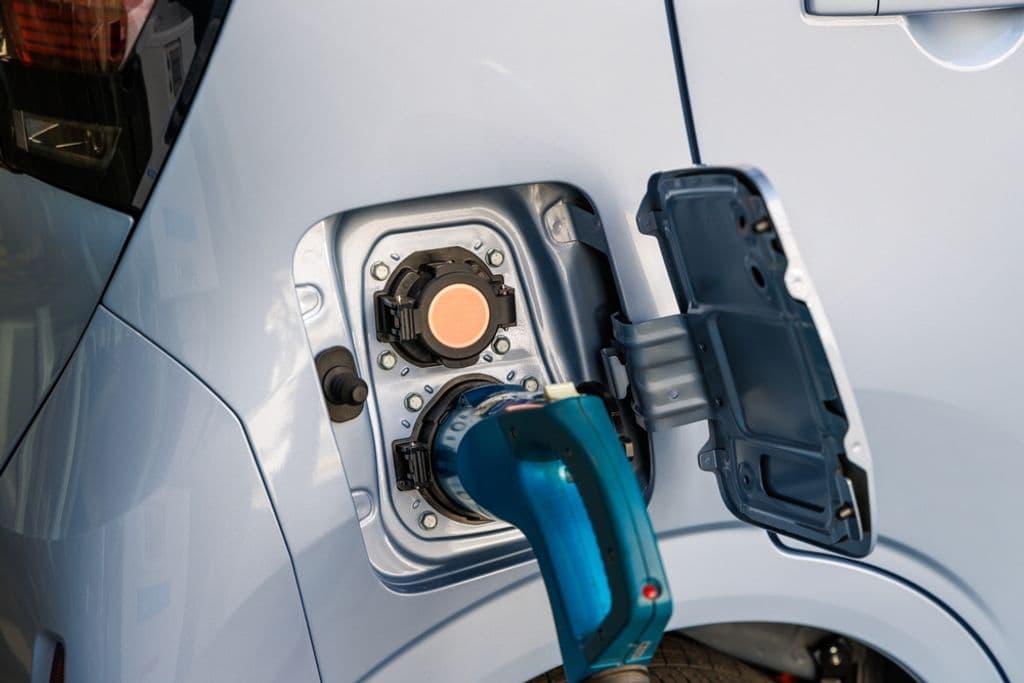
This technology is widely considered a promising part of the future of electric vehicles (EVs) because it could support longer driving ranges, faster charging, and the development of lower-emission mobility.
The adoption of electric vehicles continues to grow as demand increases for transportation that is more efficient and environmentally friendly.
However, the lithium-ion batteries commonly used today still face several challenges, including the risk of thermal runaway, charging time, and limitations in energy density.
For this reason, next-generation battery technologies such as solid-state batteries are being developed by various automotive and technology companies. So, how do they work, and what is their potential for the EV industry?
What Is a Solid-State Battery?
In simple terms, a solid-state battery is a battery that uses a solid electrolyte as the medium for transferring lithium ions between the cathode and anode.
This technology differs from conventional lithium-ion batteries, which use liquid electrolytes.
A solid electrolyte allows lithium ions to move while preventing the movement of electrons. This structure can help reduce the risk of short circuits and fires.
Some designs also allow the use of a lithium-metal anode, which has the potential to increase the amount of energy stored within the same battery size.
Related Article: Battery Recycling: Challenges in Recycling Electric Vehicle Batteries
Types of Solid-State Battery Electrolytes
Several types of solid electrolytes are currently being developed, including:
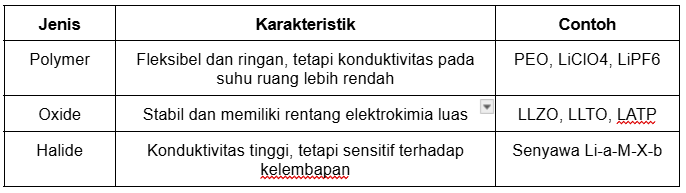
Each material has different characteristics, so research is still ongoing to find the optimal balance between performance, safety, and production costs.
How Does a Solid-State Battery Work?
The basic operating principle is similar to that of a lithium-ion battery.
During charging, lithium ions move from the cathode to the anode through the solid electrolyte. When the battery is in use, the ions move back toward the cathode, generating an electric current.
The main difference lies in the electrolyte.
Because it is solid and less flammable, the material can improve battery stability while also helping to suppress the growth of lithium dendrites that could potentially cause cell failure.
Certain technologies may also achieve energy densities of several hundred Wh/kg. This could exceed the energy density of many lithium-ion batteries currently in use.
Advantages of Solid-State Batteries for EVs
Solid-state batteries offer several advantages that could address some of the key limitations of today’s electric vehicle batteries, from safety to energy efficiency.
1. Improved Safety
Solid electrolytes are less flammable than liquid electrolytes.
The absence of liquid also eliminates the risk of leakage. This could help reduce the risk of fire and thermal runaway in electric vehicles.
2. Potential for Longer Driving Range
Higher energy density allows a battery to store more energy within a relatively similar size.
For EVs, this could help increase driving range without significantly increasing battery size.
3. Faster Charging
Solid-state batteries also have the potential to support faster charging.
Some developments are targeting charging up to 80% in less than 10 minutes.
If the technology can be mass-produced, this capability could reduce one of the main barriers to electric vehicle adoption: long charging times.
4. Potentially Longer Lifespan
This technology may also offer improved cycle life.
In other words, the battery could remain usable for longer before requiring replacement, potentially reducing both costs and battery waste.
Challenges in Developing Solid-State Batteries
Despite their potential, solid-state batteries still face several challenges.
Solid materials can develop cracks due to pressure and volume changes during charging and discharging.
Degradation at the interface between the electrolyte and electrodes can also increase resistance and reduce performance.
Another challenge is production cost.
Manufacturing solid-state batteries remains more complex than producing conventional lithium-ion batteries.
Production yields that meet quality standards also need to improve before the technology can be manufactured at scale and at competitive prices.
For this reason, companies and researchers continue to develop inspection methods, process controls, and electrodeposition techniques to improve production quality and efficiency.
Battery Technology Development in Asia
Asia is an important center for battery and electric vehicle development.
China leads in EV manufacturing scale and investment from companies such as CATL and BYD.
Japan has strengths in automotive technology and manufacturing. Toyota and Panasonic are among the companies developing next-generation battery technologies.
Meanwhile, South Korea relies on companies such as Samsung and LG Energy Solution to advance battery research and innovation.
These developments position Asia as a potential hub for the production and commercialization of solid-state batteries.
EV growth, government investment, and the development of local supply chains are also helping accelerate the progress of this technology.
The Impact of Solid-State Batteries on Indonesia
For Indonesia, the development of this technology could accelerate electric vehicle adoption.
Longer driving ranges, faster charging, and improved safety could help address range anxiety and concerns surrounding EV batteries.
Indonesia also has a strategic opportunity within the battery supply chain.
The development of local industries could include raw materials, component manufacturing, vehicle production, charging infrastructure, and battery recycling.
The continued growth of EVs will also increase demand for public electric vehicle charging stations and battery swapping infrastructure.
These facilities are essential to support wider electric vehicle adoption, particularly in major cities.
Related Article: Electric Vehicle Ecosystem: The Key to Indonesia’s Sustainable Transportation Future
TBS and the Development of Indonesia’s Electric Vehicle Ecosystem
Battery technology development needs to progress alongside the development of the broader electric vehicle ecosystem.
In Indonesia, TBS, through Electrum, plays a role in building an integrated electric mobility ecosystem.
In 2021, TBS and GoTo Group established PT Energi Kreasi Bersama, or Electrum.
Its ecosystem includes vehicle assembly, battery technology, battery swapping, charging stations, and financing.
In February 2022, President Joko Widodo inaugurated the launch of a collaborative electric vehicle ecosystem involving Electrum, Pertamina, Gogoro, and Gesits.
At the G20 Summit and B20 Forum in Bali in the same year, Electrum provided 50 electric motorcycles, 11 shelters, and 150 Gojek driver partners to serve delegates.
In December 2024, Electrum secured US$15 million in financing from the Asian Development Bank, the Australian Climate Finance Partnership, and Bank DBS Indonesia.
The funding was used to accelerate vehicle procurement and expand the battery-swapping network, which is projected to reduce emissions by up to 123,000 tons per year.
In October 2024, the Electrum H3i was launched at IMOS with options for both home charging and battery swapping.
Then, in 2025, Electrum introduced the H1 as its next electric vehicle option.
By 2025, more than 6,000 electric vehicles were operating on the road, supported by more than 320 battery-swapping station locations and over 19,000 battery swaps every day.
The ecosystem has also helped avoid more than 3,200 tons of CO2 emissions.
Solid-state batteries have significant potential to become an important technology in the future of electric vehicles by improving safety, energy density, and charging speed.
Although challenges related to cost and manufacturing remain, developments across Asia show that this technology continues to move closer to commercialization.
For Indonesia, successful electrification requires not only advanced battery technology, but also an ecosystem that is ready for everyday use.
Through TBS and Electrum, the development of electric vehicles, battery swapping, supporting infrastructure, and financing continues to support more sustainable mobility in Indonesia.