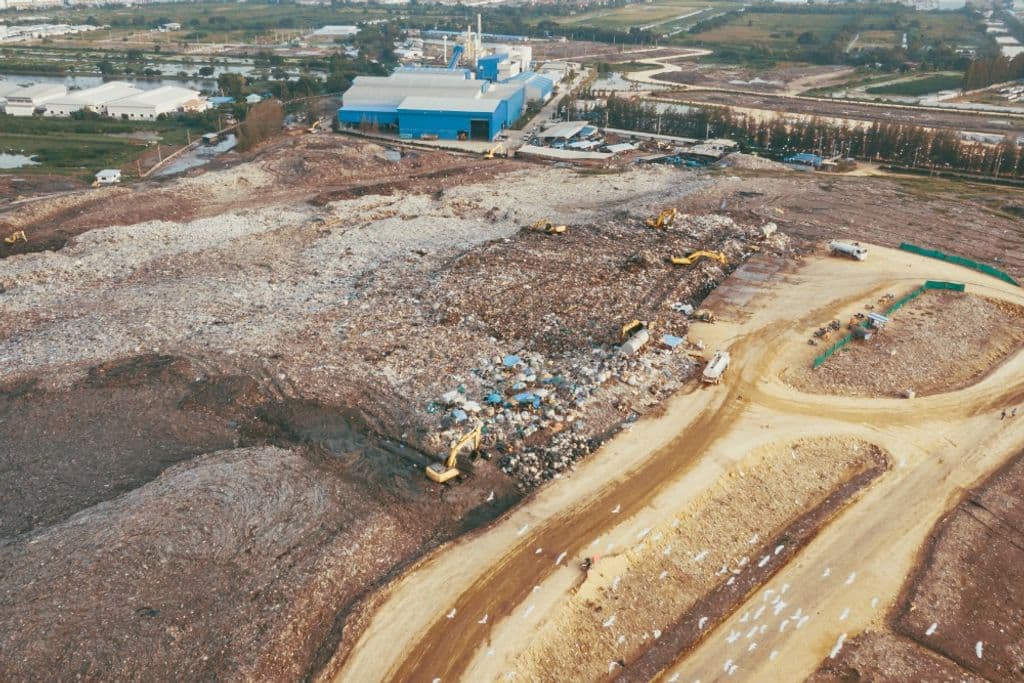
A sanitary landfill is a modern waste management method designed to reduce soil, water, and air pollution through a controlled waste disposal system.
This method has become an important solution for Indonesia in addressing the increasing volume of waste while supporting safer and more sustainable waste management practices.
As population growth and economic activities continue to increase, waste generation in Indonesia also rises every year. This condition requires a more effective waste management system compared to open dumping methods.
One approach widely used in many countries is the sanitary landfill, a landfill system that considers technical and environmental aspects to minimize pollution risks.
What Is a Sanitary Landfill?
A sanitary landfill is a waste management method that involves disposing of waste in a specially designed area equipped with impermeable layers, leachate collection systems, and waste decomposition gas management systems.
Its main purpose is to prevent environmental pollution caused by waste leakage and the accumulation of hazardous gases.
In this system, the bottom and walls of the landfill area are lined with impermeable materials such as clay or geomembranes. These layers prevent leachate from directly seeping into the soil and contaminating surrounding water sources.
How Does a Sanitary Landfill Work?
Before waste disposal begins, the landfill area is prepared with impermeable layers on the base and walls of the site. Waste is then placed and compacted gradually to optimize land capacity.
Under the waste layers, a network of pipes is installed to collect leachate and channel methane gas produced during the decomposition process.
The leachate is treated before being released into the environment, while methane gas can be utilized as an energy source.
Once the landfill reaches a certain capacity, the waste surface is covered with layers of soil or other cover materials. This covering process helps reduce odors, control fly populations, and accelerate waste stabilization.
Read Also: What Is Inorganic Waste? Definition, Types, and Examples
Important Elements in a Sanitary Landfill System
To function effectively, a sanitary landfill consists of several key components:
1. Lining System
The base layer is made from clay, bentonite, or geomembrane materials to prevent soil contamination caused by leachate leakage.
2. Leachate Collection System
A system designed to collect leachate and direct the liquid produced from waste decomposition to treatment facilities.
3. Cover System
A covering layer used to reduce rainwater infiltration into the waste pile and control odors.
4. Gas Ventilation System
A system that allows methane gas to escape in a controlled manner to prevent accumulation and potential explosion risks.
5. Monitoring System
Monitoring equipment used to detect leaks, groundwater quality, and overall landfill operating conditions.
Benefits of Using a Sanitary Landfill
Implementing a sanitary landfill provides various benefits for the environment and communities. Some of the benefits include:
1. Reducing Environmental Pollution
The impermeable layers used in sanitary landfills prevent leachate from entering the soil, reducing the risk of groundwater and surrounding land contamination.
2. Controlling Methane Gas
Methane is one of the greenhouse gases that can cause explosions if accumulated in large quantities. Through gas ventilation and collection systems, these risks can be minimized.
3. Potential Energy Generation
Collected methane gas can be used as fuel for power generation or other energy needs. This makes sanitary landfills not only waste disposal facilities but also potential sources of renewable energy.
4. Supporting Waste Valorization
Through better sorting and processing, organic waste can be converted into compost, while inorganic waste can be recycled into various valuable products.
Challenges of Implementing Sanitary Landfills in Indonesia
Although it offers many benefits, implementing sanitary landfills still faces several challenges.
One of the biggest challenges is the need for large areas of land. Therefore, landfill locations are generally required to be far from residential areas.
In addition, constructing and operating sanitary landfill facilities requires significant investment and consistent management.
If not properly managed, this system can still create environmental impacts such as leachate leakage or uncontrolled gas emissions. Therefore, supervision and maintenance are essential factors.
Examples of Sanitary Landfill Implementation in Indonesia
Several regions in Indonesia have started implementing sanitary landfill methods as part of efforts to improve waste management quality.
Talang Gulo Landfill (TPA Talang Gulo) in Jambi City is one example that successfully transformed from an open dumping system into a sanitary landfill.
This facility is equipped with a landfill area of approximately 5.2 hectares, a leachate treatment system, waste processing facilities, and compost production facilities.
Through this system, TPA Talang Gulo can produce around 15 tons of compost per day, process approximately 35 tons of organic waste per day, and manage up to 250 cubic meters of leachate daily.
Another example is Tanjung Harapan Landfill in Nunukan Regency, North Kalimantan. At this location, plastic waste is processed into floats for seaweed cultivation industries, while organic waste is utilized as compost material.
These approaches demonstrate that proper waste management can provide economic benefits while reducing the amount of waste sent to landfills.
Read More: Organic Waste: Definition, Examples, Benefits, and Management
Supporting Sustainable Waste Management with TBS
The implementation of sanitary landfills is an important step in creating a safer, more efficient, and sustainable waste management system in Indonesia.
Besides reducing environmental pollution, this method also creates opportunities to utilize waste as a valuable resource for economic and energy purposes.
Commitment to sustainable waste management is continuously strengthened by TBS Energi Utama through the development of an integrated waste management business in Indonesia and Singapore.
In 2023, TBS strengthened this sector by acquiring Asia Medical Enviro Services (AMES) and ARAH, which specialize in managing medical waste, hazardous and toxic waste (B3 waste), domestic waste, and electronic waste.
All activities were later consolidated under PT Solusi Bersih TBS (SBT).
Then, in March 2025, TBS expanded its regional business scale by completing the full acquisition of Sembcorp Environment (SembEnviro).
This leading waste management company in Singapore has strong capabilities in urban waste management, recycling, and environmental solutions.
Furthermore, in September 2025, SembEnviro officially changed its name to CORA Environment, becoming a new identity that unifies all TBS waste management businesses under an integrated platform.
Through AMES, ARAH, and CORA Environment, TBS continues to implement the TBS2030 roadmap by delivering innovative waste-to-resource solutions.
By 2025, TBS’s waste management network includes five processing facilities across Indonesia and Singapore, managing more than 1 million tons of waste annually and serving more than 475,000 customers.
This initiative demonstrates how the combination of technology, investment, and sustainability commitment from TBS Energy can help create a better future for waste management in Indonesia and Southeast Asia.