Hydropower is a renewable energy source that uses flowing water to generate electricity with relatively low carbon emissions.
In addition to supporting the clean energy transition, hydropower offers various advantages, different types of power generation systems, and its own development challenges.
As water is one of the natural resources that plays an important role in meeting electricity demand, hydropower plants harness its energy for use in household activities as well as industrial operations.
So, how does hydropower work, what are its benefits, and how is it applied in Indonesia? Read the full explanation below.
What Is Hydropower and How Does It Generate Electricity?
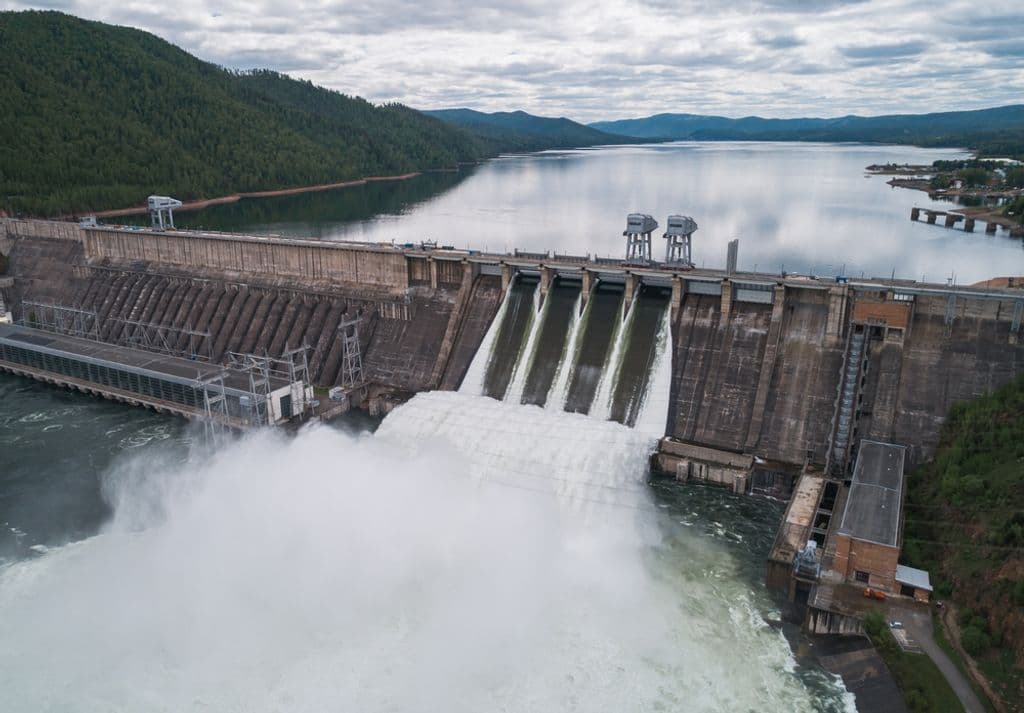
Hydropower is energy derived from the movement of water, such as river flows or water falling from a height. This energy is used to drive turbines connected to electricity generators.
In simple terms, hydropower generation works through several stages:
- Rainwater and melting snow collect in rivers or reservoirs, which are generally located at higher elevations.
- Water is directed to the power plant through dedicated channels by taking advantage of elevation differences.
- The flowing water turns turbines connected to a generator shaft.
- The rotating turbines drive the generator, converting mechanical energy into electricity.
- The electricity is distributed through the power grid, while the water flows back into rivers or the sea.
Some hydropower plants use reservoirs to regulate water supply, while others generate electricity directly from river flows.
Read Also: Understanding Agrivoltaics: When Solar Panels and Agriculture Share the Same Land
Why Is Hydropower Important?
Hydropower plays a major role in providing low-carbon electricity. According to the International Energy Agency (IEA), hydropower accounted for around one-sixth of global electricity generation in 2020.
Unlike fossil fuels, which are available in limited quantities, water resources are continuously replenished through the hydrological cycle.
In addition, reservoir-based hydropower plants can adjust electricity generation according to demand. This flexibility helps maintain grid stability, particularly when solar and wind power generation declines.
Advantages of Hydropower
The use of hydropower offers a range of environmental and economic benefits. Here are several advantages that make it an important part of sustainable energy development.
1. Supports Sustainable Development
Hydropower uses naturally replenished resources, helping reduce dependence on fossil fuels and lower carbon emissions.
2. Reduces Dependence on Fossil Fuels
Using rivers and domestic water resources can help countries strengthen energy independence while reducing the need for imported fuels.
3. Offers High Efficiency
Modern hydropower technologies allow water flow to be regulated so electricity generation can be adjusted according to demand, as long as sufficient water is available.
4. Supports Local Economic Development
The construction of hydropower plants can create jobs, improve infrastructure, and support economic activity in surrounding communities.
5. Relatively Low Operating Costs
Although hydropower projects require significant development investment, they generally have relatively low operating costs and long service lives.
Types of Hydropower Plants
Based on the technology used and the way water is harnessed, hydropower plants can be divided into several types.
1. Impoundment Hydropower
This type uses a dam or reservoir to store water before releasing it through turbines. Its main advantage is the ability to regulate electricity generation, although drought conditions can reduce generation capacity.
2. Pumped Storage Hydropower
This system moves water from a lower reservoir to a higher reservoir when excess electricity is available. When electricity demand increases, the water is released back down to generate power.
This technology functions as a form of energy storage that helps balance electricity supply and demand.
3. Diversion Hydropower
Also known as run-of-river hydropower, this type uses natural river flows without requiring a large reservoir. Its environmental impact may be lower, although electricity generation depends heavily on river flow levels.
4. Micro-Hydropower
Micro-hydropower refers to small-scale power plants that can help meet electricity needs in rural communities or remote areas.
Examples of Hydropower Use Around the World
Many countries use hydropower to meet electricity demand while reducing dependence on fossil fuels. The following are several examples of hydropower applications across different countries and regions.
1. China
China is one of the world’s largest hydropower producers. One of its major projects is the Three Gorges Dam on the Yangtze River, with a capacity of 22.5 GW, making it one of the largest hydropower plants in the world.
2. United States
Hydropower contributes around 6% of electricity generation in the United States. The country is home to the 6.8 GW Grand Coulee Dam and the Hoover Dam, with a capacity of approximately 2 GW, which also supports irrigation and flood control.
3. Europe
Norway relies on hydropower to generate more than 90% of its electricity. Meanwhile, Russia operates the 6.4 GW Sayano-Shushenskaya Dam, one of the largest hydropower plants in the world.
4. South America
Brazil and Paraguay operate the Itaipu Dam on the Paraná River, with a capacity of 14 GW. Venezuela also operates the 10.2 GW Guri Dam, which is one of the country’s main sources of electricity.
5. Africa
Egypt operates the Aswan High Dam, with a capacity of approximately 2.1 GW, which generates electricity while also providing water for irrigation. Ethiopia and the Democratic Republic of the Congo are also developing large-scale hydropower projects.
Examples of Hydropower Use in Indonesia
Indonesia has a number of hydropower plants that use rivers and dams to generate electricity. Some examples include:
- Cirata Hydropower Plant, West Java: Has a capacity of 1,008 MW and is one of the largest hydropower plants in Indonesia. The reservoir area is also used for a 192 MWp floating solar power plant.
- Jatiluhur Hydropower Plant, West Java: Has a capacity of 186.5 MW and also supports flood control and irrigation for approximately 240,000 hectares of farmland.
- Saguling Hydropower Plant, West Java: Has a capacity of 700 MW and generates around 2,156 GWh of electricity per year using the flow of the Citarum River.
- Asahan 3 Hydropower Plant, North Sumatra: Equipped with two generating units with a combined capacity of 174 MW to support electricity supply in Sumatra.
- Bakaru Hydropower Plant, South Sulawesi: Has a capacity of 126 MW and helps meet electricity needs for households and industries in surrounding areas.
Read Also: Landfill Methane Gas: Can It Be a Solution for Energy and Emissions Reduction?
Challenges in Hydropower Development
Although hydropower is a renewable energy source, its development still faces several challenges.
From an environmental perspective, dams can alter river flows, disrupt fish migration, and affect aquatic ecosystems. Certain reservoirs may also generate methane emissions due to the decomposition of organic matter.
At the same time, limited suitable locations, high upfront investment, changing rainfall patterns, and drought can affect both hydropower development and generation productivity.
Therefore, each project requires careful planning to ensure that the benefits of clean energy remain aligned with environmental protection.
TBS Supports Renewable Energy Development in Indonesia
Hydropower is one of the solutions that can help strengthen Indonesia’s clean electricity supply. Developing renewable energy requires collaboration among multiple stakeholders, including private-sector companies such as TBS.
In 2020, through PT Toba Bara Energi (TBAE), TBS acquired PT Adimitra Energi Hidro (AEH), the developer of the 2 × 3 MW Sumberjaya Mini-Hydropower Plant in Lampung.
The 6 MW power plant successfully reached its Commercial Operation Date (COD) on January 22, 2025, helping support the supply of clean electricity in Southern Sumatra while also contributing to infrastructure development, energy access, and local economic activity.
In the same year, TBS also acquired PT Bayu Alam Sejahtera (BAS), which is exploring wind energy development opportunities in East Nusa Tenggara.
In addition to hydropower, TBS is developing the 46 MWp Tembesi Floating Solar Power Plant in Batam. The project reached financial close in 2024 and is targeted to begin commercial operations in 2026.
These developments are expected to help reduce carbon emissions, improve air quality, create green jobs, encourage technology transfer, and strengthen collaboration with local communities.
Through these projects, TBS continues to strengthen its renewable energy portfolio to support Indonesia’s energy transition and sustainable development.