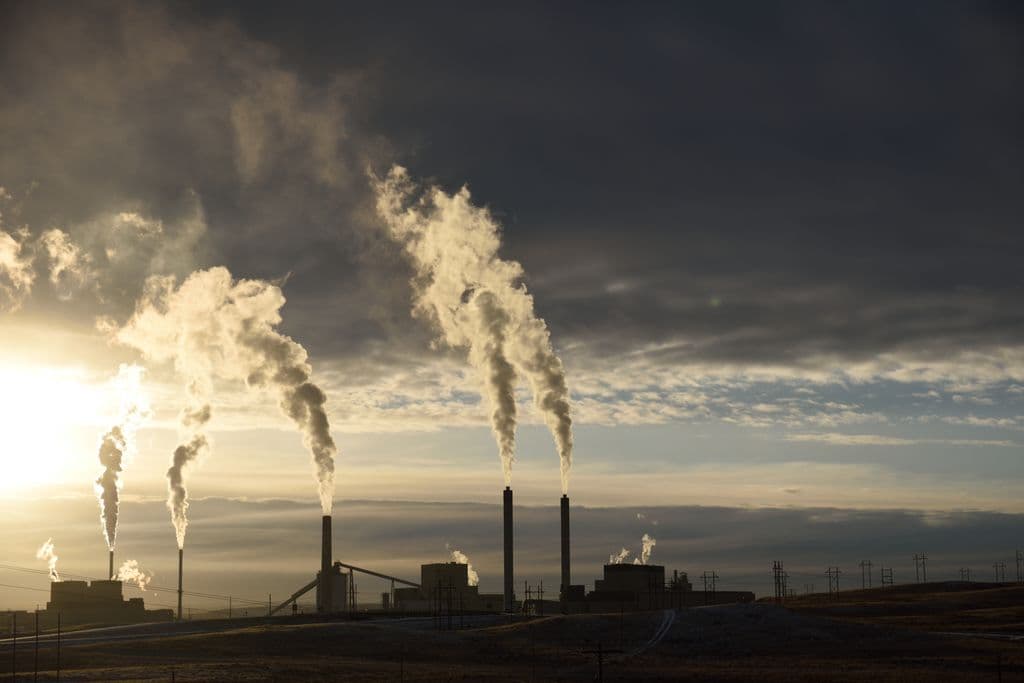
Methane gas generated from the decomposition of waste at landfills can be utilized as an alternative energy source after going through a proper capture and treatment process.
In addition to being used to produce fuel and electricity, its utilization can help reduce greenhouse gas emissions, improve waste management, and create economic opportunities for surrounding communities.
Rather than being released into the atmosphere and contributing to climate change, landfill methane can be captured and utilized to support the development of more sustainable energy solutions.
What Is Landfill Methane Gas?
Methane gas is produced through the activity of microorganisms that break down organic matter in environments with low oxygen levels.
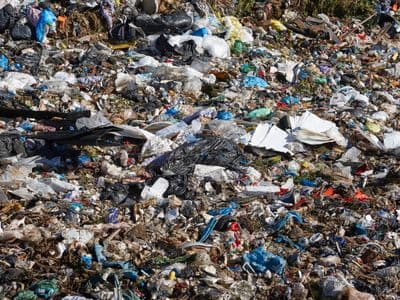
This process takes place when waste such as food scraps, dry leaves, and other organic materials decompose within a landfill. The gas produced through this process is known as landfill gas.
In general, landfill gas consists mainly of methane and carbon dioxide. It also contains small amounts of other gases and water vapor.
Methane itself has an energy value that can be utilized to generate electricity or heat.
However, landfill gas needs to be treated first to reduce water content, hydrogen sulfide, and other impurities before it can be used safely.
Read Also: Understanding Carbon Emissions: Causes, Impacts, and Ways to Reduce Them
How Is Methane Gas Captured at Landfills?
Capturing methane gas from landfills generally involves several stages.
1. Collecting Gas from Waste Deposits
Operators install vertical or horizontal extraction wells throughout the landfill area.
These wells are equipped with perforated pipes that channel the gas toward a collection system.
A blower or suction system creates negative pressure to draw gas out of the waste mass and transport it through a pipeline network to the treatment facility.
The placement of extraction wells is adjusted according to landfill conditions and waste characteristics.
Regular inspections are also required to maintain smooth gas flow and minimize the risk of leakage.
2. Purifying the Gas Before Use
The collected gas still contains water vapor, particles, and compounds that may damage equipment.
For this reason, the gas needs to undergo liquid separation, cooling, and filtration.
Purification also helps reduce hydrogen sulfide, which can cause strong odors and corrosion.
To ensure the gas is safe and suitable for use, operators need to regularly monitor several parameters, including oxygen levels, pressure, and methane concentration.
If the gas does not yet meet the technical requirements for energy generation, it can be burned through a flare system to reduce the amount of methane released into the atmosphere.
3. Converting the Gas into Energy
Once the gas meets technical requirements, methane can be utilized in several ways:
- Electricity generation. The gas is burned to produce mechanical power that drives an electricity generator.
- Heat source. Combustion energy can be used for industrial processes or facility operations.
- Renewable gaseous fuel. Further purification can increase methane concentration and produce higher-quality gas for specific applications.
The choice of technology depends on gas volume, supply stability, gas purity, and energy demand around the landfill.
What Are the Benefits of Converting Methane Gas into Energy?
When properly designed and operated, landfill methane utilization can provide several environmental and economic benefits.
1. Reducing Greenhouse Gas Emissions
Capturing methane helps prevent it from being released directly into the atmosphere.
When methane is combusted, it is primarily converted into carbon dioxide and water vapor.
Although carbon dioxide is still a greenhouse gas, capturing and destroying methane can significantly reduce its overall warming impact.
2. Reducing Dependence on Fossil Fuels
Electricity generated from landfill gas can provide an alternative to energy produced from coal, oil, and fossil gas.
The amount of emissions reduction depends on the energy source being replaced and the generation technology used.
3. Improving Safety and Environmental Quality
Controlled gas collection helps reduce gas accumulation around landfills and nearby structures.
Proper treatment can also help control odors and certain polluting compounds.
4. Creating Economic Opportunities
The development of landfill gas utilization facilities can also create employment opportunities for engineers, technicians, operators, contractors, and equipment suppliers.
The electricity or gas produced may also be sold to generate additional revenue for facility operators.
To remain economically viable in the long term, projects need to consider capital investment, maintenance costs, gas quality, and supply stability.
Methane-to-Energy Development in Asia and Indonesia
China has implemented Landfill Gas-to-Energy (LFGTE) technology to convert gas generated from waste decomposition into electricity.
Examples include the Beijing Asuwei and Shanghai Laogang facilities.
Beijing Asuwei began commercial operations in June 2007 and became the first grid-connected LFGTE project in northern China.
The project is estimated to be capable of meeting the annual electricity needs of around 20,000 households, saving approximately 28,000 tonnes of coal, and reducing emissions equivalent to around 200,000 tonnes of carbon dioxide each year.
Meanwhile, the Shanghai Laogang facility uses 11 generators with a combined capacity of approximately 15 megawatts (MW).
Its annual electricity production has been reported at around 100,000 megawatt-hours (MWh).
Development of Methane Utilization in Indonesia
In Indonesia, the National Research and Innovation Agency (BRIN) has developed landfill methane capture technology using extraction wells, pipeline networks, suction blowers, and purification equipment.
These efforts have been developed through a series of field-based research initiatives and collaborations with waste management operators, including projects in Malang, East Java.
The collected gas can be used by surrounding communities as cooking fuel or to support waste treatment facility operations.
It also has the potential to generate electricity on a smaller scale.
However, supply stability remains a challenge because the quantity and quality of methane depend on landfill conditions, waste composition, and decomposition processes.
Read Also: What Is a Carbon Footprint? Meaning, Causes, Impacts, and Ways to Reduce It
TBS and Its Role in Integrated Waste Management in Southeast Asia
To support more integrated waste management, TBS continues to expand its business by strengthening its presence in Indonesia and Singapore.
One of its strategic steps took place in 2023 through the acquisition of Asia Medical Enviro Services (AMES) and ARAH Environmental Indonesia.
Both companies were later consolidated under PT Solusi Bersih TBS (SBT).
With more than two decades of experience in medical waste management in Singapore, AMES is capable of processing more than 5,000 tonnes of waste each year.
Meanwhile, ARAH operates across 16 provinces in Indonesia, supported by more than 5,000 collection points and an incineration capacity of more than 10,000 tonnes per year.
TBS completed the acquisition of all shares in Sembcorp Environment (SembEnviro) in March 2025.
A few months later, in September 2025, the company was officially renamed Cora Environmental.
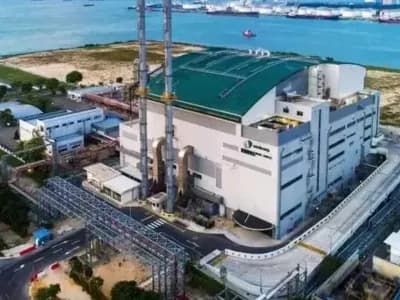
The Singapore-based company operates in municipal waste management, recycling, and environmental services, processing more than 900,000 tonnes of waste each year.
TBS continues to strengthen and expand its integrated waste management ecosystem by combining the capabilities of AMES, ARAH Environmental Indonesia, and Cora Environmental.
This approach is aligned with the TBS2030 roadmap to support sustainability, reduce environmental impacts, and create long-term value across the region.