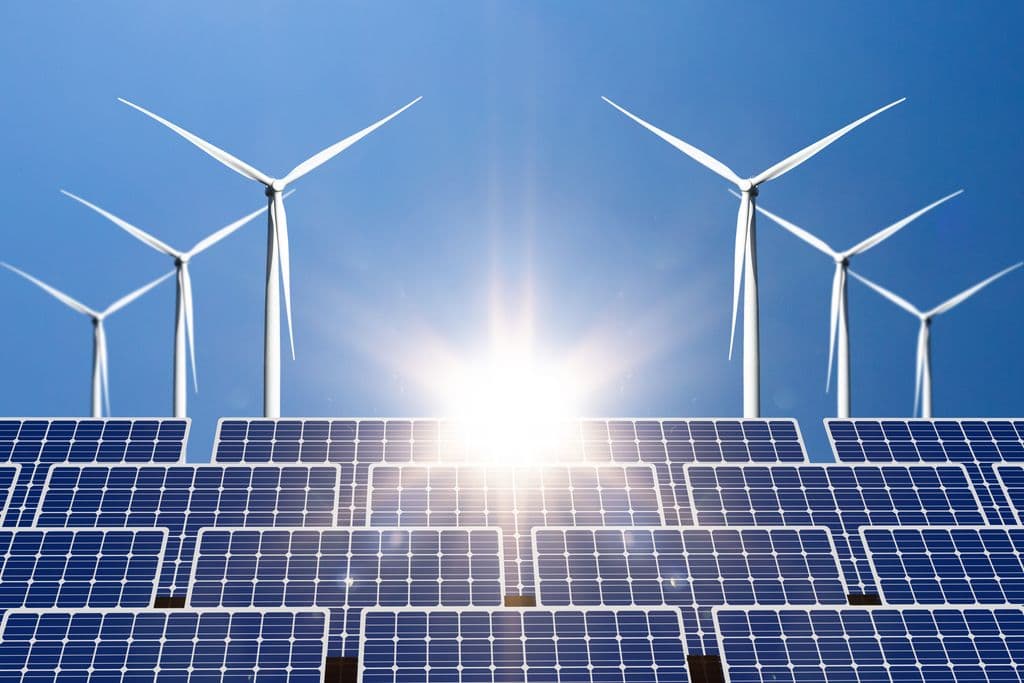
Solar panels convert sunlight into electricity that can be used for various purposes, including supporting agricultural activities through the concept of agrivoltaics.
This technology allows land to be used to produce both food and clean energy, creating opportunities to increase farmers’ income while improving land-use efficiency.
Traditionally, the development of solar power plants requires large areas of land. This can create challenges when the same land is also needed for agricultural activities.
Agrivoltaics offers a solution by combining both functions. So, how does it work, and how much potential does it have for implementation in Indonesia?
Understanding Agrivoltaics and How It Works
Agrivoltaics is a system that combines agricultural activities with solar power generation on the same land.
In practice, solar panels are installed at a certain height or spaced apart so that crops can still receive sufficient sunlight.
This allows farmers to continue cultivating crops while also benefiting from electricity generated by the solar panels.
Read Also: Solar Panels for Industry: 10 Benefits of Clean Energy
How Do Solar Panels Convert Sunlight into Energy on Farmland?
In an agrivoltaic system, solar panels convert sunlight into electricity using photovoltaic (PV) technology.
When sunlight reaches the solar cells, its energy is converted into an electrical current that can then be used for various purposes.
At the same time, part of the sunlight still reaches the crops through gaps between the panels or through the space beneath the installation.
The position, height, and tilt of the panels are important factors in ensuring that electricity generation does not interfere with crop growth.
What Crops Are Suitable for Agrivoltaics?
Not all crops require the same level of sunlight.
For this reason, the types of crops grown need to be matched with the amount of sunlight available beneath the solar panels.
Some crops that may be suitable for agrivoltaic systems include:
- Leafy vegetables: spinach, lettuce, water spinach, and mustard greens, which are relatively tolerant of partial shade.
- Herbs and spices: ginger, turmeric, and other crops that can grow under certain light conditions.
- Fruit-bearing vegetables: eggplant and tomatoes, provided that lighting is managed according to their growth requirements.
- Livestock forage: grasses grown around solar panel installations.
Crop selection still requires testing based on soil conditions, climate, and system design.
Benefits of Agrivoltaics for Agriculture and the Environment
Agrivoltaics offers several advantages by enabling food and electricity production to take place simultaneously.
1. Optimizing Land Use
Agrivoltaics reduces the need to separate land for agriculture and electricity generation.
By allowing one area to serve two functions, land can be used more efficiently without completely sacrificing crop cultivation.
2. Creating Additional Income Opportunities
In addition to earning income from agricultural produce, farmers may also benefit economically from electricity generation.
This income may come from using the electricity to reduce operating costs or from leasing land to solar power developers.
3. Reducing Water Use
Shade from solar panels can reduce direct heat exposure on the soil surface, helping to limit water evaporation.
According to studies cited by the World Resources Institute (WRI), agrivoltaic systems may reduce water evaporation by up to 30% due to the shading created by solar panels.
4. Reducing Agricultural Operating Costs
Electricity generated by the system can be used to operate irrigation pumps, crop storage facilities, and agricultural processing equipment.
As a result, dependence on diesel fuel or electricity from conventional energy sources may be reduced.
5. Supporting Carbon Emissions Reduction
In addition to improving agricultural efficiency, agrivoltaics expands the use of renewable energy.
When solar panels convert sunlight into electricity, energy demand from fossil fuels can be reduced, helping to lower greenhouse gas emissions.
Agrivoltaic Development in Asia
Several Asian countries have begun developing agrivoltaic systems to meet clean energy needs without reducing agricultural land available for food production.
This technology is becoming increasingly relevant as electricity demand grows and agricultural land becomes more limited.
China is one of the countries actively implementing agrivoltaic systems.
Since 2011, the country has developed more than 500 projects combining solar panel installations with agriculture, livestock farming, fisheries, and even tea plantations.
Meanwhile, South Korea views agrivoltaics as a potential solution to land constraints, as around 70% of the country consists of mountainous terrain.
Through this system, agricultural land can continue producing food while also generating electricity.
In Southeast Asia, Indonesia and the Philippines also have significant development potential due to abundant sunlight.
However, wider implementation still requires regulatory support, investment, and collaboration with local communities.
The experience of these countries shows that solar panels can convert sunlight into electricity while being integrated with agricultural activities to support both food security and the energy transition.
Potential and Challenges of Agrivoltaics in Indonesia
As mentioned, Indonesia has significant potential to develop agrivoltaics because it receives sunlight throughout the year and has a large agricultural sector.
One example of its development can be found at Baron Technopark in Yogyakarta.
Research conducted in the area has shown that vegetables such as mustard greens and eggplant can be cultivated in systems integrated with solar panels.
However, the implementation of agrivoltaics still faces several challenges, including:
- Investment costs: Elevated panel structures require additional construction costs.
- Crop suitability: Crop selection needs to consider shade tolerance to ensure optimal growth beneath the solar panels.
- Agricultural adjustments: Irrigation systems, equipment use, and maintenance need to be specifically planned.
- Regulation: Project development requires clarity regarding permits, land use, and electricity sales mechanisms.
For this reason, collaboration between the government, energy companies, research institutions, and local communities is needed to support agrivoltaic development and address these challenges.
Read Also: Indonesia’s 100 GW Solar Power Development: Can the Three-Year Target Be Achieved?
TBS’s Role in Supporting Renewable Energy Development
Agrivoltaics demonstrates that food production and clean energy generation can operate side by side.
Renewable energy development in Indonesia also emphasizes the efficient use of resources so that its benefits can be sustained over the long term.
In line with these needs, TBS continues to expand its clean energy portfolio through the development of hydropower and solar power projects.
This development began in 2020, when TBS acquired PT Adimitra Energi Hidro (AEH) through PT Toba Bara Energi (TBAE).
AEH developed a mini-hydropower plant in Lampung with a total capacity of 6 MW through two 3 MW generating units.
The project began commercial operations on January 22, 2025.
The 6 MW plant supports the supply of clean electricity in the Southern Sumatra region while also providing benefits through infrastructure development, energy access, and environmental conservation.
In addition to AEH, the acquisition also included PT Bayu Alam Sejahtera (BAS), which is exploring wind energy development opportunities in East Nusa Tenggara.
In the solar sector, TBS is also developing the 46 MWp Tembesi Floating Solar Power Plant in Batam.
The project, which is currently under development, reached financial closing in 2024 and is targeted to begin commercial operations and connect to the national electricity grid in 2026.
In addition to reducing emissions and supporting improved air quality, the project is expected to create green jobs, enable technology transfer, and strengthen collaboration with local communities.
Through these projects, TBS remains committed to expanding the use of renewable energy and supporting Indonesia’s energy transition.