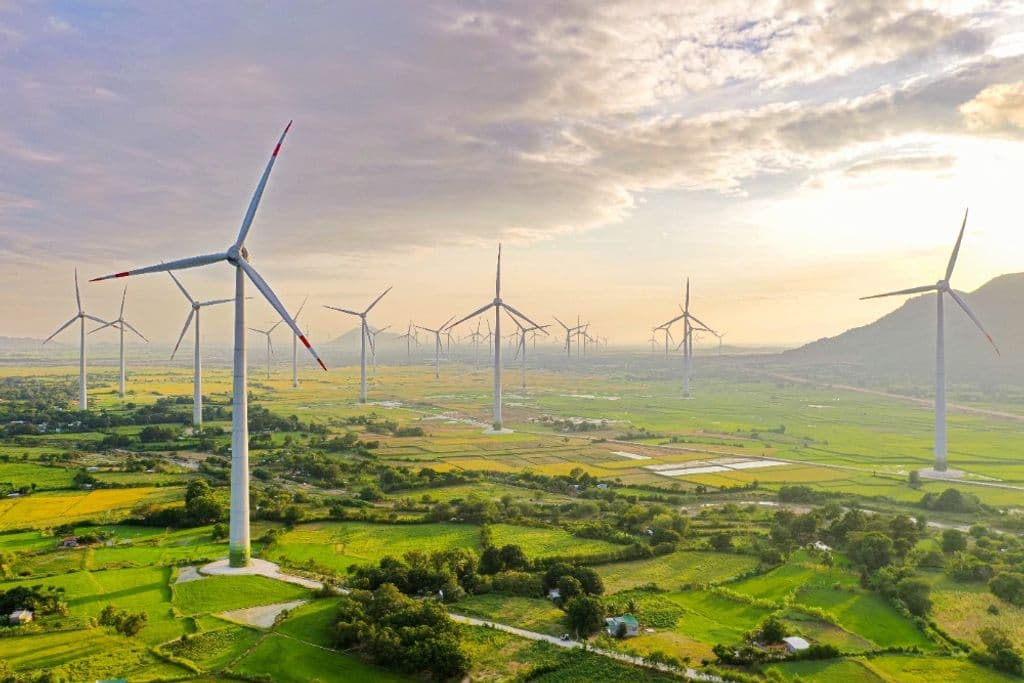
Wind energy is one of the renewable energy sources that utilizes air movement to generate electricity without producing greenhouse gas emissions during the power generation process.
This energy source is becoming increasingly important in the transition toward clean energy because it has significant potential, relatively low operational costs, and can be developed in various regions, including Indonesia.
As energy demand continues to rise and efforts to reduce dependence on fossil fuels intensify, the utilization of wind energy continues to grow in many countries.
Advancements in wind turbine technology have made this energy source more efficient, allowing it to become one of the solutions to support carbon emission reduction targets and sustainable development.
What Is Wind Energy?
Wind energy is kinetic energy derived from the movement of air in the Earth’s atmosphere.
Wind is formed because the Earth’s surface is heated unevenly by the sun, creating differences in air pressure that cause air to move from high-pressure areas to low-pressure areas.
The energy generated from wind movement can be captured using wind turbines and converted into electrical energy.
Because wind is continuously produced naturally, wind energy is considered a renewable energy source that will not run out as long as natural processes continue.
In Indonesia, the utilization of wind energy has begun to receive more attention due to its significant potential, particularly in coastal and island regions such as East Nusa Tenggara, South Sulawesi, and several areas in Java and Sumatra.
Read More: Renewable Energy Opportunities and Challenges in Indonesia: Potential, Barriers, and Solutions
Source of Wind Energy
The primary source of wind energy is the sun. When sunlight heats the Earth’s surface unevenly, temperatures and air pressures differ between regions.
These pressure differences cause air movement and create wind.
The greater the difference in temperature and pressure, the stronger the wind speed generated. Therefore, coastal areas, highlands, and offshore regions are often ideal locations for wind power development.
How Does Wind Energy Become Electricity?
The process of converting wind energy into electricity involves several stages:
- Wind blows the turbine blades, causing them to rotate.
- The rotating blades drive a shaft connected to a generator.
- The generator converts mechanical energy into electrical energy.
- Electricity is then sent to a transformer to increase the voltage.
- The electricity is distributed through the power grid and used by households, businesses, and industries.
The higher the wind speed and the larger the turbine size, the more electricity can be generated.
Types of Wind Turbines
Generally, there are two types of wind turbines commonly used today.
1. Horizontal-Axis Wind Turbine (HAWT)
This type is the most widely used worldwide. The blades rotate on a horizontal axis and are usually installed on tall towers to capture wind more effectively.
These turbines are commonly used in large-scale wind power plants, both onshore and offshore.
2. Vertical-Axis Wind Turbine (VAWT)
This turbine has a vertical rotating axis, allowing it to capture wind from various directions without changing position.
This type is generally used for small-scale applications, such as urban areas or independent power generation systems.
Examples of Wind Energy Utilization
Today, wind energy utilization is not limited to large-scale power plants but can also be applied for household and industrial needs. Some examples include:
- Wind Power Plants.
- Electricity systems in remote areas that are not connected to the main power grid.
- Small-scale household wind turbines to support independent electricity needs.
- Hybrid systems combining wind energy with solar or hydropower.
- Offshore wind farms that utilize higher wind speeds at sea.
In Indonesia, one well-known example of wind energy utilization is the Wind Power Plant in South Sulawesi, which helps increase clean energy supply to the national electricity grid.
Wind Energy and the Energy Transition in Indonesia
Indonesia has significant wind energy potential because it is an archipelagic country with a long coastline.
Based on various renewable energy studies, areas such as East Nusa Tenggara, South Sulawesi, the southern coast of Java, and several regions in Sumatra have wind speeds suitable for electricity generation.
The utilization of wind energy can help reduce dependence on fossil fuel-based power plants such as coal and diesel.
Besides producing cleaner electricity, wind energy development can also improve national energy security by utilizing domestic resources.
In the long term, combining wind energy with solar, hydropower, and energy storage systems has the potential to create a more stable electricity supply while supporting Indonesia’s net zero emission targets.
Advantages of Wind Energy
The utilization of wind energy offers various benefits for both the environment and the economy.
1. Environmentally Friendly
Wind energy does not produce carbon emissions during electricity generation, helping reduce the impacts of climate change.
2. Renewable Energy Source
Wind is a natural resource that is continuously available and will not be depleted through use.
3. Relatively Low Operational Costs
After turbines are installed, the main costs required are maintenance and operation.
4. Can Be Combined with Other Activities
Land around turbines can still be used for agriculture, livestock, or other productive activities.
5. Supports Local Economic Growth
Wind energy projects can create new job opportunities, from construction and operations to maintenance activities.
Negative Impacts of Wind Energy
Although it provides many benefits, wind energy also has several challenges that need to be considered.
1. Potential Impact on Wildlife
Wind turbines may pose risks to birds and bats flying around the project area.
2. Noise Generation
The rotation of turbine blades and mechanical components produces sound that may be heard in surrounding areas, especially if located too close to communities.
3. Dependence on Weather Conditions
Electricity production from wind energy is highly dependent on wind speed. When wind weakens or stops, electricity production also decreases.
4. Requires Suitable Locations
Not all regions have sufficiently strong and stable wind conditions to support economically viable wind power development.
However, various innovations continue to be developed to overcome these challenges, including energy storage technology, more efficient turbines, and offshore wind power development.
Read More: The Role of Renewable Energy in Driving Indonesia’s Economic Growth
The Future of Wind Energy in Indonesia and TBS’s Role
The outlook for wind energy in Indonesia remains promising, especially in supporting the transition toward cleaner and lower-emission energy.
The development of increasingly efficient turbine technology, energy storage systems, and the potential of coastal and island regions are key factors driving future wind energy growth.
As part of its commitment to sustainable energy, TBS Energi Utama continues to expand its renewable energy portfolio through various projects in Indonesia.
In 2020, TBS acquired PT Adimitra Energi Hidro (AEH) and PT Bayu Alam Sejahtera (BAS), which explores wind energy opportunities in East Nusa Tenggara. AEH successfully achieved Commercial Operation Date (COD) in January 2025 with a capacity of 6 MW in Lampung.
In addition, TBS is also developing the Tembesi Floating Solar Power Plant in Batam, which is targeted to begin operations in 2026.
Through the development of a 6 MW mini-hydropower plant in Lampung, a 46 MWp floating solar power plant in Batam, and wind energy exploration, TBS Energi Utama continues to support clean energy development and sustainable growth in Indonesia.