Modern transportation has become one of the key pillars in creating mobility that is faster, safer, more comfortable, and better connected in the digital era.
The development of electric vehicles, mass transit, digital technology, and integrated transportation systems is driving major changes in how people travel while also helping reduce emissions and improve energy efficiency.
The rapid growth of major cities across Asia has made the need for effective transportation systems increasingly urgent.
Traffic congestion, air pollution, limited fossil energy resources, and the need for greater connectivity between regions are encouraging many countries to develop transportation systems that prioritize not only speed, but also sustainability.
What Is Modern Transportation?
In simple terms, modern transportation is a system that uses technology and innovation to move people and goods more efficiently, safely, comfortably, and sustainably.
Its development is not limited to the introduction of electric vehicles or high-speed rail.
Digital systems, vehicle monitoring applications, cashless payments, artificial intelligence, and the integration of multiple modes of transportation are also important parts of the modern transportation ecosystem.
Characteristics of Modern Transportation
Several characteristics distinguish modern transportation from conventional systems, including:
- The use of digital technology and automated systems.
- Greater energy efficiency and the potential to reduce emissions.
- More structured schedules and operating systems.
- Integration with infrastructure and other modes of transportation.
- A strong focus on passenger safety, comfort, and accessibility.
Related Article: Hybrid Cars: Definition, How They Work, Advantages, and Disadvantages
Types of Modern Transportation Developing Today
Technological development has introduced various transportation options with different functions and characteristics.
1. Hybrid Electric Vehicle (HEV)
An HEV is a vehicle that combines a gasoline engine with an electric motor.
Its battery can obtain energy through regenerative braking and the operation of the engine, meaning it does not require external charging like a fully electric vehicle.
This technology helps improve fuel efficiency while reducing emissions compared with conventional vehicles.
2. Modern Mass Transportation
Mass transit is also an important part of modern mobility development.
Electric buses, MRT systems, LRT systems, and high-speed rail are being developed to carry more passengers while reducing dependence on private vehicles.
Across many Asian cities, intermodal integration is becoming increasingly important to make journeys from homes to major activity centers easier and more convenient.
3. Battery Electric Vehicle (BEV)
A BEV uses an electric motor as its main source of power and a high-capacity battery to store energy.
Unlike vehicles powered by internal combustion engines, BEVs do not have fuel tanks or exhaust pipes.
Because they produce no direct tailpipe emissions during operation, BEVs are among the technologies being widely developed to support cleaner urban mobility.
4. Plug-in Hybrid Electric Vehicle (PHEV)
A PHEV combines a gasoline engine with an electric motor and uses a larger battery than an HEV.
The battery in a PHEV can also be charged using an external electricity source.
When the battery is charged, the vehicle can use electric power for certain journeys. Once the battery level decreases, the gasoline engine can take over, providing flexibility for users who may not yet have adequate access to charging infrastructure.
Positive Environmental Impacts of Modern Transportation
Changes in transportation systems are closely connected to efforts to reduce environmental impacts.
The use of electric vehicles, mass transportation, and energy-efficient technologies can help reduce dependence on fossil fuels.
1. Reducing Emissions and Air Pollution
Vehicles powered by fossil fuels produce carbon dioxide (CO2) as well as various other pollutants.
Electric vehicles, on the other hand, do not produce direct tailpipe emissions during operation.
If electric vehicle adoption is supported by the development of cleaner energy sources, the potential emissions reduction benefits can become even greater.
In densely populated Asian cities, this transition can also help improve air quality.
2. Improving Energy Efficiency
Regenerative braking technology in hybrid and electric vehicles allows some of the energy generated when a vehicle slows down to be recovered and reused.
Digital energy management systems also help vehicles use power more efficiently.
This efficiency is important for reducing fuel consumption and operating costs over the long term.
Social Benefits of Modern Transportation
Transportation development is not only about environmental benefits.
A well-designed mobility system can also improve people’s quality of life.
1. Faster and More Reliable Travel
High-speed rail, integrated mass transit systems, and data-driven traffic management technologies can help reduce travel times.
Real-time vehicle location information also makes it easier for passengers to estimate arrival times.
2. Greater Comfort and Accessibility
Modern vehicles are equipped with various facilities such as air conditioning, digital information systems, ergonomic seating, and accessibility features for passengers with special needs.
Cashless payment systems and digital applications also make travel more convenient.
3. Supporting Public Health
Comfortable public transportation can encourage people to reduce their dependence on private vehicles.
Walking to bus stops or train stations can also add more physical activity to daily routines.
At the same time, reducing vehicle-related pollution can provide broader public health benefits.
Challenges in Developing Modern Transportation in Asia
Despite its significant potential, transportation transformation still faces several challenges.
Electric vehicle charging infrastructure remains unevenly distributed, intermodal integration still needs to be strengthened, and many people remain accustomed to using private vehicles.
Investment costs, limited infrastructure in certain regions, comfort, safety, and public awareness also influence the success of the transition.
For this reason, transportation development requires collaboration among governments, businesses, technology providers, and communities.
Infrastructure such as electric vehicle charging stations, public transportation networks, integrated payment systems, and digital applications needs to be developed simultaneously.
Looking ahead, the use of artificial intelligence, connected vehicles, electrification, digital payment systems, and smart infrastructure will increasingly shape the future of mobility across Asia.
Related Article: Types of Cars and Their Characteristics, from SUVs to Electric Vehicles
TBS and the Development of the Electric Vehicle Ecosystem
Indonesia is also beginning to strengthen its electric mobility ecosystem and integrated transportation systems.
One example is the development of an electric vehicle ecosystem by TBS through Electrum.
In 2021, TBS and GoTo Group established PT Energi Kreasi Bersama, or Electrum, to build an integrated electric mobility ecosystem in Indonesia.
The ecosystem covers vehicle assembly, battery technology, battery swapping, charging stations, and financing schemes.
In February 2022, President Joko Widodo inaugurated the launch of a collaborative electric vehicle ecosystem involving Electrum, Pertamina, Gogoro, and Gesits.
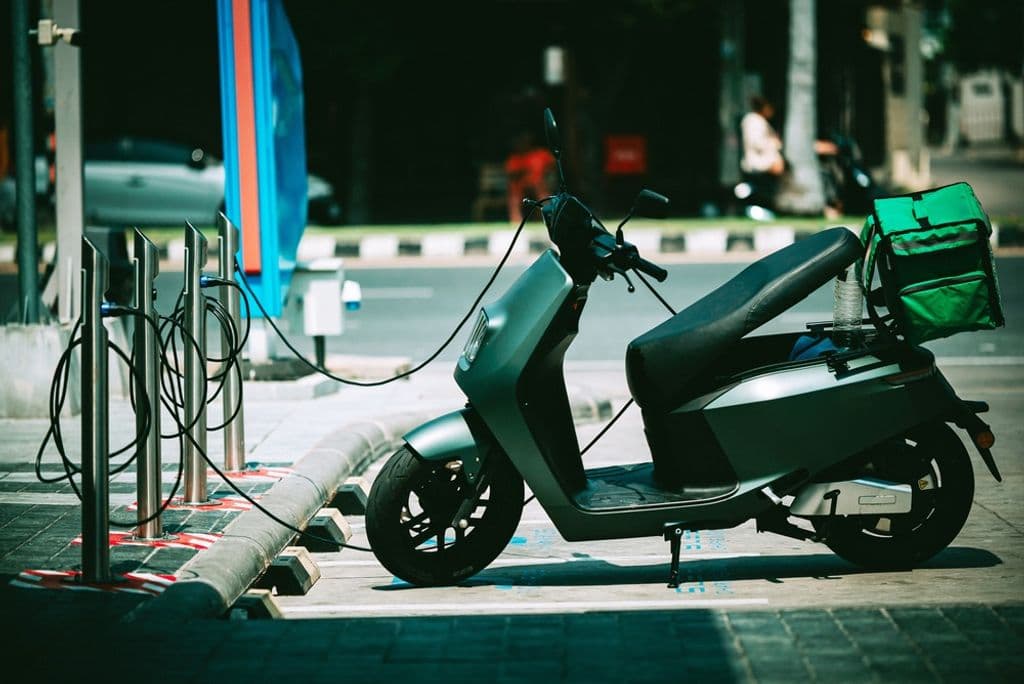
In the same year, Electrum also supported the G20 Summit and B20 Forum in Bali by providing 50 electric motorcycles, 11 shelters, and 150 Gojek driver partners to serve delegates.
Financial support was further strengthened in December 2024, when Electrum secured US$15 million in financing from the Asian Development Bank, the Australian Climate Finance Partnership, and Bank DBS Indonesia.
The funding was used to accelerate vehicle procurement and expand the battery swapping network, which is projected to reduce greenhouse gas emissions by up to 123,000 tons per year.
Electrum has also continued to expand its vehicle lineup.
The H3i electric motorcycle was launched in October 2024 at IMOS with options for both home charging and access to the battery-swapping network.
In 2025, Electrum introduced the H1 as another option for consumers.
By 2025, more than 6,000 electric vehicles were operating on the road, supported by more than 320 battery-swapping station locations and more than 19,000 battery swaps each day, contributing to the avoidance of more than 3,200 tons of CO2 emissions.
Through Electrum, TBS demonstrates its commitment to building Indonesia’s electric vehicle ecosystem, from vehicle assembly to supporting infrastructure.
These achievements show that modern transportation can play an important role in creating urban mobility that is more efficient, connected, and sustainable.