Used electric vehicle batteries do not always become waste once their performance declines. In many cases, they can still be reused or recycled to recover valuable materials.
However, managing batteries that are no longer used in vehicles comes with challenges related to cost, safety, technology, and infrastructure readiness, including across Asia and Indonesia.
As electric vehicles (EVs) become more widely adopted to reduce emissions and dependence on fossil fuels, one important question remains: where do electric vehicle batteries go after they reach the end of their useful life?
After years of use, battery capacity gradually declines and is generally considered no longer optimal for vehicle use when performance falls to around 70–80% of its original capacity.
Even so, this does not mean the battery has lost all of its value. So, what can be done with these batteries? Here is a closer look.
What Happens to Used Electric Vehicle Batteries?
There are several possible pathways once an electric vehicle battery no longer meets vehicle performance requirements. It can be repaired, reused for another purpose, or recycled.
1. Reused for Second-Life Applications
Batteries with reduced capacity can still be used for applications that do not require the same level of performance as electric vehicles. This concept is known as a second-life battery.
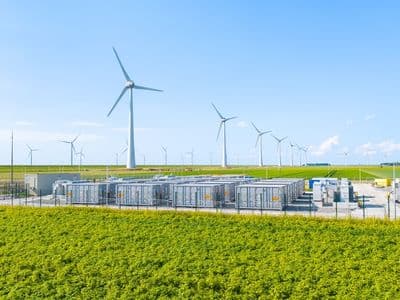
Potential applications include storing energy from solar panels, supporting grid balancing systems, and providing backup energy for industrial and residential use.
However, reusing batteries is not always cheaper than using new ones. Inspection, dismantling, transportation, testing, and installation costs remain significant challenges.
For this reason, second-life applications still require further improvements in technology and more efficient business models.
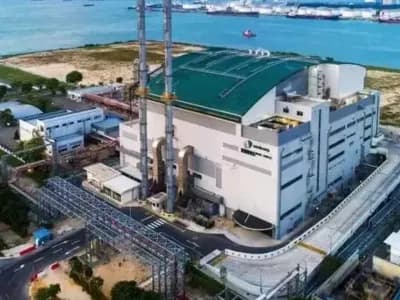
2. Recycled to Recover Valuable Materials
Another option is battery recycling. EV batteries contain a number of valuable materials, including lithium, nickel, cobalt, manganese, graphite, copper, and aluminum.
These materials can be separated and reused as raw materials.
In this way, recycling can help reduce the need for new mining activities while supporting the development of a circular economy.
Read Also: Second-Life Batteries: The Potential of Used EV Batteries for Energy Storage
How Are EV Batteries Recycled?
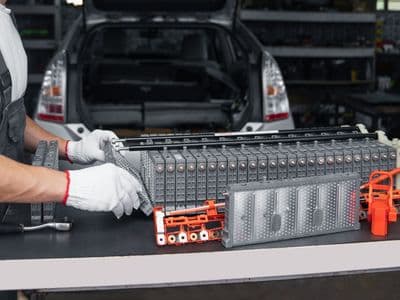
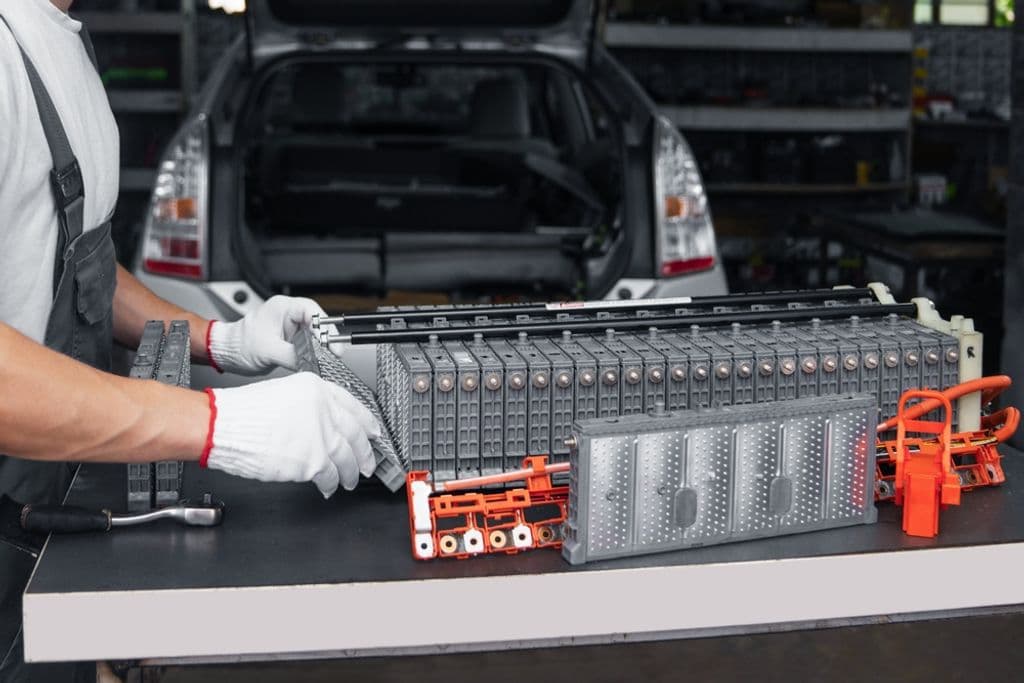
Electric vehicle batteries consist of several modules containing many individual cells. These cells store and release energy through electrochemical reactions.
Battery types can also differ based on their cathode materials, such as nickel-cobalt-aluminum (NCA), lithium iron phosphate (LFP), and nickel-manganese-cobalt (NMC).
These differences in composition affect how batteries are processed during recycling.
1. Pyrometallurgy
Pyrometallurgy uses heat to process batteries.
The batteries are first mechanically processed, after which the materials are heated at high temperatures to separate and recover certain metals.
This method is already used in industry, but it requires significant amounts of energy and does not always recover all valuable battery materials.
2. Hydrometallurgy
Unlike pyrometallurgy, hydrometallurgy uses chemical solutions to separate materials from batteries.
Battery materials are processed in specific solutions so that metals can be extracted and separated.
The development of this method is important for improving material recovery rates while creating a more efficient recycling process.
Safety Challenges of Lithium-Ion Batteries
Managing used electric vehicle batteries is not only an economic issue, but also a safety concern.
Damaged lithium-ion batteries, particularly those involved in accidents, can experience thermal runaway, a condition in which rising temperatures trigger a chain reaction that generates extremely high levels of heat.
This risk means damaged batteries require special handling, storage, and transportation.
They should not be disposed of carelessly because they contain materials and chemicals that can pose risks to both people and the environment.
Another issue arises when used batteries enter the market without adequate testing and installation standards.
For this reason, the development of battery recycling and reuse ecosystems needs to be supported by clear regulations, safety standards, and skilled professionals.
Where Do Used Electric Vehicle Batteries Go in Asia?
Asia is one of the most important regions in the global electric vehicle battery industry.
Countries such as China, South Korea, and Japan take different approaches to developing used battery ecosystems.
China relies on industrial scale and supply chain integration to expand battery collection and recycling.
South Korea views battery recycling as part of its efforts to maintain industrial and technological competitiveness.
Meanwhile, Japan tends to develop battery technologies through a more cautious and research-oriented approach.
These differences show that EV battery management is not only an environmental issue.
It is also closely linked to raw material security, manufacturing, technology, and economic competitiveness.
What About Indonesia?
Indonesia also needs to begin building a stronger ecosystem for managing used electric vehicle batteries.
Batteries with declining capacity should not immediately be treated as waste if they can still be used for other applications.
Reuse can support the circular economy while reducing the potential generation of hazardous and toxic waste, known in Indonesia as B3 waste.
At the same time, a clear system is needed to ensure that batteries are collected, inspected, reused, or recycled safely.
Read Also: Electric Cars During Floods: A Safety Guide for the Rainy Season
Building Indonesia’s Electric Vehicle Ecosystem with TBS
Battery management is an important part of a sustainable electric vehicle ecosystem.
For this reason, developing electric mobility involves more than simply providing vehicles and charging or battery-swapping infrastructure. The entire value chain, from upstream to downstream, also needs to be considered.
In 2021, TBS and GoTo Group established PT Energi Kreasi Bersama (Electrum) to build an integrated electric mobility ecosystem in Indonesia.
Electrum’s ecosystem includes vehicle assembly, battery technology, battery swapping infrastructure, charging stations, and financing solutions.
In February 2022, President Joko Widodo inaugurated the launch of a collaborative electric vehicle ecosystem involving Electrum, Pertamina, Gogoro, and Gesits.
In the same year, Electrum also supported the G20 and B20 Summits in Bali by providing 50 electric motorcycles, 11 shelters, and 150 Gojek driver partners.
In December 2024, Electrum secured US$15 million in financing from the Asian Development Bank, the Australian Climate Finance Partnership, and Bank DBS Indonesia.
The financing supported vehicle procurement and the expansion of its battery swapping network, which is projected to reduce greenhouse gas emissions by up to 123,000 tonnes per year.
Electrum’s development continued in October 2024 with the launch of the H3i electric motorcycle at IMOS, offering both home charging and access to its battery swapping network.
A year later, in 2025, the Electrum H1 was introduced as another option for consumers.
By 2025, more than 15,000 Electrum electric vehicles were in operation, supported by over 500 battery swapping station locations across Jakarta and surrounding areas.
The network recorded more than 19,000 battery swaps per day and contributed to avoiding more than 3,200 tonnes of CO₂ emissions.
Through the development of Electrum, TBS continues to play a role in building Indonesia’s electric vehicle ecosystem, from vehicles and batteries to battery swapping and supporting infrastructure.
These efforts form part of TBS’s broader commitment to advancing more sustainable mobility while strengthening Indonesia’s domestic electric vehicle value chain.