Organic waste is a type of waste derived from living organisms that can naturally decompose through the action of microorganisms.
When managed properly, organic waste can be converted into compost, animal feed, and renewable energy sources such as biogas, helping reduce environmental pollution and greenhouse gas emissions.
In Indonesia, organic waste still makes up the largest portion of household waste. Unfortunately, most of it ends up in landfills without proper treatment.
In fact, effective organic waste management can provide economic benefits while supporting environmental conservation efforts.
What Is Organic Waste?
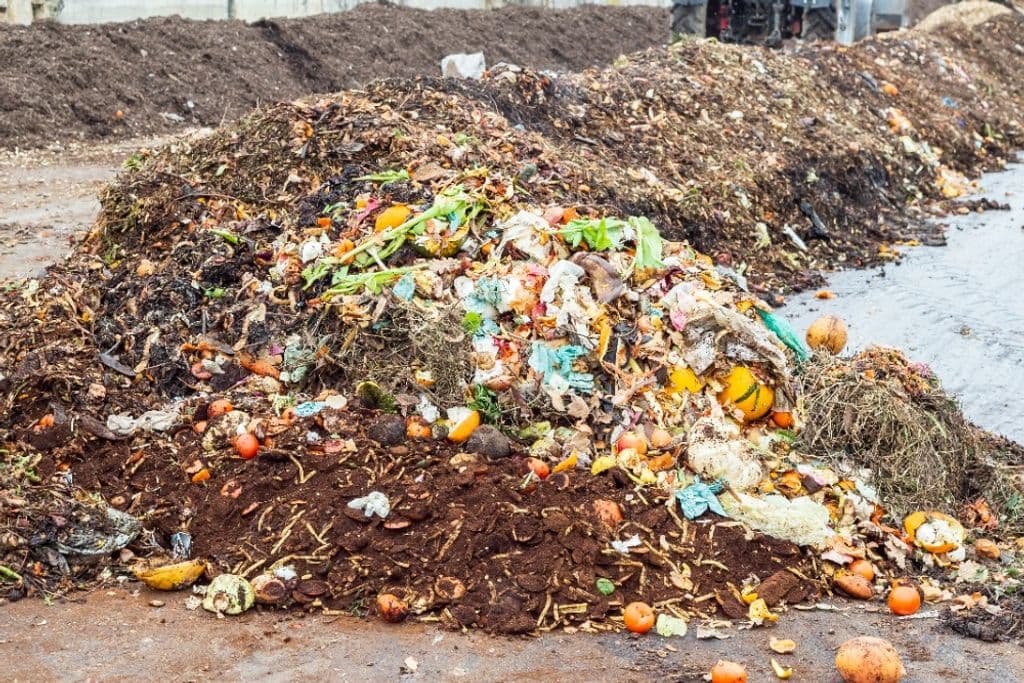
Organic waste refers to waste materials originating from plants, animals, or other living organisms that can naturally decompose over time.
Unlike inorganic waste such as plastic, glass, or metal, which can take hundreds of years to break down, organic waste can return to the natural ecosystem through biological decomposition.
This type of waste is generated from various daily activities, including households, agriculture, livestock farming, and food processing industries.
Because of its biodegradable nature, organic waste has significant potential to be transformed into valuable resources.
Examples of Organic Waste
Some common examples of organic waste include:
- Food scraps and spoiled food
- Fruit and vegetable peels
- Coffee grounds and tea bags
- Eggshells
- Dry leaves, grass clippings, and tree branches
- Fish bones and meat leftovers
- Paper and cardboard that are not coated with certain chemicals
- Livestock waste such as animal manure
- Leather and animal tissue waste from industrial processes
In general, organic waste can be categorized into two main groups:
- Household organic waste, such as food scraps and kitchen waste.
- Green waste, originating from gardens, parks, landscaping, and vegetation areas.
Read More: Why Waste Management Is the Key to Sustainable Business: Here Are the Benefits
Environmental Impacts of Organic Waste
Although organic waste is biodegradable, improper management can still create various environmental problems.
1. Produces Greenhouse Gases
When organic waste accumulates in landfills under low-oxygen conditions, it decomposes anaerobically and generates methane gas.
Methane is one of the most potent greenhouse gases and has a much greater heat-trapping effect than carbon dioxide.
2. Pollutes Soil and Water
Leachate produced by piles of organic waste can seep into the ground and contaminate nearby water sources.
This can reduce environmental quality and pose risks to public health.
3. Causes Odors and Disease Risks
Decomposing organic waste produces unpleasant odors and attracts flies, rats, and other pests.
These conditions can increase the risk of disease transmission.
4. Wastes Valuable Resources
Organic waste contains nutrients and materials that can be reused as fertilizer, animal feed, or renewable energy feedstock.
When discarded without treatment, these valuable resources are lost.
Benefits of Organic Waste
When managed correctly, organic waste can provide numerous environmental and economic benefits.
1. Producing Compost
One of the most common uses of organic waste is compost production.
Compost helps improve soil fertility, enhance soil structure, and support healthy plant growth naturally.
2. Serving as Animal Feed
Food scraps, vegetables, and certain organic materials can be processed into feed for livestock, fish, and some domestic animals.
3. Supporting Black Soldier Fly (BSF) Farming
Black Soldier Fly larvae can consume large amounts of organic waste quickly.
In addition to reducing waste volume, BSF larvae can be used as a high-protein feed source for livestock and aquaculture.
4. Generating Renewable Energy
Organic waste is one of the primary feedstocks for biogas production.
Through anaerobic digestion, organic materials produce methane gas that can be used as an alternative fuel or electricity source.
Organic Waste and Its Role in the Circular Economy
Sustainable waste management aims to reduce the amount of waste sent to landfills while maximizing resource recovery.
Within a circular economy framework, waste is no longer viewed as a disposal problem but as a valuable resource that can be reused and repurposed.
Organic waste is one of the most promising waste streams for conversion into compost, animal feed, and renewable energy such as biogas.
These processes help reduce greenhouse gas emissions, minimize environmental pollution, and create economic value from materials that would otherwise be discarded.
For Indonesia, applying circular economy principles to organic waste management can help reduce waste generation while supporting more sustainable development.
Effective Ways to Manage Organic Waste
Organic waste can be managed using both simple household methods and industrial-scale technologies.
1. Composting
Composting is one of the easiest and most cost-effective methods of managing organic waste.
Typical compost materials include:
Green materials:
- Vegetable scraps
- Fruit waste
- Fresh grass clippings
- Coffee grounds
- Flowers
Brown materials:
- Dry leaves
- Twigs
- Rice husks
- Cardboard
- Wood chips
To accelerate the composting process, waste can be chopped into smaller pieces before mixing and turning regularly.
Under ideal conditions, compost can be produced within approximately 4–6 weeks.
2. Vermicomposting
Vermicomposting uses earthworms to process organic waste.
The worms consume organic materials and produce nutrient-rich castings containing phosphorus, magnesium, and potassium.
The result is a high-quality organic fertilizer beneficial for plant growth.
3. Converting Waste into Biogas
Biogas is produced through the anaerobic decomposition of organic materials by bacteria in oxygen-free conditions.
Organic materials commonly used for biogas production include:
- Food waste
- Fruit and vegetable peels
- Livestock waste
- Fish bones
- Leather industry waste
- Wood waste
- Animal carcasses
This process not only generates renewable energy but also helps reduce methane emissions that would otherwise be released into the atmosphere.
4. Black Soldier Fly (BSF) Processing
BSF technology is becoming increasingly popular in Indonesia because it can significantly reduce organic waste volume within a short period.
BSF larvae consume organic waste and produce residues that can be used as fertilizer.
Meanwhile, the larvae themselves have economic value as a high-protein feed ingredient.
Read Also: Waste to Energy: Converting Waste into Environmentally Friendly Energy
Organic Waste Management for a Sustainable Future with TBS
Organic waste is a type of waste that holds significant value when managed properly.
In addition to reducing environmental pollution, organic waste processing can produce compost, animal feed, and renewable energy that support the circular economy and Indonesia’s emissions reduction goals.
TBS continues to strengthen its commitment to sustainable waste management through various strategic initiatives.
In 2023, TBS expanded its waste management business through the acquisition of Asia Medical Enviro Services (AMES) and ARAH, companies specializing in medical, hazardous, domestic, and electronic waste management.
These operations are managed under PT Solusi Bersih TBS (SBT), TBS’s dedicated waste management subholding.
In March 2025, TBS further expanded its role in Southeast Asia through the full acquisition of Sembcorp Environment (SembEnviro), one of Singapore’s leading waste management and environmental solutions companies.
In September 2025, SembEnviro was rebranded as CORA Environment, bringing together TBS’s waste management businesses under a unified regional identity.
Today, through AMES, ARAH, and CORA Environment, TBS Energy operates five waste management facilities across Indonesia and Singapore, managed more than 1 million tons of waste throughout 2025, and served over 475,000 customers.
This initiative aligns with the TBS2030 roadmap, which aims to create sustainable waste-to-resource solutions while delivering positive environmental and social impacts.