Electric motorcycle battery waste is becoming an environmental challenge as electric vehicle adoption continues to grow in Indonesia.
Reusing batteries through second-life applications and implementing recycling can help reduce pollution while supporting the circular economy.
The development of electric vehicles requires not only technological innovation and charging infrastructure, but also proper battery management systems once batteries reach the end of their service life.
With appropriate handling, components from used batteries may still be reused before they are eventually processed into new raw materials.
Why Does Electric Motorcycle Battery Waste Need to Be Managed Properly?
The Indonesian government is targeting electric vehicle production of 600,000 electric cars and 2.45 million electric motorcycles by 2030.
This target creates opportunities to accelerate the energy transition, but the growing number of vehicles may also increase the volume of battery waste that needs to be managed.
An Asian Development Bank (ADB) study cited by the National Research and Innovation Agency (BRIN) estimates that by 2030, battery waste could reach 300–600 kg for each electric car and 10–30 kg for each electric motorcycle.
Overall, the total volume is estimated to reach around 70,000–100,000 tonnes per year.
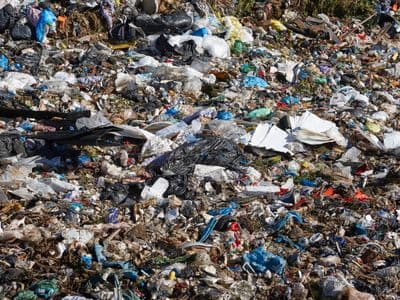
If disposed of improperly, battery materials can contaminate soil and water. Certain metals and electrolytes may pose environmental risks if they are not handled according to proper procedures.
For this reason, collection, reuse, and recycling need to become part of the development of the electric vehicle ecosystem.
Sudaryanto, Principal Researcher at BRIN’s Energy Materials Research Center, explained that second-life battery applications can be one way to reduce battery waste.
Developing batteries with longer lifespans, sufficient capacity, and shorter charging times is also important for strengthening public confidence in electric vehicles.
In many cases, battery degradation does not affect every cell at the same time.
Lithium batteries with LFP, or lithium iron phosphate, cathodes, for example, may still be reused as long as the remaining cells meet the necessary technical and safety requirements.
Read Also: Battery Recycling: Challenges in Recycling Electric Vehicle Batteries
Second-Life Battery Solutions for Two-Wheelers
Used electric motorcycle batteries, including those used in battery swapping stations, do not necessarily need to be discarded immediately when their capacity declines.
If inspection results show that they remain suitable for use, the batteries can be repurposed for energy storage or applications with different power requirements.
The second-life battery concept allows batteries that are no longer optimal for powering electric motorcycles to be reused for other purposes.
After undergoing capacity, physical condition, and safety checks, lithium-ion cells can be reassembled for suitable applications such as solar energy storage, solar-powered street lighting, electronic devices, or residential energy storage systems.
Management of lead-acid or sealed lead-acid (SLA) batteries is relatively more established.
These batteries already have collection and treatment pathways similar to conventional vehicle batteries.
Waste management companies can also collect used batteries periodically and process their materials for recovery.
Meanwhile, lithium battery waste in Indonesia remains relatively limited because widespread use began more recently and these batteries generally have relatively long service lives.
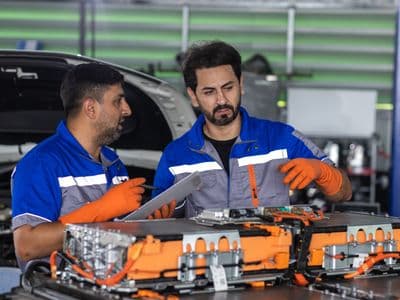
During repair, damage may also be limited to certain cells or the Battery Management System (BMS), rather than the entire battery pack.
For example, a 72 V 25 Ah lithium battery pack may contain around 100 cells.
If only some cells are damaged, the remaining cells may still be usable after proper testing.
However, reuse must comply with safety standards and consider the capacity and condition of each cell to avoid creating additional risks.
In short, electric motorcycle battery waste can be managed through two main stages: reusing components that remain suitable and processing materials that can no longer be used.
Prospective Battery Recycling Processes in Indonesia
Once a battery’s second-life use has ended or it is declared unsuitable for further use, recycling becomes the next step.
This stage aims to recover valuable materials from batteries, including lithium, nickel, and other metals depending on the battery type and composition.
In general, the recycling process for electric motorcycle battery waste involves several stages:
- Collection and dismantling. Used batteries are collected and dismantled so their components can be separated.
- Material separation. Battery components are sorted to make it easier to recover materials that still have value.
- Material processing. Battery materials are processed using mechanical methods, chemical processes involving liquid solutions (hydrometallurgy), or high-temperature processes (pyrometallurgy), depending on the battery type and materials being recovered.
- Reuse of recovered materials. Recovered materials can be used as industrial raw materials, including for the production of new batteries.
It is important to understand that each battery chemistry has a different material composition.
LFP batteries, or lithium iron phosphate batteries, for example, do not use nickel as a cathode material, while NMC batteries, or nickel manganese cobalt batteries, contain nickel.
For this reason, recycling methods need to be adapted to battery characteristics so that material recovery can be optimized.
A report by the Institute for Essential Services Reform (IESR) on electric vehicle battery waste management highlights the importance of building an integrated system for battery collection, processing, and material recovery.
Regulatory support, recycling infrastructure, and participation from both manufacturers and consumers are needed to prevent used batteries from becoming environmental pollutants.
This principle is aligned with the circular economy concept, which aims to extend the useful life of materials through reuse and recycling.
Through this approach, the need for new raw materials can be reduced while the environmental risks associated with battery waste can be minimized.
Read Also: The Role of Electric Vehicles in Reducing Motor Vehicle Emissions in Indonesia
TBS and the Development of a Sustainable Electric Mobility Ecosystem
TBS supports the development of electric mobility in Indonesia through PT Energi Kreasi Bersama, or Electrum, a company established together with GoTo Group in 2021.
Its ecosystem includes vehicle assembly, battery technology, battery swapping infrastructure, charging stations, and financing schemes.
In February 2022, President Joko Widodo launched a collaborative electric vehicle ecosystem involving Electrum, Pertamina, Gogoro, and Gesits.
Later that year, at the G20 Summit and B20 Forum in Bali, Electrum also provided 50 electric motorcycles, 11 shelters, and 150 Gojek driver partners to serve delegates.
In December 2024, Electrum secured US$15 million in financing from the Asian Development Bank, the Australian Climate Finance Partnership, and Bank DBS Indonesia to support vehicle procurement and expansion of its battery swapping network.
Electrum also introduced the H3i electric motorcycle at IMOS in October 2024, offering both home charging and access to its battery swapping network.
In the first half of 2025, Electrum launched the H1 to expand electric vehicle options for consumers.
Throughout 2025, the Electrum ecosystem was supported by more than 500 battery swapping stations serving over 15,000 electric vehicles in Jakarta and surrounding areas.
Battery swapping activity exceeded 19,000 transactions per day, while reported carbon emissions reductions reached more than 3,200 tonnes.
Through Electrum, TBS continues to support the growth of Indonesia’s national electric mobility ecosystem.