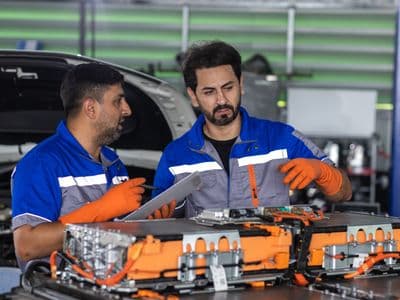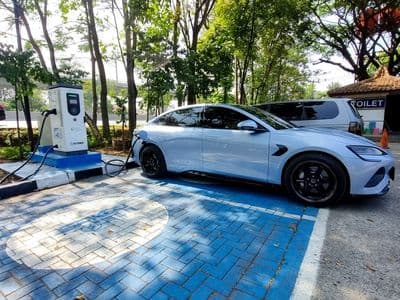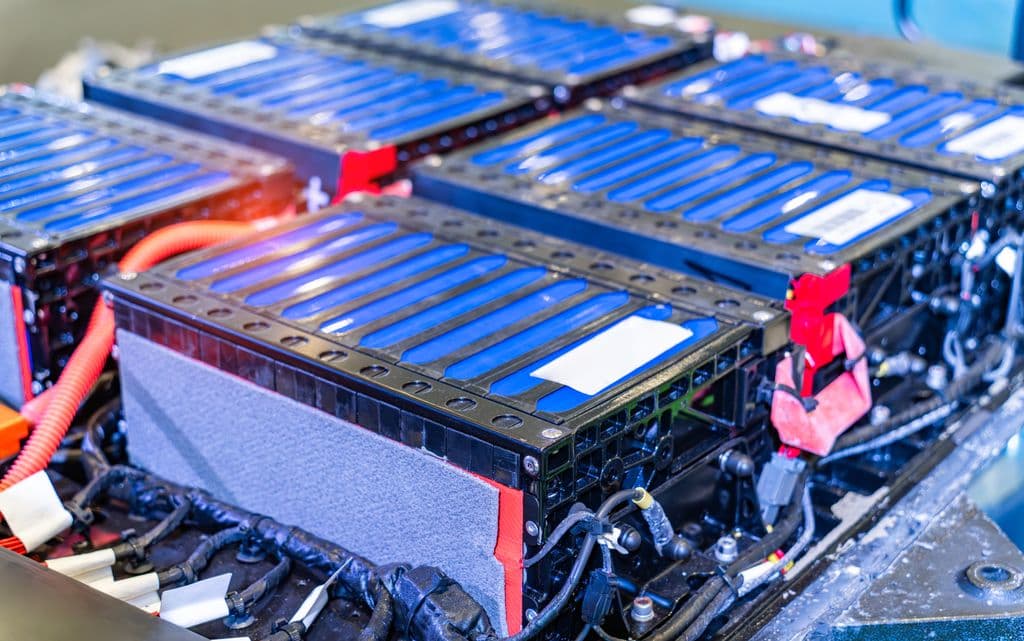
The differences between LFP and NMC batteries lie in their materials, energy density, durability, safety, and production costs.
LFP batteries offer advantages in thermal stability and more affordable pricing, while NMC batteries provide higher energy capacity to support longer electric vehicle driving ranges.
Both of these lithium-ion battery technologies are increasingly used by electric vehicle manufacturers around the world. However, each has different characteristics that should be considered before purchasing a vehicle.
So, which one is more suitable for mobility needs in Indonesia? Here is a complete comparison.
Understanding LFP and NMC Battery Technologies
To better understand the differences between LFP and NMC batteries, it is important to first look at the characteristics and working principles of each technology.
LFP, or Lithium Iron Phosphate, is a lithium-ion battery that uses lithium iron phosphate as its cathode material. This technology is known for its long lifespan, resistance to high temperatures, and relatively low risk of overheating.
LFP batteries are also more economical to produce because they use iron and phosphate, which are widely available. Their main drawback is lower energy density, meaning a larger or heavier battery pack is required to store the same amount of energy.
Meanwhile, NMC, or Nickel Manganese Cobalt, uses a combination of nickel, manganese, and cobalt as the cathode material.
NMC batteries can store more energy in a relatively compact size. The technology is available in several compositions, including NMC 111, 532, 622, and 811, each with different performance characteristics.
Read Also: Battery Recycling: Challenges in Recycling Electric Vehicle Batteries
Comparing EV Battery Performance
The differences between LFP and NMC batteries can be seen across four main aspects.
The differences between LFP and NMC batteries can be seen across four main aspects: energy density, cycle life, safety, and production cost.
Energy density. LFP batteries have lower energy density, while NMC batteries can store more energy in a relatively more compact size.
Cycle life or durability. LFP batteries generally have a longer cycle life, while NMC batteries tend to have a relatively shorter lifespan.
Safety and thermal stability. LFP batteries are more stable at high temperatures and offer better heat resistance. In contrast, NMC batteries require stricter thermal management to operate safely and optimally.
Production cost. LFP batteries tend to be more economical because they use materials that are relatively easier to source. Meanwhile, NMC batteries generally have higher production costs.
In addition to these characteristics, LFP batteries generally experience a greater decline in performance in very cold temperatures. NMC batteries, on the other hand, tend to perform better under those conditions.
From an environmental perspective, LFP batteries do not require nickel or cobalt. NMC production, meanwhile, faces challenges related to mining activities, supply chains, and battery material recovery.
Which Is More Suitable for Indonesia’s Tropical Climate?
Indonesia has a tropical climate with relatively high temperatures throughout the year. This makes thermal stability an important consideration when choosing an electric vehicle battery.
LFP batteries have an advantage because they are more resistant to heat and have a relatively lower risk of thermal runaway, a condition involving an uncontrolled increase in temperature.
However, even with good heat resistance, batteries still require an effective thermal management system to operate safely and optimally.
At the same time, Indonesia has significant nickel reserves, making NMC battery development an important part of the country’s mineral downstreaming strategy.
In February 2024, Minister of Energy and Mineral Resources Arifin Tasrif emphasized the importance of continuing the development of the nickel-based battery industry even as LFP adoption expands.
This is because the two technologies serve different market segments.
LFP is suitable for more affordable vehicles and operational transportation, while NMC offers advantages for premium vehicles that require higher energy density.
Global Adoption Trends and Cost Efficiency
The global automotive industry is increasingly adopting LFP technology because its production costs are lower than NMC.
According to a BloombergNEF (BNEF) survey in 2025, the average global price of lithium-ion battery packs fell by 8% to US$108/kWh.
Competition among manufacturers, excess production capacity, and the growing use of LFP batteries contributed to this decline.
The average battery pack prices by chemistry were reported as follows:
- LFP: US$81, or approximately Rp1.4 million/kWh
- NMC: US$128, or approximately Rp2.2 million/kWh
This price difference highlights LFP’s potential to help reduce electric vehicle production costs.
BNEF also recorded that battery packs for battery electric vehicles reached an average price of US$99, or approximately Rp1.7 million/kWh, in 2025.
The downward trend is expected to continue as technology and manufacturing efficiency improve.
Conclusion: Choosing the Right Electric Vehicle
After understanding the differences between LFP and NMC batteries, it is clear that both technologies have their own advantages.
There is no single battery type that is universally better because the best choice depends on driving needs, budget, and user priorities.
LFP batteries can be a suitable option for users who prioritize cost efficiency, safety, and long-term durability.
This technology is well suited for electric vehicles used for everyday mobility, particularly for short- to medium-distance urban travel.
Its longer lifespan can also help reduce total vehicle ownership costs over the long term.
Meanwhile, NMC batteries are more suitable for users who require higher energy density.
Their ability to store more energy in a relatively smaller and lighter package enables manufacturers to develop vehicles with longer driving ranges without excessively increasing battery pack size.
For this reason, NMC technology is widely used in mid-range to premium electric vehicles.
However, battery chemistry is not the only factor that determines the quality of an electric vehicle.
Potential buyers should also consider battery capacity, energy consumption efficiency, charging speed, public charging station availability, and the battery warranty offered by the manufacturer.
By considering these factors, consumers can select an electric vehicle that meets their mobility needs while providing long-term economic benefits.
A simple comparison of LFP and NMC batteries to help consumers choose an electric vehicle based on their needs is as follows:
- Choose LFP: if the vehicle is mainly used for urban mobility and daily driving, while prioritizing lower costs and longer service life. Examples include the BYD M6, Wuling Air EV, and Chery Omoda E5.
- Choose NMC: if higher energy density, lower battery weight, and the potential for longer driving range are greater priorities. Examples include the Hyundai Ioniq 5 Long Range and certain Tesla Long Range variants.
Read Also: How Do Solar-Powered Electric Vehicle Charging Stations Work?
TBS Strengthens Indonesia’s Electric Vehicle Ecosystem
Regardless of the battery technology used, electric vehicle development requires integrated infrastructure and ecosystem support.
Through its collaboration with GoTo Group, TBS established PT Energi Kreasi Bersama (Electrum) in 2021.
The initiative covers electric vehicle development, assembly, battery technology, charging and battery swapping facilities, and financing solutions.
In February 2022, President Joko Widodo launched a collaborative electric vehicle ecosystem initiative involving Electrum, Pertamina, Gogoro, and Gesits.
Electrum then supported the G20 and B20 events in Bali later that year by providing 50 electric motorcycles, 11 shelters, and involving 150 Gojek driver partners.
Expansion continued with the launch of the H3i electric motorcycle at IMOS in October 2024, offering both home charging and battery swapping options.
Electrum also introduced the H1 model in 2025.
In December 2024, Electrum secured US$15 million in financing from the Asian Development Bank, the Australian Climate Finance Partnership, and Bank DBS Indonesia.
The financing supported fleet expansion and battery swapping infrastructure, with the potential to reduce emissions by up to 123,000 tonnes per year.
Throughout 2025, Electrum’s ecosystem recorded several achievements:
- More than 15,000 electric vehicles in operation.
- More than 500 battery swapping locations available.
- More than 19,000 battery swaps conducted every day.
- More than 3,200 tonnes of CO₂ emissions avoided.
Through Electrum, TBS continues to expand access to low-emission mobility while supporting the acceleration of Indonesia’s energy transition.