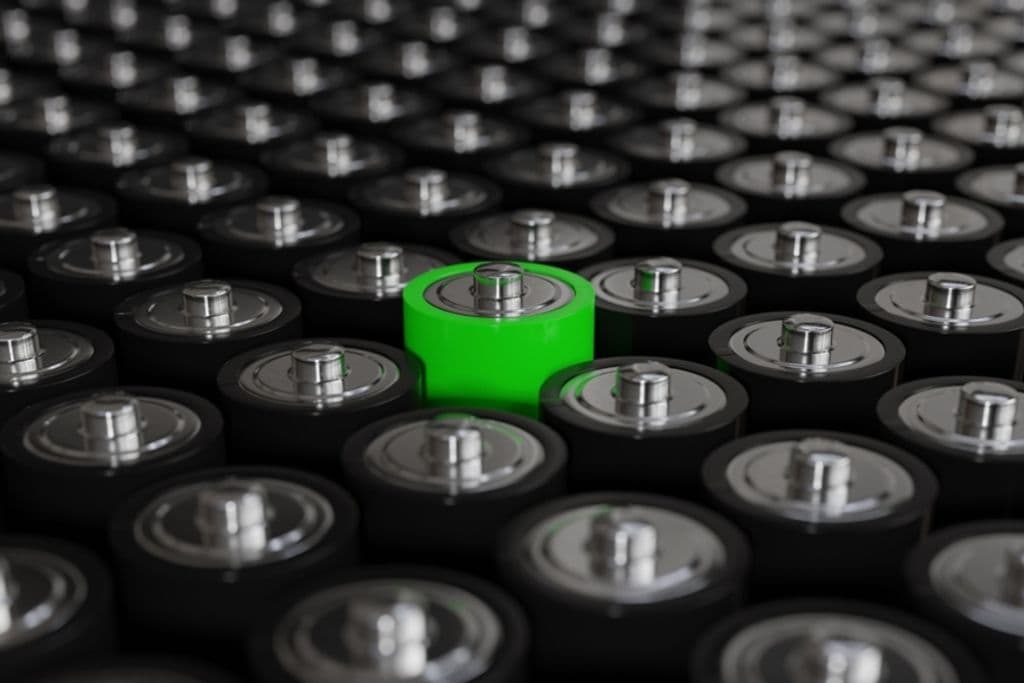
Battery recycling is becoming a new challenge as the adoption of electric vehicles, energy storage systems, and electronic devices continues to grow rapidly across Asia, including Indonesia.
In addition to requiring safe processing technologies, battery recycling also faces challenges related to collection, safety, regulation, and the varying economic value of used batteries depending on their chemistry.
The growth of electric vehicles is transforming the automotive industry while also creating new requirements for managing batteries at the end of their useful life.
As the number of electric vehicles increases, more batteries will eventually need to be collected, reused, or recycled.
Why Is Battery Recycling Becoming a New Challenge?
Lithium-ion batteries have a high energy density. Even when they are considered no longer suitable for use, they can still retain enough energy to create safety risks.
Used batteries can also suffer from internal damage that is not visible from the outside.
Microcracks, damaged separators, or weakened cells can cause short circuits and trigger thermal runaway, a condition in which the temperature inside the battery rises uncontrollably.
The risks become even greater when batteries need to be transported, sorted, stored, dismantled, or crushed. Impact and mechanical pressure can trigger fires that are difficult to control.
Related Article: Electric Vehicles Are Today’s Environmentally Friendly Transportation: Discover Their Advantages
Fire Risks and Hazardous Gases
Lithium-ion battery fires behave differently from ordinary fires. A battery can reignite even after the flames appear to have been extinguished because chemical reactions inside the cells may still be ongoing.
Burning batteries can also release toxic and corrosive gases, including hydrogen fluoride. This poses risks to workers and can potentially contaminate the environment.
For this reason, battery recycling facilities require specific procedures, including safe battery storage, temperature monitoring, segregation of damaged batteries, and proper fire control and containment systems.
Battery Recycling Challenges in Indonesia
Indonesia faces challenges not only in processing technology, but also in collecting used batteries.
The Ministry of Environment estimates that Indonesia could generate around 120,000 tons of used electric vehicle batteries by 2030. This figure is significantly higher than the country’s current domestic recycling capacity of approximately 20,000 tons per year.
At present, around 83,000 tons of lithium batteries have been installed in 468,231 electric vehicles. As electric vehicle adoption continues to grow, the number of batteries reaching the end of their useful life will also increase.
Interestingly, domestic processing capacity to convert black mass into battery materials is already available.
The main challenge is ensuring that used batteries enter the correct collection channels and are delivered to appropriate processing facilities.
Battery Economics Vary by Chemistry
One important issue in battery recycling is the difference in economic value between battery chemistries.
Black mass, which can account for around 35% of a battery’s weight, contains various valuable materials such as lithium, nickel, cobalt, manganese, and graphite.
Under certain processes, recovery rates for nickel, cobalt, and copper can exceed 95%, while manganese recovery can reach more than 90%. Lithium recovery ranges from around 50% to 90%, depending on battery chemistry and the technology used.
However, not all batteries have the same economic value.
NMC (nickel-manganese-cobalt) and NCA (nickel-cobalt-aluminium) batteries contain relatively high levels of nickel and cobalt, making them more commercially attractive for recycling.
By contrast, LFP (lithium-iron-phosphate) batteries do not contain nickel or cobalt.
Their growing use, particularly in electric motorcycles and more affordable electric vehicles, may result in lower economic incentives for recycling.
Indonesia therefore needs a strong collection system and the implementation of Extended Producer Responsibility, or EPR, to prevent lower-value batteries from ending up in inappropriate disposal channels.
Learning from China, South Korea, and Japan
The development of battery recycling across Asia shows that each country has adopted a different approach.
1. China: Managing the Entire Value Chain
China applies a comprehensive approach through EPR, battery tracking systems, technical standards, and a whitelist system for recycling companies that meet specific requirements.
Recycling is also viewed as part of the country’s industrial strategy and raw material security.
Through incentives, tax reductions, and pilot projects, China is working to integrate battery production, electric vehicles, and end-of-life battery processing.
2. South Korea: Supporting Industrial Competitiveness
South Korea positions battery recycling as part of its strategy to maintain the competitiveness of its battery industry.
The country is developing certification systems for recycled materials, digital tracking, and recovery targets for critical raw materials.
This approach demonstrates that used batteries are not viewed merely as waste, but also as valuable industrial resources.
3. Japan: Focusing on Technology and the Future
Japan takes a more cautious approach.
Policies specifically addressing electric vehicle battery recycling remain relatively limited, while greater emphasis is placed on research, technological innovation, and international cooperation.
The differences between these three countries show that Indonesia can learn from various approaches when developing a system suited to its domestic conditions.
Battery Recycling as Urban Mining
When managed properly, used batteries can become an important source of new raw materials.
This concept is known as urban mining, which involves recovering valuable materials from products already in circulation rather than relying entirely on the extraction of new raw materials.
Recovered lithium, nickel, cobalt, copper, aluminium, and graphite can be returned to industrial supply chains.
As a result, battery recycling has the potential to support the circular economy while reducing pressure on natural resources.
Related Article: The Role of Electric Vehicles in Reducing Motor Vehicle Emissions in Indonesia
TBS and the Future of Battery Recycling
The development of the electric vehicle ecosystem is also an important part of Indonesia’s journey toward more sustainable mobility.
In 2021, TBS, together with GoTo Group, established PT Energi Kreasi Bersama, or Electrum, to build an integrated electric mobility ecosystem in Indonesia.
Electrum covers various parts of the electric vehicle value chain, including vehicle assembly, battery technology, battery-swapping infrastructure, charging stations, and financing schemes.
In February 2022, President Joko Widodo inaugurated the launch of a collaborative electric vehicle ecosystem involving Electrum, Pertamina, Gogoro, and Gesits.
In the same year, Electrum participated in the G20 Summit and B20 Forum in Bali by providing 50 electric motorcycles, 11 shelters, and 150 Gojek driver partners to serve delegates.
Then, in December 2024, Electrum secured US$15 million in financing from the Asian Development Bank, the Australian Climate Finance Partnership, and Bank DBS Indonesia.
The funding was used to accelerate vehicle procurement and expand the battery swapping network, which is projected to reduce greenhouse gas emissions by up to 123,000 tons per year.
This development continued with the launch of the Electrum H3i at IMOS in October 2024, offering both home charging and battery-swapping options.
In 2025, Electrum also introduced the H1 as another electric vehicle option.
By 2025, the Electrum ecosystem had achieved several milestones:
- More than 6,000 electric vehicles operating on the road.
- More than 320 battery-swapping station locations available.
- More than 19,000 battery swaps recorded each day.
- More than 3,200 tons of CO2 emissions avoided.
As the ecosystem continues to grow, managing batteries at the end of their useful life will become an increasingly important part of building truly sustainable electric mobility.
Therefore, battery recycling is not simply about processing used batteries.
It requires an integrated chain covering vehicle use, collection, storage, transportation, processing, and the reuse of recovered materials.
Through the development of its electric vehicle ecosystem and various sustainability initiatives, TBS is contributing to the transformation of Indonesia’s energy and mobility sectors.