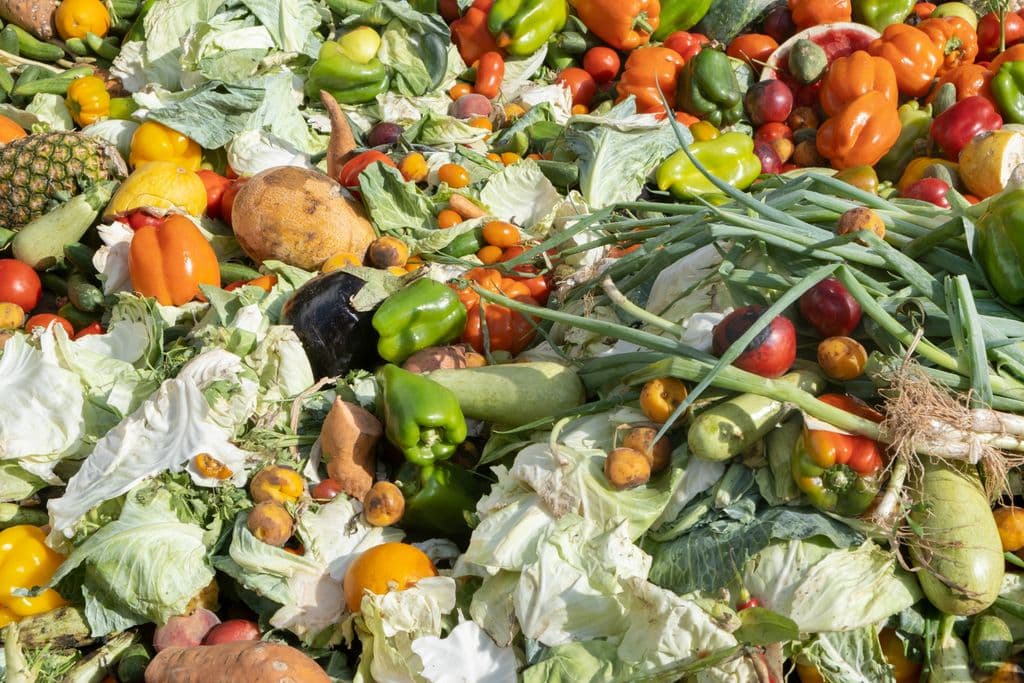
Food waste management is an important solution for reducing waste accumulation while also producing useful outputs such as organic fertilizer and renewable energy.
Among the various methods available, composting and biogas production offer different advantages. The most suitable option depends on factors such as waste volume, land availability, and waste management needs.
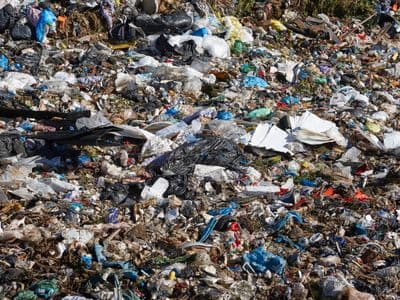
Food waste from households, hotels, restaurants, canteens, and the food industry can create odor problems, increase disposal costs, and place additional pressure on landfills.
If not managed properly, organic waste can also produce methane when it decomposes without oxygen in disposal sites.
For this reason, food waste management needs to be properly planned. In addition to reducing waste, the process can support the circular economy by turning discarded materials into valuable resources.
Read Also: Recycle: How to Turn Waste into Resources, Including the Process and Examples
Understanding Food Waste Management Methods
Two commonly used methods for treating organic waste are composting and biogas production.
Although both can help reduce waste volumes, they use different processes and produce different end products.
1. Composting to Produce Organic Fertilizer
Composting is the process of breaking down organic materials through microorganisms with the presence of oxygen.
Various types of organic waste, including fruit peels, vegetable scraps, coffee grounds, dry leaves, and food leftovers, can be used as composting materials.
The resulting compost can help improve soil structure, increase organic matter, and support plant growth.
Composting is relatively easy to implement for households, schools, garden operators, and small businesses, particularly when sufficient space is available to process organic waste.
However, composting requires proper moisture control, air circulation, and material separation.
Poor management can cause unpleasant odors during decomposition and slow down the breakdown of organic materials.
2. Biogas to Produce Renewable Energy
Unlike composting, biogas is produced through anaerobic digestion, a process in which microorganisms break down organic matter without oxygen inside a closed reactor.
This process produces gas containing methane that can be used as fuel for cooking, heating, or electricity generation, depending on the treatment system.
The remaining material can also be further processed into organic fertilizer.
Biogas treatment is suitable for facilities that generate large and consistent volumes of organic waste.
However, biogas facilities generally require higher upfront investment and more complex operation and maintenance compared with simple composting.
Compost vs Biogas: What Is the Difference?
The main differences between the two methods lie in their oxygen requirements, outputs, land use, and energy potential.
Here is a comparison:
- Oxygen requirements: Composting generally requires oxygen, while biogas production takes place without oxygen.
- Treatment output: Composting produces soil conditioner, while biogas produces energy-rich gas and a residual material that can potentially be used as fertilizer.
- Energy production: Composting produces organic fertilizer without generating fuel, while biogas can convert organic waste into energy for various uses.
- Land requirements: Open composting systems generally require larger areas to support decomposition, while closed-tank biogas systems can make more efficient use of space.
- Cost: Simple composting usually requires lower initial investment, while biogas requires higher upfront capital but may offer operational savings over time.
Neither method is always superior in every situation.
Their effectiveness depends on waste characteristics, operational scale, cost, and the operator’s ability to manage the system properly.
Which Method Is More Effective for Industry?
For businesses that generate food waste every day, the choice of treatment method should be based on operational needs and the benefits they want to achieve.
Composting for Smaller-Scale Operations
Composting can be suitable for households, schools, gardens, and small businesses that have enough space to process organic waste.
It is an appropriate option for those that want to reduce organic waste while using the resulting compost to improve soil fertility.
Biogas for Larger-Scale Operations
Hotels, restaurants, large canteens, food factories, and livestock operations can consider biogas when they have a stable supply of organic material.
In addition to reducing the amount of waste sent for disposal, these facilities can potentially reduce their reliance on conventional energy.
However, the waste needs to be properly sorted and prepared according to the requirements of the technology.
Not all types of food waste can be placed directly into a reactor without preparation.
Capacity requirements, treatment costs, and the use of the resulting outputs also need to be carefully considered before investment decisions are made.
Environmental Benefits of Food Waste Management
Both composting and biogas contribute to more sustainable waste management.
Composting helps reduce the amount of waste sent to landfills while returning organic matter to the soil.
Meanwhile, biogas can reduce the need for organic waste disposal, generate renewable energy, and help lower greenhouse gas emissions when the system is properly designed and operated.
Using biogas through methane capture can support efforts to reduce the release of greenhouse gases into the atmosphere.
However, these benefits depend on effective leakage control, proper management of residual materials, and whether fossil fuel-based energy is actually replaced.
Another important first step is preventing food waste at the source.
Better planning of raw material purchases, portion management, proper storage, and redistribution of edible food can reduce the amount of waste that needs to be treated.
Food Waste Management in Asia and Indonesia
Asian countries have adopted different approaches to managing organic waste.
South Korea has developed food waste separation systems alongside composting and anaerobic digestion.
Meanwhile, Japan promotes food waste recycling in the food sector through specific targets and policies for businesses.
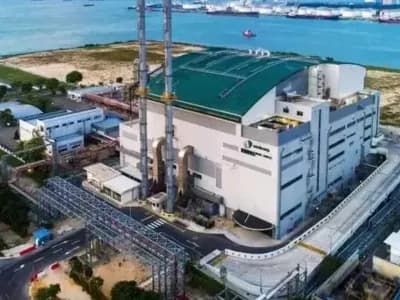
In Southeast Asia, Singapore has developed food waste treatment facilities and is gradually strengthening separation requirements for certain business groups.
In Indonesia, waste management is governed by central government regulations that are implemented and adjusted through policies at the regional level.
Technical requirements and business obligations may vary by location, meaning companies need to comply with local regulations.
Food waste treatment in Indonesia has the potential to reduce pressure on increasingly burdened landfills.
Source separation, composting, and biogas utilization can become part of the solution, particularly in urban areas and commercial centers that generate organic waste on a regular basis.
Read Also: Environmentally Friendly Waste Management Strategies and Sustainable Waste Management
TBS Strengthens Its Integrated Waste Management Ecosystem in Southeast Asia
As part of the development of its environmental services, TBS Energi Utama (TBS) continues to expand its waste management capabilities by strengthening its businesses in Indonesia and Singapore.
In 2023, TBS acquired Asia Medical Enviro Services (AMES) and ARAH Environmental Indonesia, which operate in the management of medical waste, hazardous and toxic waste, household waste, and electronic waste.
The two companies were later consolidated under PT Solusi Bersih TBS (SBT), a subholding focused specifically on waste management.
In March 2025, TBS completed the full acquisition of Sembcorp Environment (SembEnviro), a Singapore-based company with expertise in municipal waste management, recycling, and environmental solutions.
In September 2025, SembEnviro was renamed Cora Environmental to unify the identity of TBS’s waste management businesses.
Through AMES, ARAH Environmental Indonesia, and Cora Environmental, TBS is building an integrated waste management platform that supports the TBS2030 agenda.
By 2025, TBS had five waste management facilities in Indonesia and Singapore, processed more than 970,000 tonnes of waste, and served more than 475,000 active customers.
This demonstrates TBS’s continued commitment to supporting more efficient, responsible, and sustainable business operations.