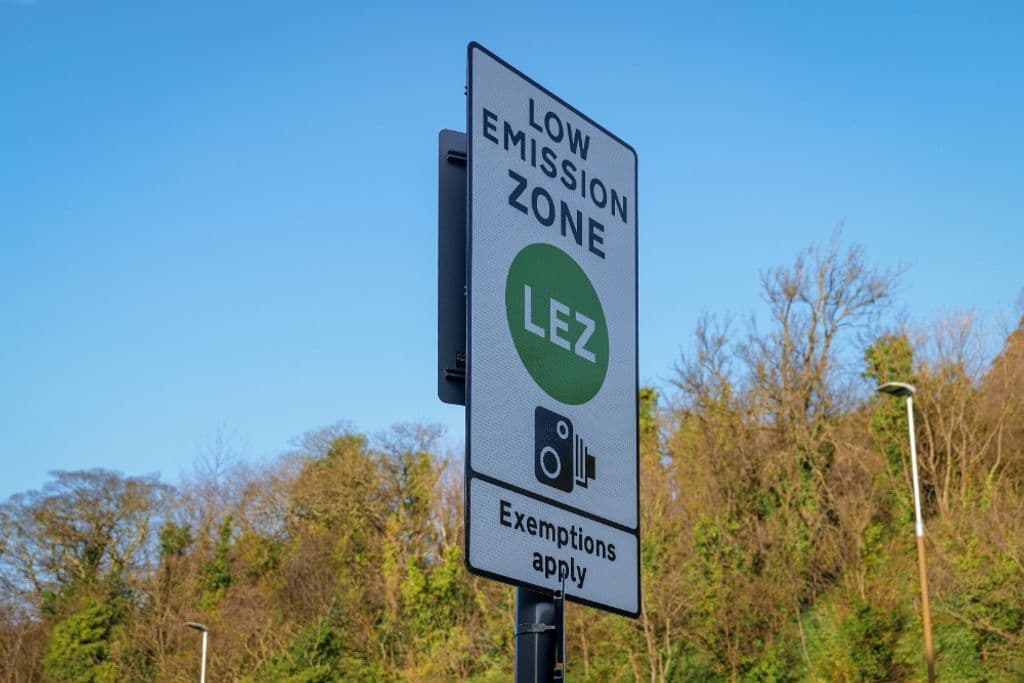
A low emission zone is one of the strategies being introduced in Jakarta to reduce air pollution by restricting high-emission vehicles in designated areas.
Although implementation is still at an early stage, the policy represents a new direction in urban transportation management and forms part of Indonesia’s efforts to support cleaner mobility.
Air pollution remains a major challenge in large cities such as Jakarta, affecting public health, quality of life, and the environment.
For this reason, many countries have introduced low emission zones, or LEZs, which restrict high-emission vehicles from entering certain areas to improve air quality. How has this policy been implemented in Indonesia, and what still needs to be improved?
What Is a Low Emission Zone and How Is It Implemented in Jakarta?
A low emission zone is an area that restricts motor vehicles with high emission levels from entering a designated location.
The policy aims to reduce air pollution while encouraging people to use public transportation, walk, cycle, or switch to low-emission vehicles such as electric vehicles.
In many European countries, LEZs have been introduced in city centers and metropolitan areas.
Various studies have shown that these policies can reduce concentrations of pollutants such as NO₂, NOx, and PM10 by approximately 5–25%, particularly when they are implemented across large areas and supported by strict regulations.
In Indonesia, the low emission zone concept was first introduced through the development of public areas. Jakarta became the first city to test this policy through two designated Low Emission Zones, namely Kota Tua and Tebet Eco Park.
Related Article: Green Hydrogen: Its Potential, Benefits, and Development in Indonesia
1. Low Emission Zone at Tebet Eco Park
Tebet Eco Park covers approximately 7.3 hectares and applies low emission zone restrictions on the roads surrounding the park. The purpose is to maintain air quality for visitors carrying out activities in the open space.
However, because the park is located in a residential area with high mobility, the LEZ is only implemented on Saturdays, Sundays, and national holidays from 6:00 a.m. to 5:00 p.m. Western Indonesian Time.
During these periods:
- Private vehicles are not allowed to travel on roads surrounding the park.
- Electric vehicles, public transportation, and vehicles belonging to local residents with special stickers are still permitted.
- Parking areas are provided outside the zone.
- Visitors can continue using Mikrotrans services.
2. Kota Tua Jakarta as a Low Emission Zone
Kota Tua Jakarta serves a different function from Tebet Eco Park.
Covering approximately 14 hectares, the area is both a cultural heritage district and a tourist destination filled with museums, historical buildings, Jakarta Kota Commuter Line Station, and Transjakarta bus stops.
The implementation of a low emission zone in Kota Tua forms part of the Kota Tua Master Plan established under Governor Regulation No. 36 of 2014.
Official implementation began in 2022 alongside the area’s revitalization, the construction of pedestrian paths, and improvements to public transportation access.
Only certain types of vehicles are allowed to enter the area, including:
- Transjakarta buses.
- Electric vehicles.
- Vehicles belonging to local residents with special stickers.
The policy is intended not only to reduce pollution, but also to protect heritage buildings from the effects of motor vehicle emissions.
Challenges Facing Low Emission Zones in Indonesia and Lessons from Other Countries
Although it is a positive step, the implementation of low emission zones in Jakarta still faces several challenges.
A study by the Jakarta Environmental Agency showed that air quality improved briefly one day after the LEZ trial in Kota Tua in 2021.
However, pollution levels increased again the following day. Research from Universitas Trisakti also found that PM2.5 concentrations remained relatively high, particularly at night.
A C40 evaluation using the AQUA Transport model in 2023 concluded that the limited size of the zones had not yet produced a significant impact on Jakarta’s overall air quality.
Enforcement in the field also continues to face several issues, including vehicles entering through dedicated Transjakarta lanes and regulations that have not been fully enforced.
Nevertheless, the Jakarta Provincial Government continues to strengthen the policy through several regulations, including:
- Governor Regulation No. 90 of 2021 on the Regional Low-Carbon Development Plan.
- Governor Instruction No. 66 of 2019 on Air Quality Management.
- Governor Decree No. 576 of 2024 on the Air Pollution Management Strategy, which again includes low emission zones as one of its main programs.
Comparison with Bangkok, Hanoi, and Singapore
Several cities in Southeast Asia have developed broader approaches.
Bangkok, for example, implements LEZ measures as part of its PM2.5 control strategy.
When air quality deteriorates, large trucks that do not meet emission standards or are not included on the Green List are prohibited from entering certain areas. Enforcement is carried out using CCTV cameras and an automated ticketing system.
Hanoi also began gradually testing low emission zones in the city center in 2026. Vehicles that do not meet certain emission standards are restricted based on time or location, with plans to expand the policy through 2030.
Singapore, meanwhile, does not use the term LEZ, but applies an integrated transportation policy through Electronic Road Pricing, or ERP, restrictions on vehicle use during certain periods, and the development of public transportation.
This approach has helped control congestion while reducing transportation-related emissions.
In addition to government policies, the public also plays an important role in reducing transport emissions.
People can contribute by using more fuel-efficient vehicles, switching to electric vehicles, taking public transportation, or walking and cycling for shorter journeys.
Related Article: Hybrid Cars: Definition, How They Work, Advantages, and Disadvantages
Supporting More Effective Low Emission Zones with TBS Energi Utama
Going forward, the implementation of low emission zones in Indonesia will require broader coverage, more consistent enforcement, and stronger support from a low-emission transportation ecosystem so that the benefits can be felt across urban areas.
To support this transition, TBS Energi Utama through PT Energi Kreasi Bersama, or Electrum, continues to develop an integrated electric vehicle ecosystem in Indonesia.
Established in 2021 with GoTo Group, Electrum develops electric vehicle assembly, battery technology, battery-swapping networks, charging stations, and financing solutions.
The company has achieved several important milestones, including the launch of an electric vehicle ecosystem with Pertamina, Gogoro, and Gesits in 2022.
Electrum also participated in the G20 Summit and B20 Forum in Bali by providing 50 electric motorcycles, 11 shelters, and 150 Gojek driver partners.
In December 2024, Electrum secured US$15 million in financing from the Asian Development Bank, the Australian Climate Finance Partnership, and Bank DBS Indonesia.
The funding is being used to expand its fleet and battery-swapping network, with projected greenhouse gas emission reductions of up to 123,000 tons per year.
Electrum has also continued to introduce new innovations, including the launch of the H3i electric motorcycle in 2024, which supports both home charging and battery swapping, followed by the H1 electric motorcycle in 2025.
By 2025, Electrum had operated more than 6,000 electric motorcycles supported by over 370 Battery Swapping Stations in Jakarta, served more than 19,000 battery swaps each day, and helped avoid more than 3,200 tons of CO₂ emissions.
These initiatives demonstrate TBS Energi Utama long-term commitment to supporting cleaner urban mobility while strengthening the successful implementation of low emission zones in Indonesia.