Methane emissions from landfills are an environmental threat that deserves more serious attention because methane has a much stronger warming effect than carbon dioxide, particularly over the short term.
Across Asia, including Indonesia, the large amount of organic waste sent to landfills makes methane emissions control an important part of addressing climate change while also improving environmental quality.
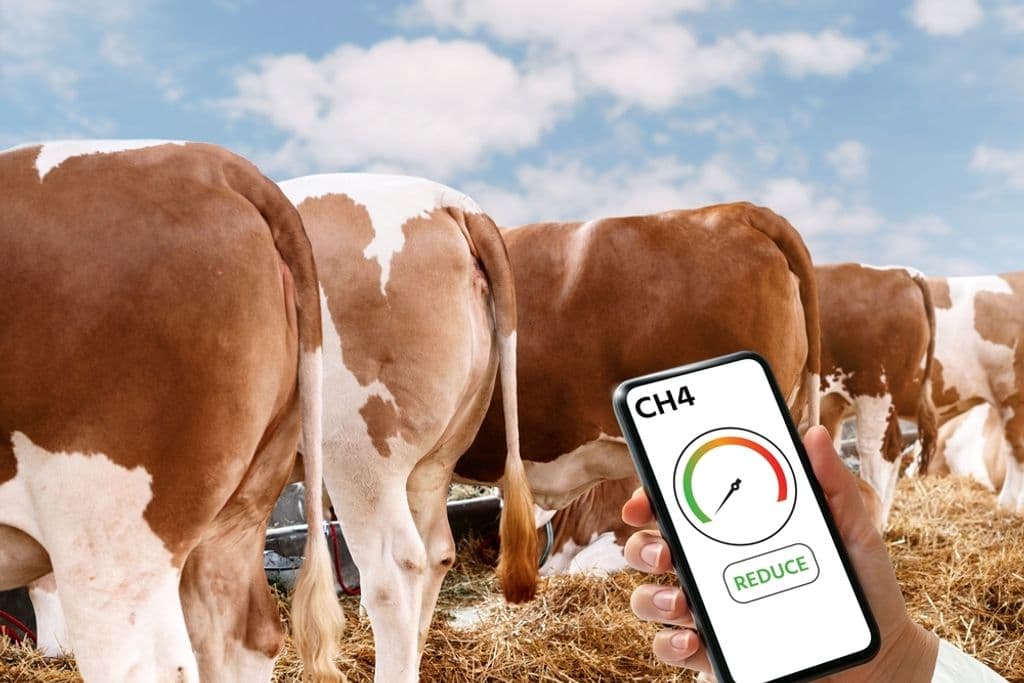
Discussions about climate change often focus on carbon dioxide (CO₂). However, another greenhouse gas is equally important: methane (CH₄).
This gas is produced when organic materials such as food waste decompose in oxygen-free conditions, including in poorly managed landfills.
Related Article: What Is a Carbon Footprint? Meaning, Causes, Impacts, and Ways to Reduce It
Why Are Methane Emissions Harmful to the Climate?
According to the United Nations Environment Programme (UNEP), methane contributes to around one-quarter of current global warming.
During the first 20 years after being released into the atmosphere, methane can trap heat around 80 times more effectively than CO₂.
Methane remains in the atmosphere for a much shorter period, at around 12 years, while some CO₂ can remain for hundreds of years.
However, methane’s strong warming effect means that reducing its emissions can have a relatively rapid impact on slowing the rate of global warming.
Atmospheric methane concentrations have also increased to more than two and a half times their pre-industrial levels.
This means methane reduction is not only important for the future, but also plays a critical role in addressing climate change today.
Methane Can Also Come from Many Sectors
Landfills are not the only source of methane. The energy and agriculture sectors also make significant contributions.
In the oil and gas industry, methane can be released through leaks, venting, and flaring during extraction, processing, and transportation.
More than 75% of methane emissions from oil and gas operations and around 50% of emissions from coal operations could potentially be reduced using technologies that are already available.
Meanwhile, the agriculture sector can reduce methane through improved livestock manure management, better animal productivity and health, appropriate feed practices, and rice cultivation methods such as alternate wetting and drying.
Methane Emissions from Landfills in Asia and Indonesia
As mentioned above, landfills are one of the major sources of human-caused methane emissions.
Globally, landfills are estimated to account for around 11% of anthropogenic methane emissions. This figure could increase as populations grow, urbanization expands, and more waste is generated.
The issue is particularly relevant in Asia, where cities are growing rapidly while waste management systems in some areas still face significant limitations.
In Indonesia, more than 63% of municipal waste consists of biodegradable materials.
When this organic waste is disposed of directly in landfills without adequate treatment, anaerobic decomposition can produce methane.
The situation becomes more complex because some landfills still operate using open dumping or controlled landfill systems.
An analysis of 341 landfills found that around 43.1% operated as open dumping sites and 41.6% as controlled landfills, while only 5.3% were classified as sanitary landfills.
Limited waste covering, monitoring, and gas recovery systems also make it easier for methane to escape into the atmosphere.
Several major landfills, including Tamangapa, Antang, Benowo, and Bantar Gebang, have even been reported to generate methane emissions exceeding 100,000 Mg per year.
The Threat Goes Beyond Climate Change
The impacts of methane emissions from landfills are not limited to global warming.
Accumulated methane can also increase the risk of fires and explosions if it is not properly managed.
Over a two-decade period, 63 landfill fire incidents were recorded in Indonesia, with methane identified as one of the main causes in 26 cases.
Poor waste management can also create unpleasant odors, reduce air quality, and release volatile organic compounds (VOCs) and other hazardous substances.
For this reason, methane control needs to be implemented alongside broader improvements in waste management systems.
How to Reduce Methane Emissions from Waste
The waste sector has significant potential to reduce methane emissions.
Several measures can be implemented, including capturing and treating landfill gas (LFG), using flaring, and utilizing landfill gas to generate energy.
Biocover technology is another solution receiving increasing attention.
This biological layer helps microorganisms oxidize methane before the gas reaches the atmosphere. In addition to reducing emissions, a well-designed biocover can also help reduce odors and VOC emissions.
Reducing organic waste at the source is equally important.
Separating food waste, composting, processing it through anaerobic digestion, and using black soldier fly larvae can reduce the amount of organic waste sent to landfills.
Simple actions at the household level can also contribute.
When food waste is separated and properly processed, the amount of organic material ending up in landfills can be reduced.
Related Article: Eco-Friendly Waste Management Strategies and Sustainable Waste Solutions
The Role of Renewable Energy and a Low-Emission Future with TBS
Efforts to address climate change also need to be supported by a transition toward cleaner energy.
TBS is strategically expanding its renewable energy portfolio through several projects.
Through its subsidiary PT Toba Bara Energi, or TBAE, TBS acquired PT Adimitra Energi Hidro, or AEH, in 2020. AEH is the developer of a 2 x 3 MW mini-hydropower plant in Lampung.
The project reached its Commercial Operation Date (COD) on January 22, 2025, and now contributes 6 MW of clean energy to the Southern Sumatra region.
TBS is also developing the 46 MWp Tembesi Floating Solar Power Plant in Batam.
The project reached financial closing in 2024 and is targeted to begin full commercial operations and connect to the national electricity grid in 2026.
The power plant is expected to help reduce carbon emissions, improve air quality, create green jobs, and encourage technology transfer and collaboration with local communities.
In addition, through PT Bayu Alam Sejahtera, or BAS, TBS is also exploring the potential development of wind energy in East Nusa Tenggara (NTT).
Methane emissions from landfills should no longer be viewed simply as a waste problem.
Better waste management, methane control technologies, organic waste reduction, and the transition toward renewable energy all need to progress together.
Environmental commitments can begin with better waste management and be further strengthened through clean energy development.
Through its 6 MW mini-hydropower plant in Lampung, which reached COD in January 2025, and the 46 MWp Tembesi Floating Solar Power Plant currently under development, TBS continues to contribute to building a more sustainable energy future for Indonesia.