Open dumping is a waste disposal method in which waste is openly discarded without proper management, sorting, soil covering, or adequate pollution control. In Indonesia, this practice is targeted to be gradually phased out by 2028.
The phase-out of open dumping is part of broader efforts to improve the national waste management system, reduce pollution, and promote more modern and sustainable waste management practices.
Indonesia’s waste problem is becoming increasingly urgent as waste volumes continue to rise while the capacity of several final disposal sites, or landfills, remains limited.
For this reason, the government is not only encouraging the closure of landfills that still apply open dumping, but is also promoting more integrated waste management from upstream to downstream, including sorting, recycling, and waste-to-energy.
Open Dumping Is an Environmental Problem That Needs to Be Addressed
In simple terms, open dumping is the practice of piling or disposing of waste in open landfill areas without a management system capable of preventing pollution.
This method differs from a sanitary landfill, which uses systems for leachate management, gas control, waste covering, and environmental protection.
The practice of open dumping has actually been prohibited under Law No. 18 of 2008 on Waste Management.
However, it can still be found in various regions due to limitations in infrastructure, budgets, technology, and waste management systems.
The environmental impacts are significant. Leachate from accumulated waste can contaminate soil and water sources, while the decomposition of organic waste produces methane, which contributes to climate change.
Unmanaged waste piles can also create unpleasant odors, pose health risks, and reduce the quality of life for surrounding communities.
Read Also: Environmentally Friendly Waste Management Strategies and Sustainable Waste Management
Indonesia’s Target to Phase Out Open Dumping
The government is targeting a gradual phase-out of open dumping. Coordinating Minister for Food Affairs Zulkifli Hasan stated that the government aims to resolve 50 percent of the issue by 2027, with the remainder targeted for completion in 2028.
Meanwhile, the Ministry of Environment/Environmental Control Agency (KLH/BPLH) previously recorded 343 landfill sites still applying open dumping practices.
The government is also encouraging the end of these practices through supervision and administrative sanctions for regional governments that fail to make improvements after receiving warnings.
These efforts are becoming increasingly important because waste management in several regions still largely consists of transporting waste from temporary collection points directly to landfills without proper sorting.
Organic waste, plastics, and hazardous materials can still be mixed together, making them more difficult to process.
What Is the Future of Landfills in Indonesia?
Phasing out open dumping does not mean landfills will no longer be needed.
Instead, their role needs to evolve from simply being places where waste accumulates into part of a more integrated waste management system.
Regional governments need to strengthen household waste sorting, develop TPS3R facilities and waste banks, improve treatment infrastructure, and ensure that waste entering landfills has already gone through reduction and recovery processes.
Technology can also become part of the solution. One example is the government’s push to develop waste processing into electricity through Waste-to-Energy Power Plants, known as PSEL, using technologies such as incinerators.
In addition, a pilot project to convert landfill gas into hydrogen in Sarimukti, West Java, shows that gas generated from waste may potentially be used as a low-carbon energy source.
According to its feasibility study, the Sarimukti project is estimated to reduce approximately 58,000 tonnes of CO₂ equivalent emissions per year and produce up to 1 tonne of hydrogen per day.
However, projects like this still require reliable gas supply, regulatory support, a viable hydrogen market, and protection for communities that depend on waste sorting activities at landfill sites for their livelihoods.
Strategic Steps to End Open Dumping
Ending open dumping requires a well-planned and gradual transition.
The closure of open landfill sites needs to be followed by stronger waste management systems from upstream to downstream so that waste does not simply accumulate elsewhere without proper treatment.
For this reason, governments, communities, and businesses need to implement several key strategies.
1. Strengthen Policies and Budgets
Regional governments need to position waste management as a development priority.
Waste management policies should be integrated into regional planning, supported by clear targets and adequate budgets.
Institutional strengthening is also necessary so that regulatory and operational functions can be carried out more professionally.
Investment in infrastructure, technology, and human resources will be an important part of this transition.
2. Manage Waste from the Source
Waste reduction needs to begin at the source.
Household sorting, TPS3R facilities, waste banks, composting, and recycling can help reduce the burden on landfills.
Changes in public behavior are equally important.
Education on waste sorting and reduction should be carried out continuously, including through schools and community programs.
3. Encourage Collaboration and Technology
Central and regional governments, industries, academics, communities, and businesses need to work together.
Waste treatment technologies should also be selected based on local conditions, waste characteristics, and long-term management capacity.
Waste Management Challenges in Asia
Landfill capacity issues are not unique to Indonesia.
Several major cities in Southeast Asia also face rising waste volumes and limited land availability for the development of new landfill sites.
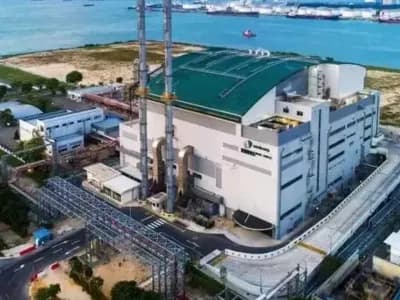
Singapore, for example, faces capacity constraints at the Semakau Landfill, making waste incineration and energy recovery important parts of its waste management system.
This condition reflects a broader shift in waste management approaches across Asia.
Governments and industry players are increasingly viewing waste not only as something to be discarded, but also as a resource that can be recovered through recycling, material recovery, waste-to-energy, and the utilization of landfill gas.
Read Also: Electronic Waste: Risks and How to Dispose of It Properly
The Future of Waste Management with TBS
Phasing out open dumping requires an integrated waste management ecosystem.
In this context, TBS is strengthening its waste management capabilities through expansion in Indonesia and Singapore.
In 2023, TBS acquired Asia Medical Enviro Services (AMES) and ARAH Environmental Indonesia.
Both companies were later consolidated under PT Solusi Bersih TBS (SBT), a sub-holding focused on waste management.
In March 2025, TBS completed the full acquisition of Sembcorp Environment (SembEnviro) in Singapore, a company operating in municipal waste management, recycling, and environmental solutions.
In September of the same year, SembEnviro was renamed Cora Environmental, bringing TBS’s waste management portfolio under a unified identity.
Today, TBS operates five waste management facilities across Indonesia and Singapore, processed more than 970,000 tonnes of waste throughout 2025, and has served more than 475,000 active customers.
TBS’s current portfolio includes:
- Cora Environmental as a waste-to-energy operator in Singapore, processing more than 900,000 tonnes of waste per year.
- AMES with a medical waste treatment capacity of more than 5,000 tonnes per year.
- ARAH Environmental Indonesia, which provides integrated waste management solutions across 16 provinces, supported by more than 5,000 collection points and an incineration capacity of more than 10,000 tonnes per year.
Through the TBS2030 roadmap, TBS continues to develop waste-to-resource solutions that aim to reduce environmental impact while creating long-term value.
This approach is becoming increasingly relevant as Indonesia and other Asian countries face limited land availability, rising waste volumes, and growing pressure to reduce emissions.
Therefore, phasing out open dumping is not simply about closing problematic landfill sites.
It represents an opportunity to build a more modern, integrated, and sustainable waste management system, in line with TBS’s efforts to provide waste management solutions across Indonesia and Southeast Asia.